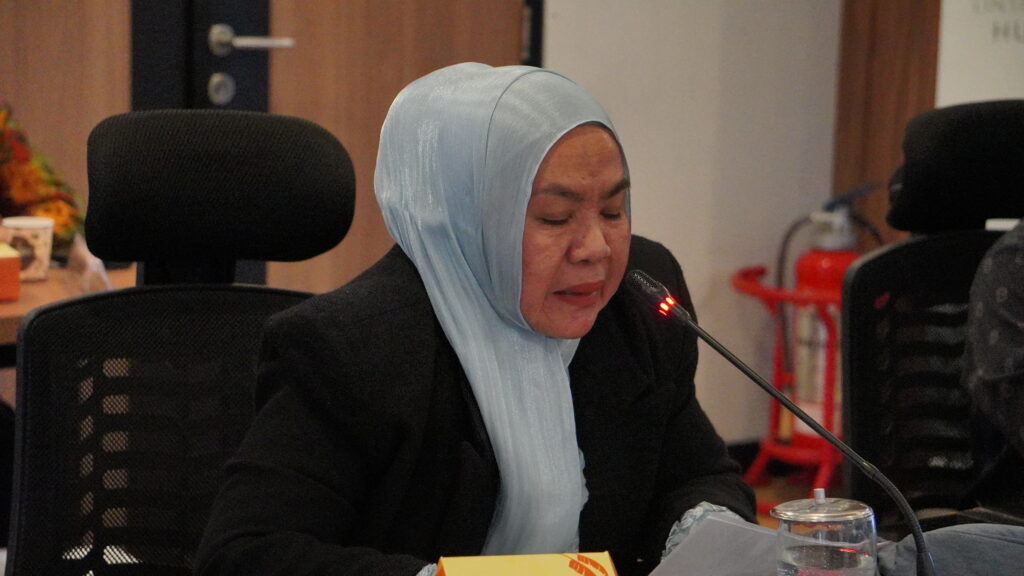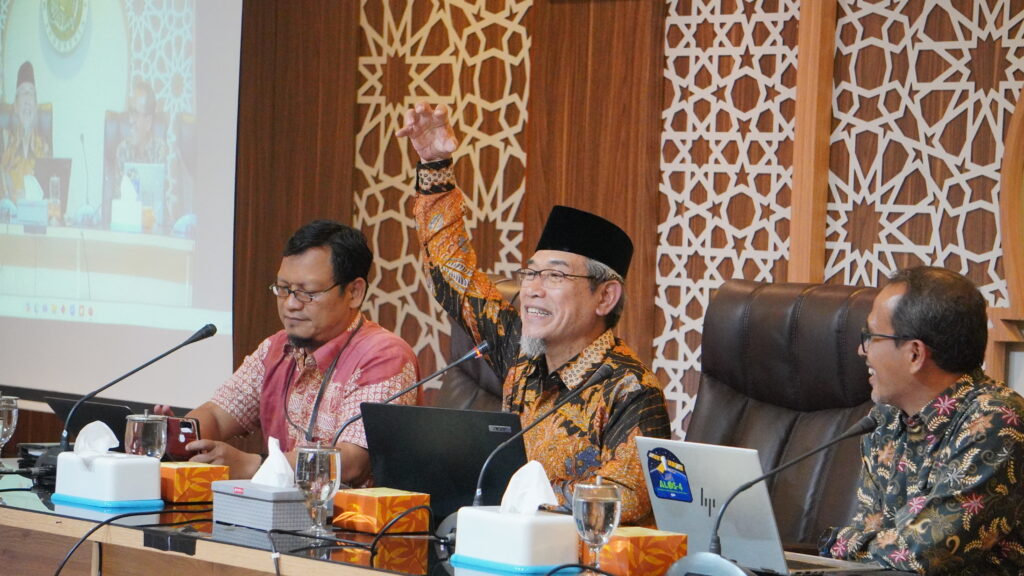
On July 12, 2025, IRI Indonesia held the scientific immersion program “Merging Science and Spirituality: The Role of Religious Leaders in Rainforest and Indigenous Peoples Protection” for the Indonesian Ulema Council (Majelis Ulama Indonesia – MUI).
The event took place in a hybrid format, with 55 participants onsite at the MUI headquarters in Jakarta and 64 joining online, totaling 119 Islamic leaders representing MUI commissions, provincial branches, and environmental councils from across Indonesia.
The program aimed to strengthen the capacity of faith leaders in rainforest conservation and the protection of Indigenous Peoples by integrating scientific evidence with Islamic teachings. It also marked the official launch of two national guidebooks developed by IRI Indonesia — Religious Teachings for Rainforest Protection and The Role of Houses of Worship in Environmental Stewardship — designed to serve as educational and spiritual tools for sermons, religious schools, and community programs.
The opening session brought together voices that framed ecological care as both a scientific and moral calling. Dr. Suhardin, member of the IRI Indonesia Advisory Council, reaffirmed the initiative’s mission to bridge faith and science, followed by K.H. Sodikun, M.Si., Head of MUI’s Environmental Commission.
Quoting Surah Al-Qasas (28:77), K.H. Sodikun emphasized that protecting nature is an expression of devotion and accountability before God. He reminded participants that the issue of tropical forests in Indonesia cannot be separated from the lives of Indigenous Peoples, who have long been spiritual and ecological guardians of these ecosystems.
“Preserving the environment is not only a scientific or ecological duty — it is a form of worship and a spiritual responsibility entrusted to humankind.”
— K.H. Sodikun, M.Si., Head of the Environmental Commission of MUI
Integrating faith, knowledge, and action
The program featured presentations by esteemed experts from Indonesia’s scientific and civil society institutions, enriching the theological reflection with empirical insight. Among the distinguished speakers were: Dr. Hayu Prabowo (IRI Indonesia), Iwan Prijanto (Green Building Council Indonesia – GBCI and MUI), Erasmus Cahyadi (Indigenous Peoples Alliance of the Archipelago – AMAN), Dr. Rahmat Arief (National Research and Innovation Agency – BRIN), and Siswanto, Ph.D. (Meteorology, Climatology, and Geophysical Agency – BMKG).
Their addresses elucidated the connections between deforestation and climate change, the pertinence of green building standards for Islamic institutions, the moral dimension of Indigenous rights, and the role of data and remote sensing in guiding environmental policy.
This dialogue underlined how the Islamic concept of stewardship (khalifah fil-ardh) harmonizes with modern environmental science, and how both can jointly inform social and ecological transformation.
From reflection to roadmap, participants structured their discussions around three key strategic pillars: Education, Action, and Policy Advocacy. These pillars are designed to translate program insights into practical application.
- Under Education, leaders proposed integrating conservation themes into Islamic curriculum, fatwas, and sermons to cultivate ecological awareness within religious teachings.
- For Action, participants outlined plans for tree-planting campaigns, EcoDeen youth programs, and digital outreach initiatives to engage younger generations and mobilize communities.
- Through Policy Advocacy, they committed to support the revision of the Forestry Law, advancing the Climate Change and Indigenous Peoples Bills, and exploring Islamic green finance mechanisms. These mechanisms include forest waqf, the Tropical Forest Forever Facility (TFFF), and the Cali Fund.
Concrete outcomes and institutional impact
By the end of the immersion, religious leaders expressed a strengthened understanding of rainforest ecosystems, deforestation trends, and climate science, along with a renewed sense of moral duty to act. The two guidebooks were widely distributed, supporting preachers, teachers, and community leaders across provinces.
The event also deepened collaboration among Indonesia’s key environmental and interfaith institutions — MUI, IRI Indonesia, AMAN, BRIN, BMKG, and GBCI — creating new pathways for partnerships that unite Islamic ethics with scientific evidence to shape policy and civic engagement.
What began as a day of reflection and learning now stands as a blueprint for a broader movement — one in which religion, science, and indigenous knowledge converge to protect the Earth’s sacred forests and secure the wellbeing of future generations.
📊 IMPACT
- 119 Islamic leaders trained
- 2 national guidebooks launched
- 6 institutional partners