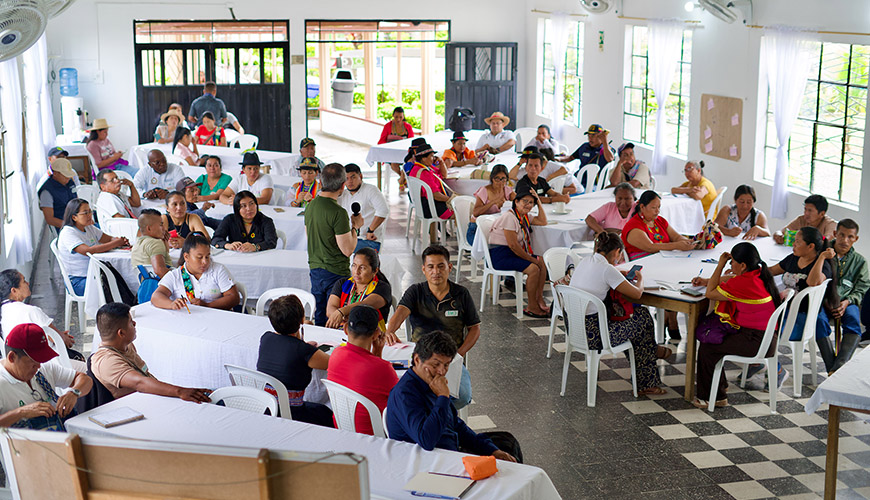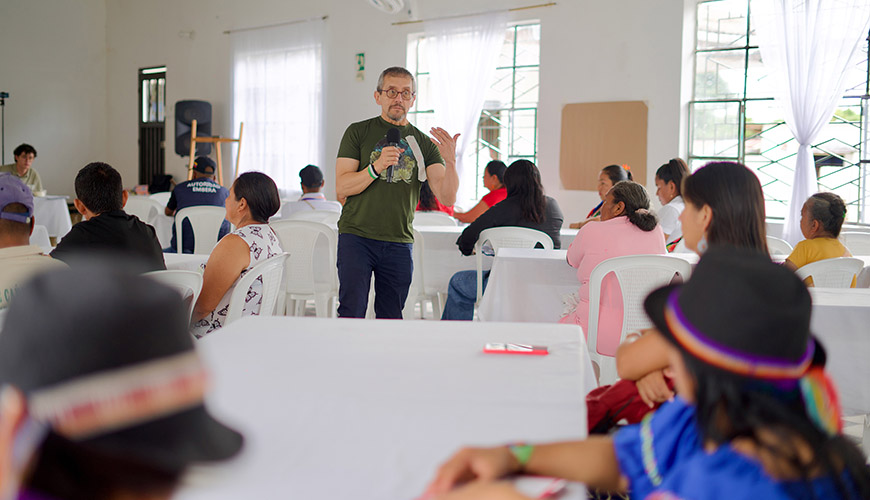
On November 13, the Interreligious Initiative for Tropical Forests held a new training session in Villagarzón (Putumayo), aimed at members of its local chapters in this municipality and in the townships of Puerto Umbría and La Castellana.
Indigenous Territorial Entities (ETI) and self-government were the central themes of this educational event, developed in partnership with the Etnollano Foundation, whose purpose was to pave the way for a collective process aimed at strengthening indigenous territorial organization in the municipality.
This training process allows diverse knowledge to be brought together to defend the Amazonian territory from its cultural roots, said Carlos Augusto Lozano. The senior advisor to IRI-Colombia recalled that Putumayo, a fundamental part of the Amazon, is also a territory where protecting life, water, and spirituality is a collective mandate.
The first part of the meeting was led by Alejandro Ballesteros, advocacy coordinator for Etnollano, who explored the elements of self-government and its role in the consolidation of Indigenous Territorial Entities (ETI). He also presented various processes that his organization is supporting in the department of Guainía, where intercultural dialogue has enabled ancestral peoples to make progress in consolidating the management of their territories and gaining recognition from the state as indigenous entities.
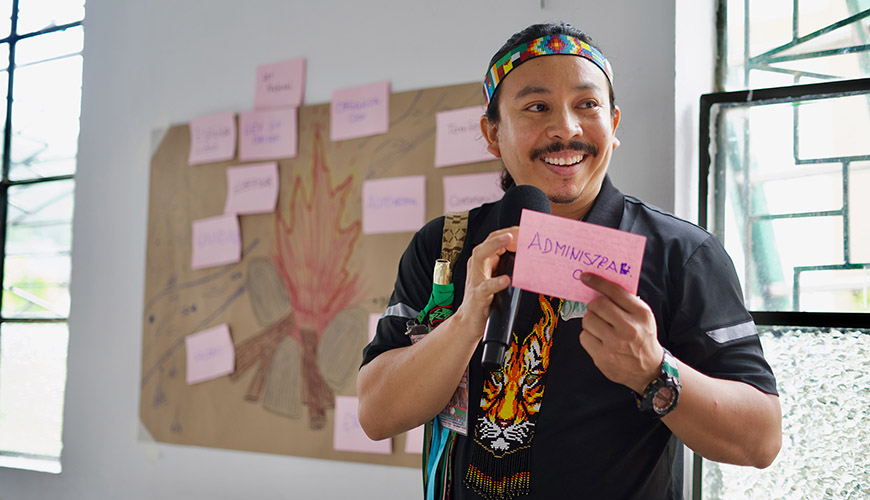
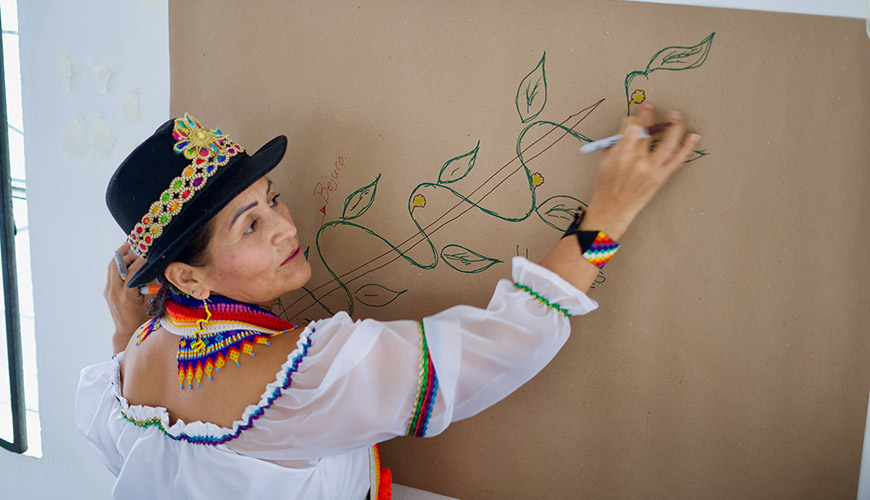
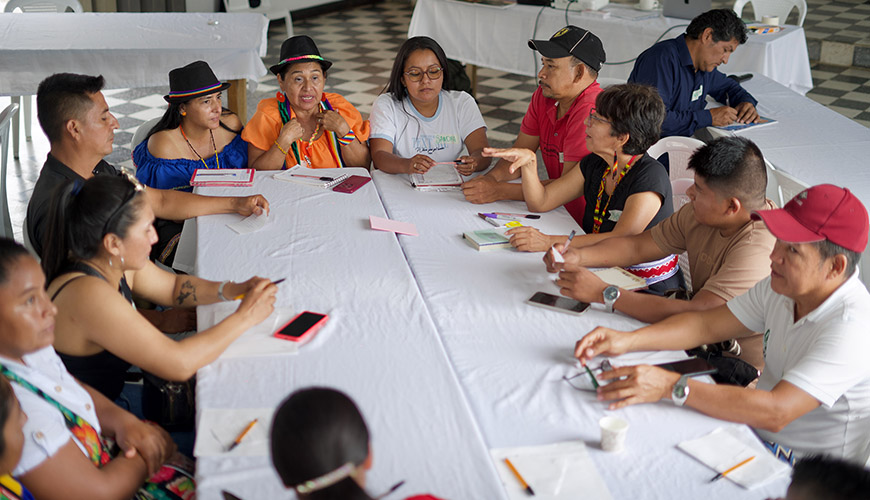
Through practical exercises, participants identified essential principles of self-government: unity, autonomy, cultural identity, and spiritual connection to the land. Using symbols such as the yagé plant, the tulpa, and the bejuco vine, they explained how ancestral knowledge guides decision-making, community harmony, and ways of protecting the land.
“Wisdom is the foundation that guides our decisions. The territory is not just a place: it is a way of life that unites people, nature, and the spiritual world,” said Erwin Guaspa Peña, from the Inga Guayaco Reserve.
For her part, anthropologist Carlina Flores, from Etnollano, shared the lessons learned in Guainía in indigenous territorial organization processes. She emphasized that unity, participation, and collective work are essential elements for advancing on the path toward the ETI.
As a final exercise, a legal timeline was created, which allowed for the recognition of the main regulatory and organizational milestones that support the path toward territorial formalization.
Participants reflected on the challenges involved in consolidating an intercultural state where indigenous knowledge systems are recognized and engage in dialogue on an equal footing with public institutions.
The day ended with a shared message: moving towards Indigenous Territorial Entities is not just an administrative process, but an act of protecting the forest, water, and life based on ancestral knowledge. For IRI-Colombia, accompanying this journey is essential to strengthening indigenous autonomy and defending the Amazon as our common home.
 67 leaders from the local IRI chapters in Villagarzón participated in the training process.