By: Blanca Lucía Echeverry, director of IRI Colombia.
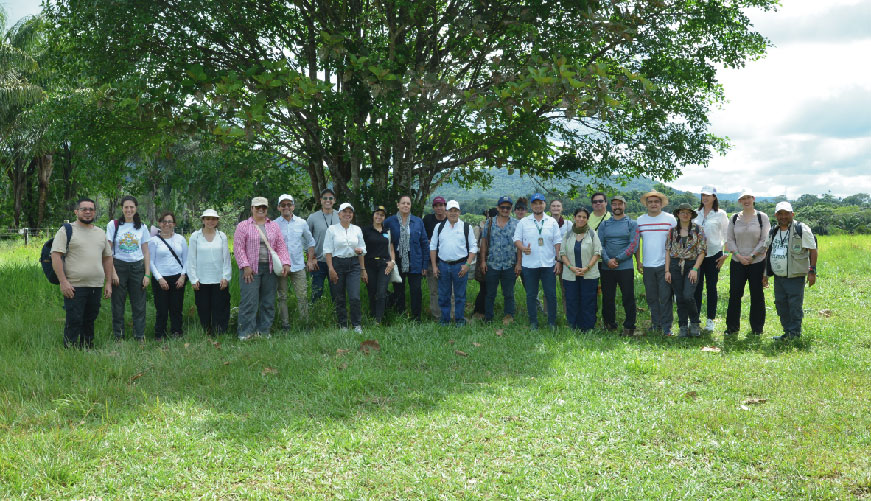
Between November 20 and 22, in San José del Guaviare—the gateway to the Colombian Amazon and a living border between jungle, savanna, and anthropogenic pressures on the landscape—an unusual experience in the country’s recent history took place: a Scientific Immersion Day conceived as a profound exercise in listening, learning, and transformation, rather than just another academic event.
Religious leaders from different traditions, members of Congress and the high courts, scientists from the country’s leading environmental institutes, local and regional authorities, communicators, and young leaders walked together for three days across the same physical and symbolic territory: that of a comprehensive understanding of the Amazon as a living system essential for climate stability, water security, biodiversity, and territorial peace in Colombia.
This immersion did not arise from abstract discourse. It started from a clear and urgent premise: Amazonian deforestation is not a distant or sectoral problem; it is a structural crisis that affects daily life, the economy, health, water, and the future of the country. Understanding it requires leaving our desks, looking at the territory, listening to those who inhabit it, and engaging in dialogue with science where it is produced and applied.
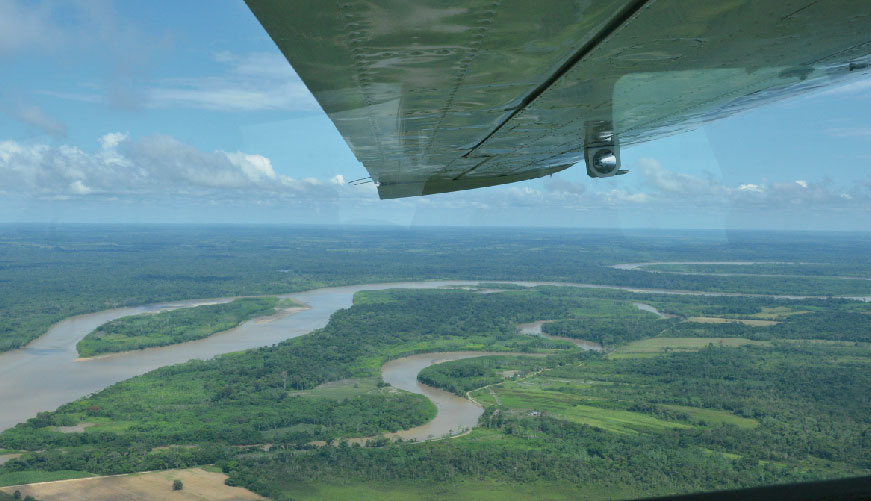
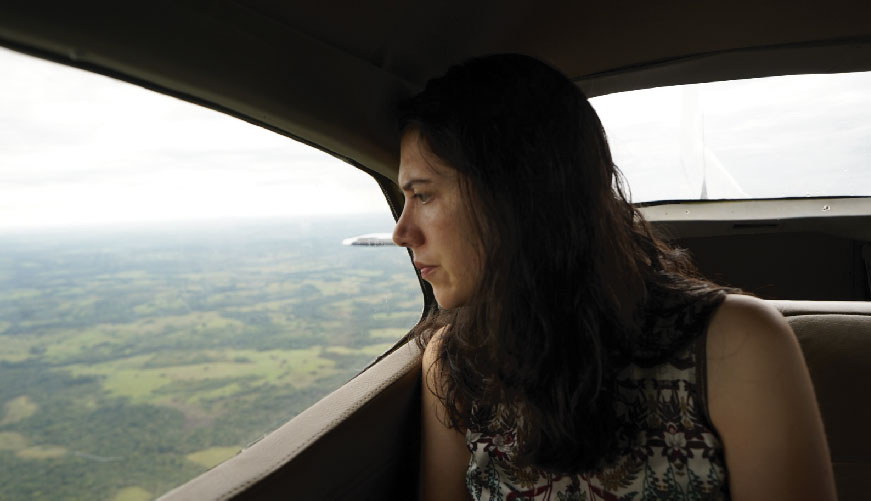
One of the most striking moments of the day was flying over critical deforestation corridors in Guaviare, including transition areas between intact forest and degraded territories. From the air, Amazon deforestation ceased to be a statistical abstraction and was revealed in all its harshness: straight lines opened up by illegal logging, gray patches of recent logging and fires, roads fragmenting ancient ecosystems.
This contrast between living jungle and damaged territory marked a turning point for participants. The science, previously presented in maps, models, and satellite data by experts from the Sinchi Amazonian Institute for Scientific Research, the Humboldt Institute, Visión Amazonía, the National Unit for Disaster Risk Management, and the Corporation for the Sustainable Development of the Northern and Eastern Amazon, then took on a concrete form. The data was transformed into a moral conviction about the urgency of acting to stop the growing degradation of the Amazon biome.
The scientific sessions addressed key issues throughout the immersion: the structural causes of deforestation, its relationship with climate change, the impacts on the water cycle and so-called “flying rivers,” the increased risk of floods and droughts, the strategic role of indigenous territories in protecting forests, and the possibilities—still fragile but real—of an Amazonian bioeconomy that does not destroy what it depends on.
But this was not a one-way transmission of knowledge. It was, above all, an interdisciplinary and intercultural dialogue in which science encountered ethics, spirituality, and pastoral and community experience. Participants reflected on the shared moral responsibility to care for creation, recognizing that the ecological crisis is also a crisis of values, meaning, and relationship with life.
In a country where more than 90% of the population identifies with some religious tradition, faith leaders occupy a unique place in shaping social consciousness. They reach communities where the state does not always have a presence; they speak a language that is familiar, full of meaning, trust, and belonging.
The scientific immersion day was based on a strategic conviction: when religious leaders understand the data on deforestation and climate change, they become powerful allies for the protection of the Amazon. Not as technicians, but as ethical mediators capable of translating complex information into understandable, mobilizing, and deeply human messages.
At the end of the immersion, many of them clearly stated that their sermons, teachings, digital content, and community conversations would never be the same again. They can now explain, with rigor and responsibility, why deforestation intensifies heat, alters rainfall, affects food security, and deepens social inequalities. They can also counter misinformation and false narratives that minimize the climate crisis or present it as an ideological issue.
San José del Guaviare: a territory that speaks
It is no coincidence that the conference was held in San José del Guaviare. This territory, historically ravaged by armed conflict, disorderly colonization, and illegal economies, is now an epicenter of tensions and hopes in the Colombian Amazon. There, the jungle is resisting, but it is also retreating. There, communities are seeking alternatives, but they face enormous structural challenges.
Listening to the region, its local authorities, communities, and scientists was an essential part of the experience. This immersion allowed us to understand that there can be no effective protection of the Amazon without social justice, without the full presence of the state, and without real alternatives for the populations that live in and off the forest.
The IRI Colombia Scientific Immersion Day was not a point of arrival, but rather a starting point. Concrete commitments emerged from it: to strengthen interfaith action for forests, to expand these training processes to other Amazonian territories, to influence public policy with an informed ethical voice, and to accompany communities in building possible futures where life is at the center.
In times of global climate crisis, when cynicism and resignation are tempting, this experience sends a clear message: when science touches the conscience, paths of hope open up. And when faith commits to scientific truth and the care of life, the Amazon—and with it, the country—still has a chance.
The forest is life.
And protecting it is a shared responsibility.