The global environmental crisis is no longer a future warning: it is a reality that cuts across economies, redefines business risks and calls into question the sustainability of current production models. Aware of this turning point, IRI-Colombia is moving forward decisively in collaborative work with the private sector, aimed at broadening understanding of the strategic value of Amazonian tropical forests and promoting business commitments consistent with their protection.
Within the framework of the alliance that it has been consolidating for more than four years with the Bogotá Chamber of Commerce, on December 12 IRI-Colombia held the webinar “Amazon Water Risk and Business Sustainability”, a space conceived not as an isolated event, but as part of a long-term strategy to bring the Amazon to the center of economic decision-making.
The meeting was based on a fundamental premise: the health of the Amazon is directly linked to the productivity, stability and economic security of Colombian companies. The water crisis, extreme weather events, and accelerated biodiversity loss are already affecting supply chains, operating costs, and business competitiveness. Ignoring this reality is not only environmentally irresponsible; it is economically unviable.
During the opening, the director of IRI-Colombia, Blanca Lucía Echeverry, stressed that the Initiative offers an ethical and environmental framework that allows a strategic dialogue with the business sector, demonstrating that halting the loss of biodiversity and promoting sustainable forest management is not a marginal agenda, but an intrinsic component of the country’s socioeconomic stability. In this sense, the seminar sought to build bridges between science, business and values, moving sustainability from the discursive terrain to the field of real risk management.
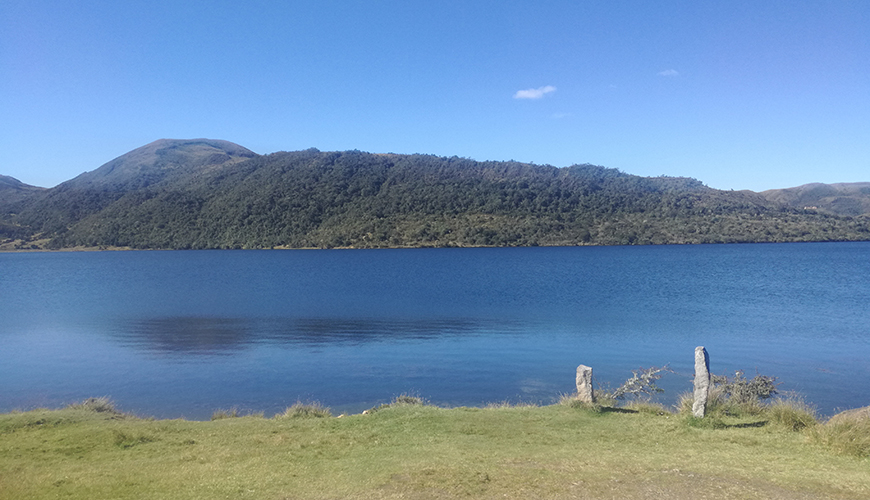
Expert interventions reinforced this message with strong evidence. Natalia Acero, an expert in integrated water resources management at The Nature Conservancy Colombia, explained how the hydrological cycle works as an interconnected system that sustains the economic and social structure of Colombia, and how the effects on Amazonian ecosystems have a direct impact on the Andean region, including the Bogotá Savannah. Their analysis highlighted the growing risks to strategic sectors such as electric power, tourism, dairy and agriculture, derived from land use change, deforestation and climate change.
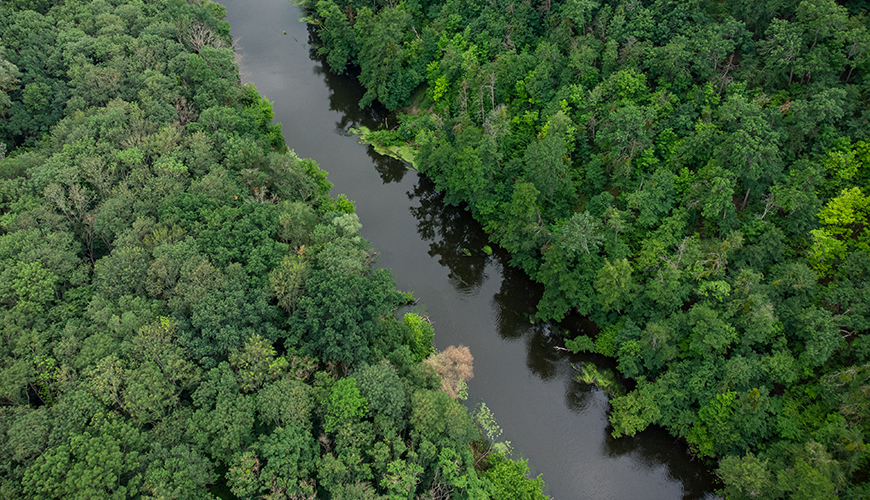
Business Resiience, Competitive Advantage
The scientific reading was complemented by Javier Eduardo Mendoza, a consultant in sustainability, climate change and biodiversity, who raised a forceful idea for the business world: it is not possible to manage a company with your back turned to the global environmental crisis.
According to Mendoza, the triple environmental crisis – biodiversity loss, climate change and pollution – is already straining production chains and must be explicitly incorporated into corporate risk matrices. For the expert, territory is not an external variable, but a central axis of business resilience and a potential source of competitive advantages when integrated strategically.

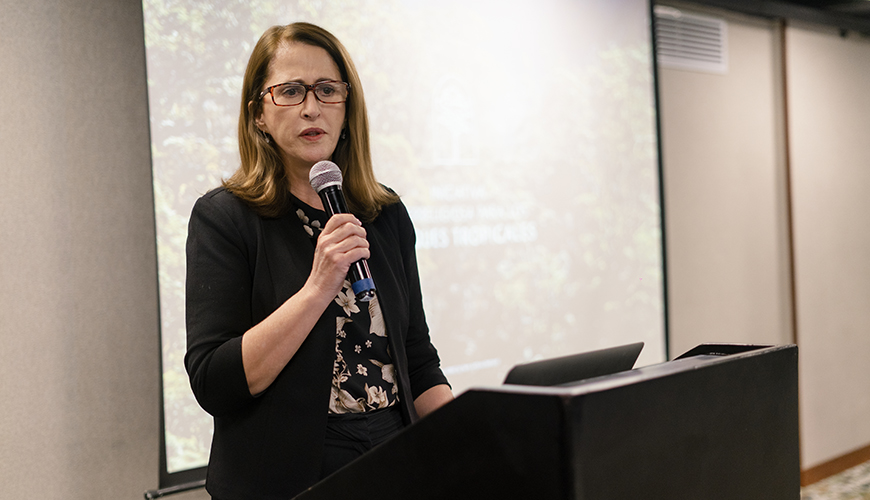
The seminar closed with a reflection that raised the conversation to a deeper level: the ethical dimension of the economy. Reverend Loida Sardiñas, Ph.D. in Theology and professor at the Pontificia Universidad Javeriana, addressed the concept of the economy of the common good, inspired by the social magisterium of Pope Francis, particularly in the encyclicals Laudato Si’ and Fratelli Tutti. His speech invited us to rethink the dominant economic model and move towards an economy “with a soul”, focused on human dignity, decent work, care for the environment and the inclusion of the most vulnerable.
With this seminar, IRI-Colombia reaffirms a strategic conviction that runs through its global work: the transformation of the economic model will not be achieved only from regulation or public policy, but also from the business decisions that today define the use of the territory and the limits of the planet. By consolidating spaces for dialogue with the private sector, based on science, ethics and evidence, the Initiative helps companies understand that protecting the Amazon is not only a moral imperative, but a condition for Colombia’s economic and social sustainability.
This sustained work with the private sector positions IRI-Colombia as a reliable bridge between business, science and values, and as a key player in building a future where the economy listens to the Amazon before it is too late.
 Reverend Loida Sardiñas, priest of the Anglican Church and professor at the Pontifical Xavierian University.