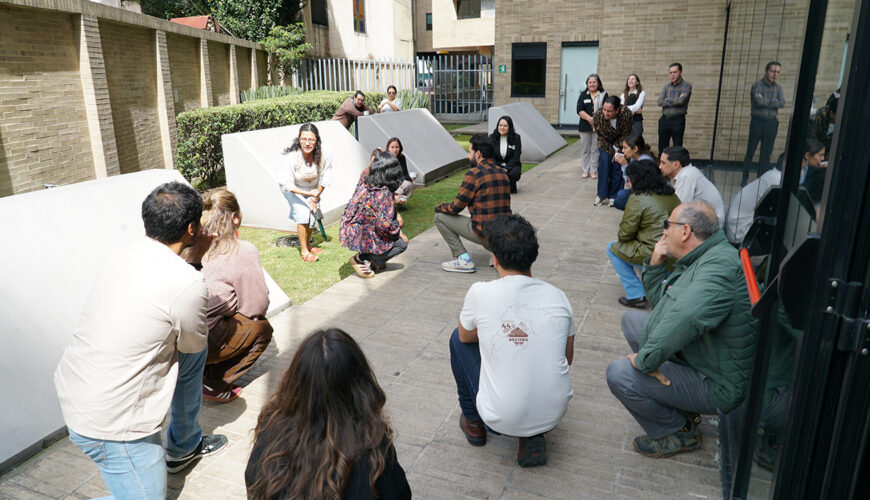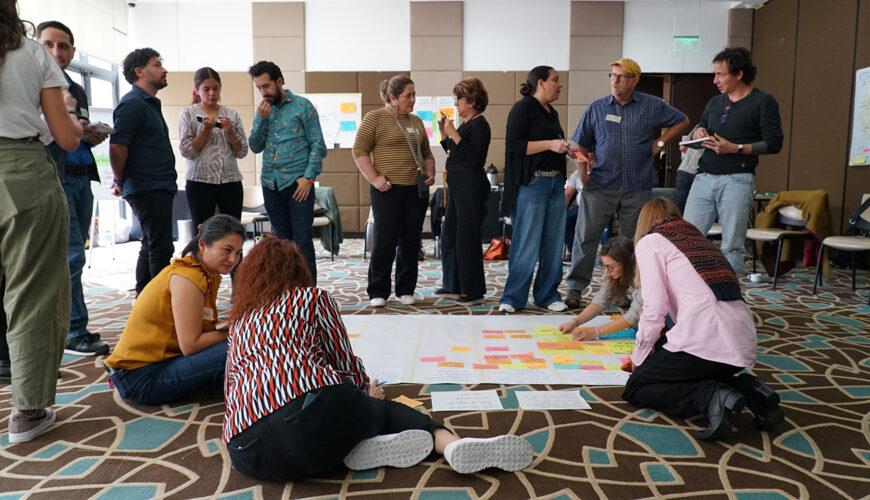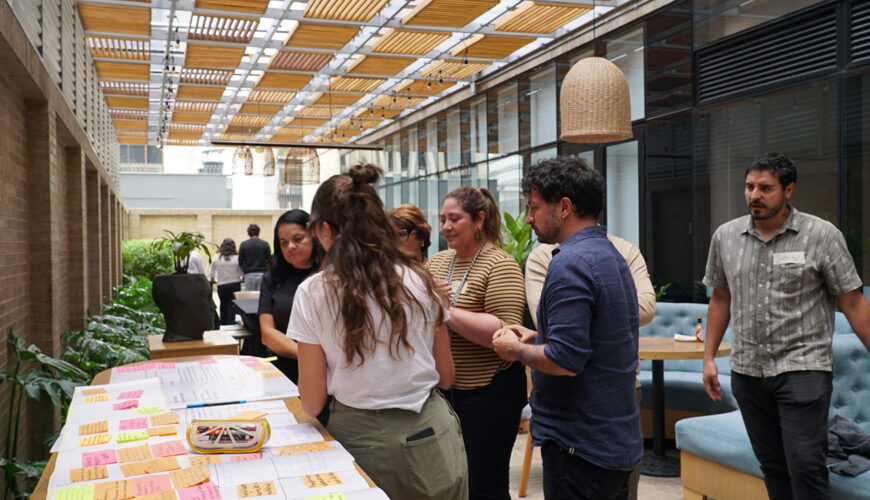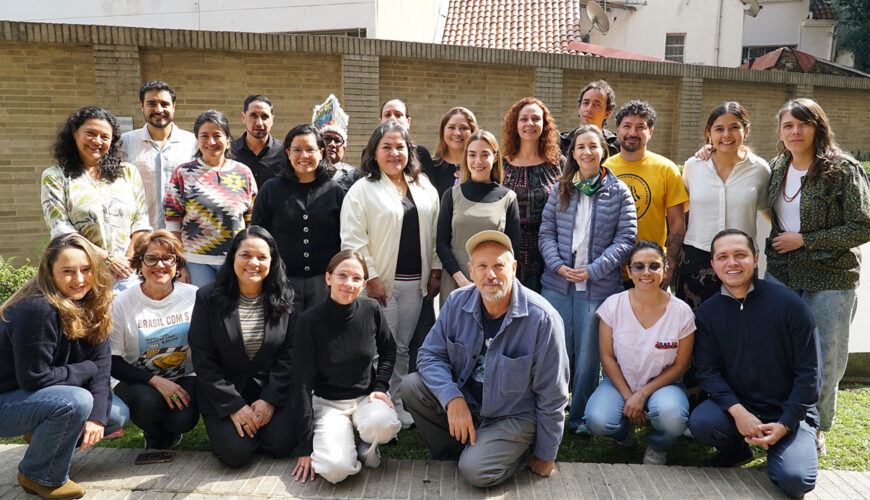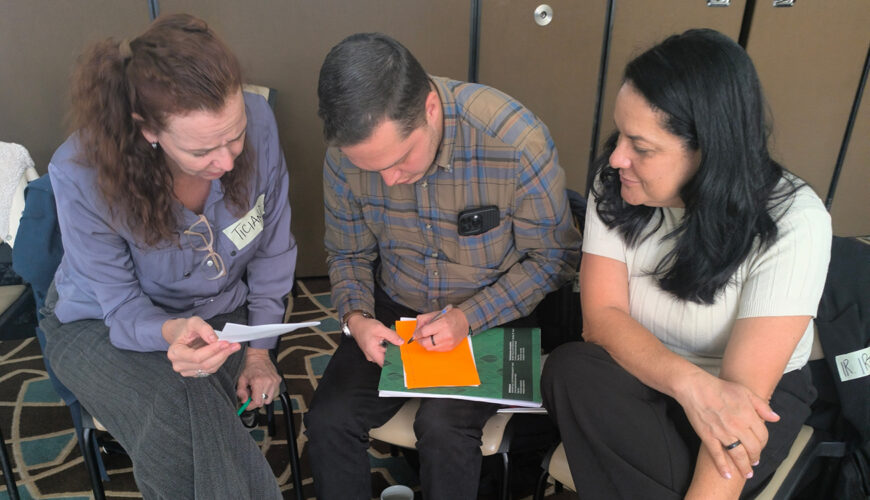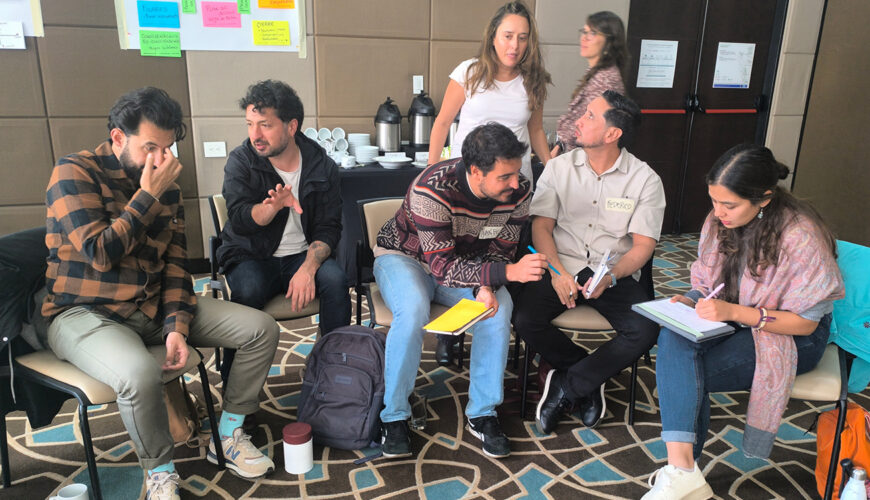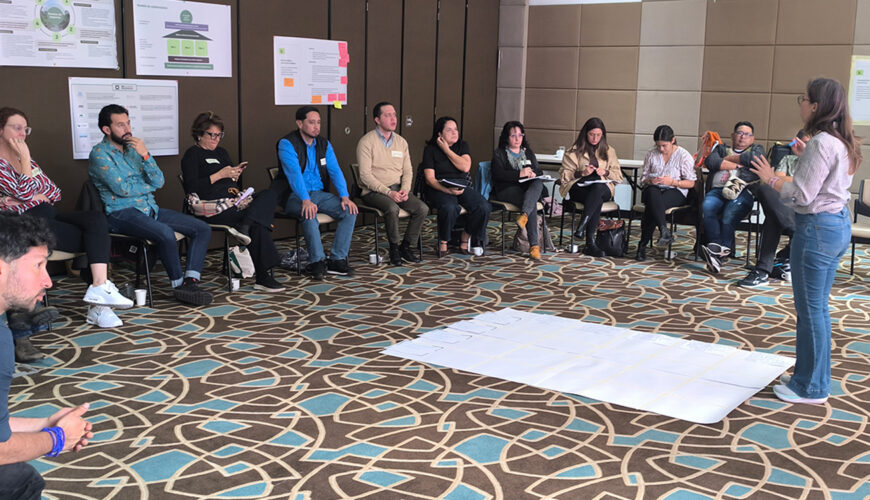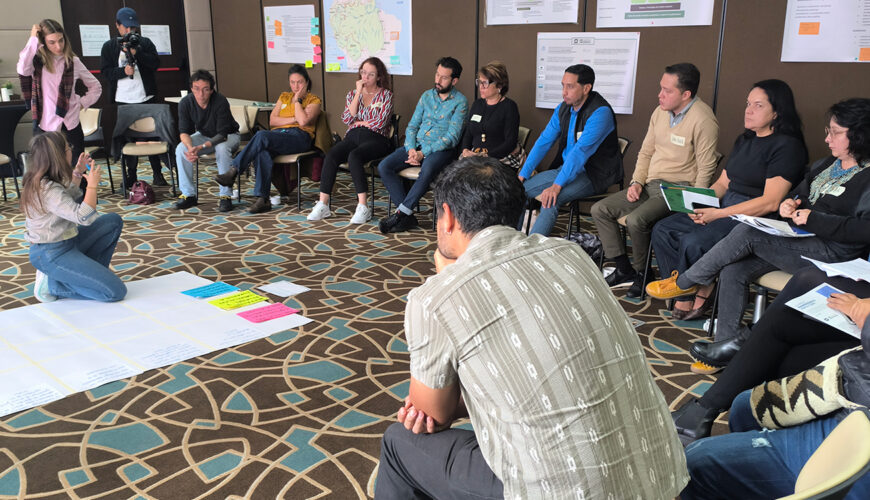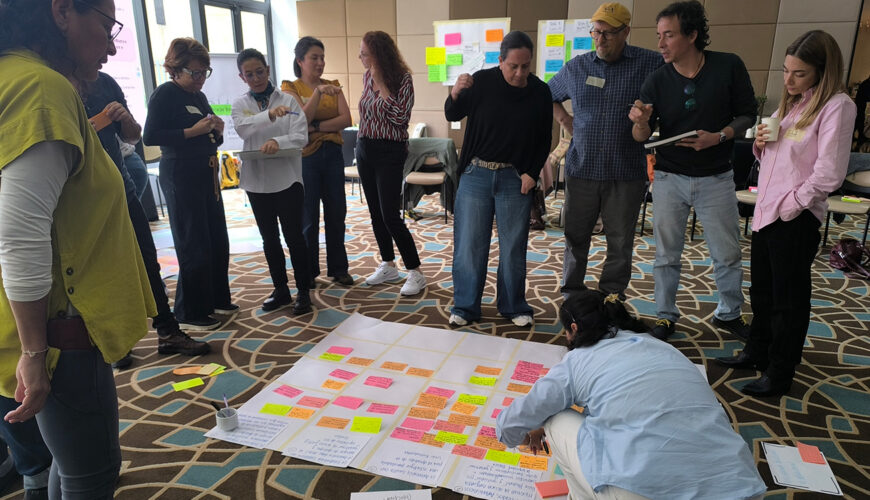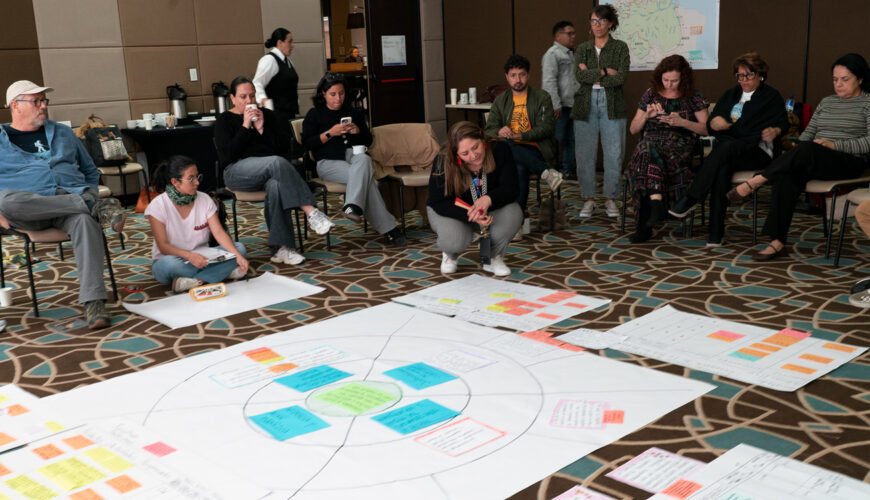
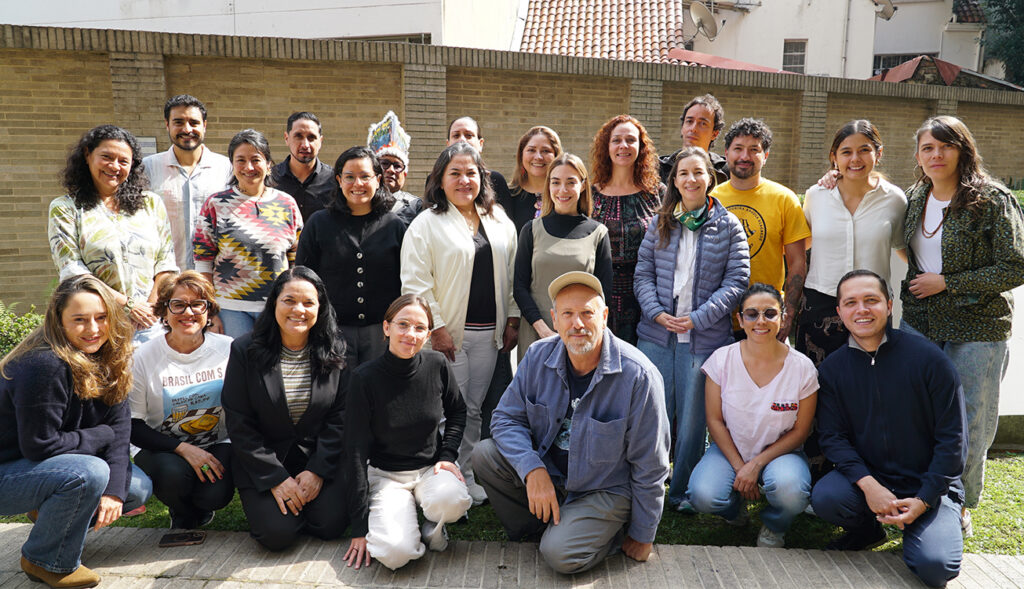
IRI-Colombia participated in the third Meeting of the Amazon Network of Networks, which brought together representatives from 13 civil society and indigenous peoples’ networks in Bogotá to rethink and reflect on the structure and future of this important alliance through a co-creation exercise. Although the Amazon Network of Networks was launched last year in response to the urgent need to promote issues of vital importance to the Amazon in international forums such as the 5th Summit of Heads of State of the Amazon Cooperation Treaty Organization (ACTO) and the United Nations Climate Change Conference (COP30), it was crucial to establish the roadmap that will guide the Network’s work over the next two years, guided by the five key points included in the Pan- Amazonian Climate Pact, presented to Amazonian heads of state last year.
Over the course of three days (March 23–25), representatives from the networks—hailing from the nine Amazonian countries—reflected on topics such as advocacy, research and knowledge management, communication, and territorial coordination, with the aim of establishing the Network’s vision, which will inspire and serve as a compass for strategic planning and decision- making, and to jointly define the mission, governance, values, pillars of work, and the 2026–2027 action plan.
Promoted by the Pan-Amazonian Institute, the Network of Amazonian Networks is made up of key nodes such as the Interfaith Initiative for Tropical Forests, Escucha la Amazonía, the North Amazon Alliance, and the Panel of Scientists for the Amazon. Together, they represent more than 600 organizations and 300 scientists, addressing a wide variety of issues, yet all with the common goal of working for the stability of the biome. With the consolidation of this broad coalition, each of the networks hopes to intensify the impact of its work to safeguard the Amazon in all its forms of life.
Read the full issue of the IRIboletin here (in Spanish).
 The Amazonian Network of Networks encompasses around 650 organizations and more than 300 scientists.