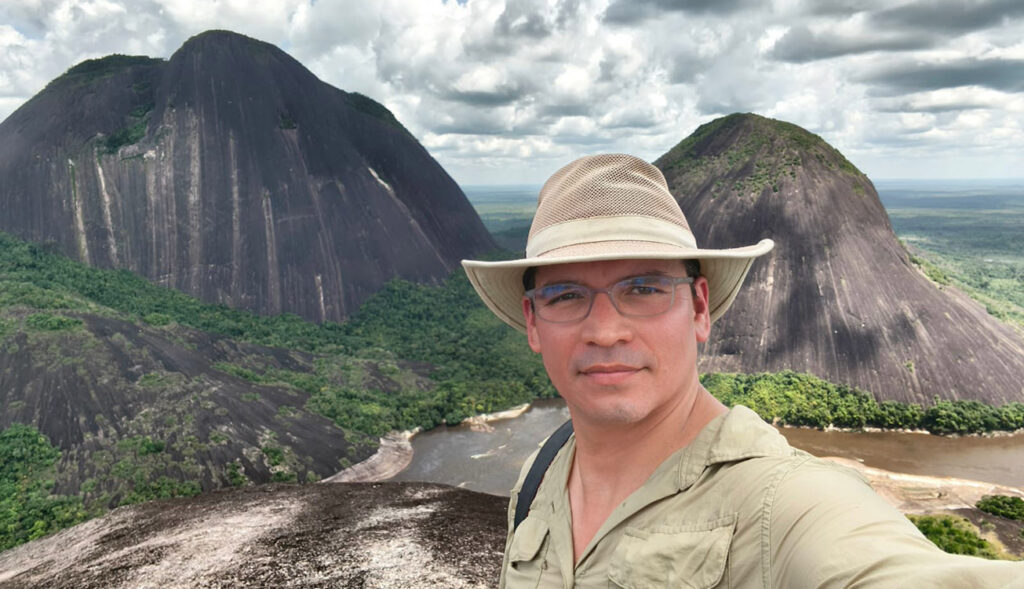
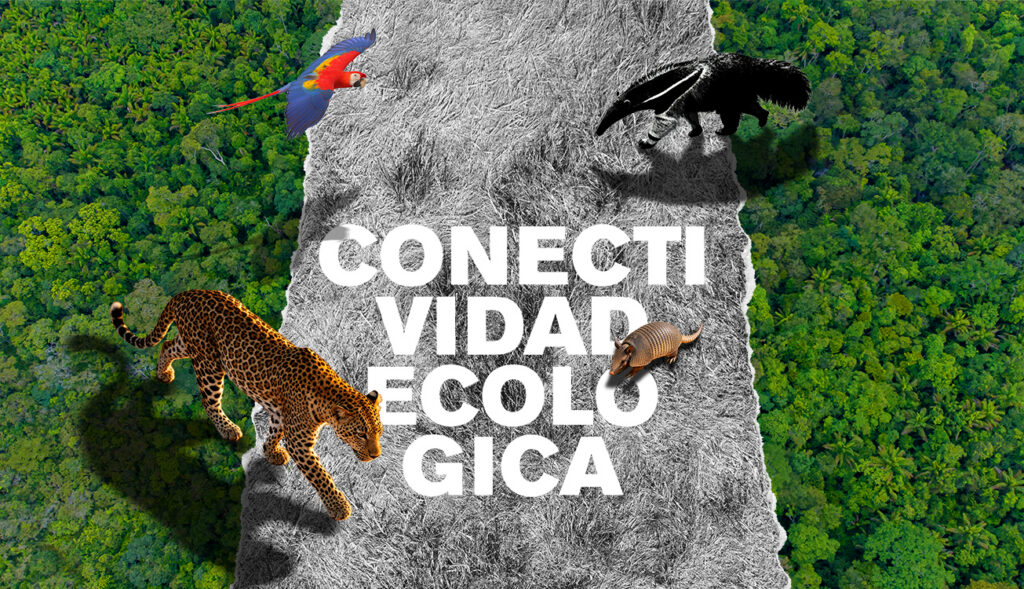
From the movement of animals from one place to another to the transport of moisture between the Amazon and the Andes, many natural processes depend on connected ecosystems. Biologist Laín Pardo explains what ecological connectivity means and why its loss poses a risk to biodiversity and the climate.
A jaguar may travel miles through the jungle to find food or a mate. If roads, pastures, or cities appear along its path, that journey becomes increasingly difficult. The same is true for many other species that depend on continuous forests to survive. When ecosystems become fragmented, animals, plants, and even water and nutrient flows lose the ability to connect. This ability of landscapes to maintain these connections is known as ecological connectivity, a key concept for understanding the health of tropical forests. To understand why this connection is fundamental to life in ecosystems, we spoke with Laín Pardo, a biologist and biodiversity specialist at WWF Colombia. Drawing on his experience in research and conservation, he explains what ecological connectivity means, how it is affected by human activities, and why protecting it is essential for the future of forests and the species that depend on them.
What is ecological connectivity?
This concept refers to a landscape’s ability to facilitate or impede the movement of the animals or organisms that inhabit it from one segment of the forest to another. A landscape is an expanse of land where different elements can be identified, such as segments of a fragmented forest. The spaces between one segment and another are called the matrix; it has a series of specific characteristics and consists of various land uses in addition to forestry, such as agricultural, urban, commercial, or extractive.
What should be taken into account when studying the ecological connectivity of a landscape?
Many aspects. It is necessary to consider the distance between forest segments, the characteristics of the matrix, and the type of organism moving through the area, among other things. Not all organisms respond in the same way to the same landscape or the same matrix. For example, it won’t be difficult for a jaguar to travel 2 km between one forest patch and another; but it won’t be the same for an armadillo, a peccary, or a caiman. Similarly, it’s not the same if the organism must cross an area where agriculture or extractive activities take place, or if it’s an urban environment or a biological corridor.
Does ecological connectivity apply specifically to animals?
Although it is usually associated with terrestrial animals because they are easier to study, connectivity also applies to aquatic organisms, insects, plants, etc. For example, if a dam is built on a river, the aquatic system will become fragmented and organisms will lose that connection, which will affect their biological cycles such as reproduction, migration, etc.

Why is it important for systems to be connected rather than isolated?
The main reason is to maintain diversity, genetic variability, and associated ecological processes. Wild organisms often leave their usual habitat to reproduce; if the landscape is highly fragmented, they become isolated and unable to find mates, which limits their reproduction.
This is a problem that won’t be evident in 10 or 20 years, but much later, when these same organisms become more susceptible to disease or lose their ability to adapt to the system, due to the limited gene flow that occurs in isolated populations.
What happens to animals and plants when forests become fragmented?
One consequence of fragmentation is the disruption of reproductive processes, which can lead to fewer individuals and even the loss of species. If an oak or another species drops its seed and it cannot find a forest to grow in—that is, a river to carry it to a better place or an animal to transport it and allow it to germinate elsewhere—its only fate will be to die, and there will be no new oak.
What is the impact of roads on ecological connectivity?
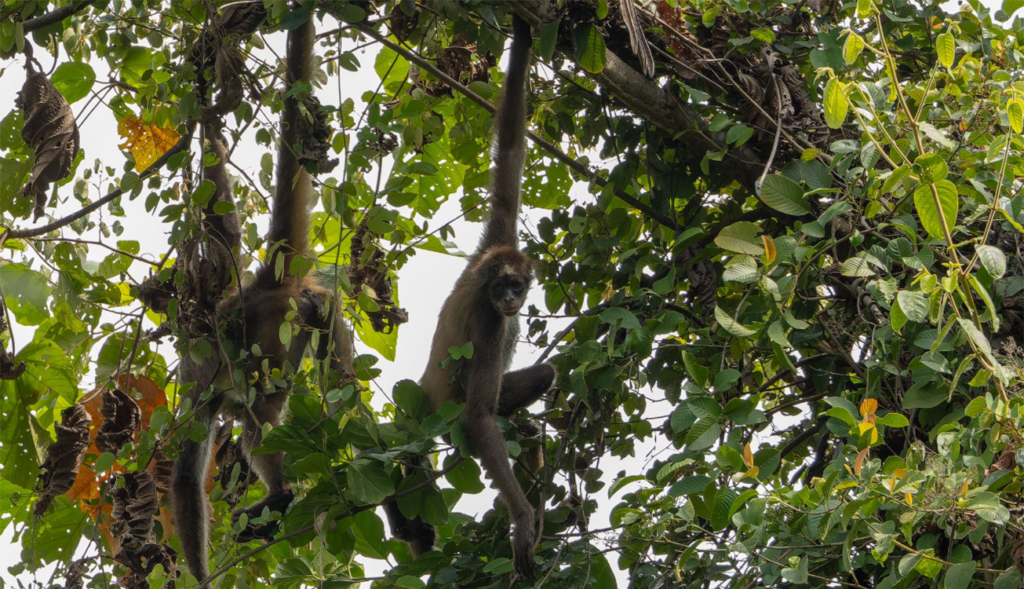
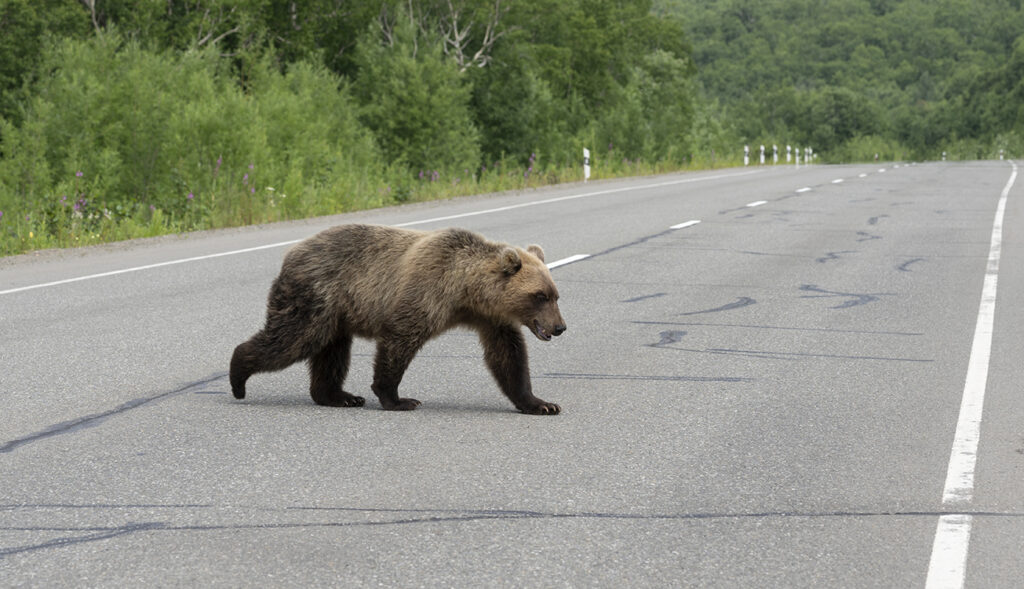
It is more complicated when fragmentation is caused by road construction, because even though it only appears that a small piece of habitat is broken, the consequences are greater. On the one hand, it creates a natural barrier to the movement of certain species, reducing the connectivity of that landscape. And, on the other hand, this disruption of the habitat can also make it easier for some animals to cross the roads—particularly rural ones—and get hit by cars, as happens with turtles, sloths, and anteaters.
These roads are easier for them to travel because they are clear and well-lit; for this reason, some prefer to use them rather than move through areas with branches and vegetation that offer them protection. In Antioquia alone, according to the Colombian Wildlife Monitoring Network (Recosfa), nearly 600,000 animals are struck by vehicles each year.
But the impact goes further. A road can provide greater access to hunters or allow the entry and spread of diseases and pathogens to which the community in that fragment may not be adapted.
Does connectivity only occur between nearby patches?
We speak of connectivity at different scales. A spectacled bear in Chingaza may eventually travel to other páramos or mountain ranges and influence that environment. Similarly, evapotranspiration from the Amazon can affect the Andean region, which would be classified as a macro-scale in terms of connectivity.
What is an ecological corridor?
It is a strip that can improve connectivity between patches. It does not have to be continuous, as it depends on the landscape configuration and the characteristics of the matrix. There are also artificial elements, such as wildlife crossings built over roads, that allow for connection.
What is the relationship between ecological connectivity and water?
Let’s talk about the Amazon and its connection to the Andean region. “Flying rivers” are the result of vegetation transpiration in the Amazon region, which can generate four liters of water vapor per square meter daily. Considering that the Amazon covers an area of 750 million hectares, we’re talking about 30 trillion liters.
This vapor is transported westward and reaches the Andes, where it falls as rain and supplies between 20% and 30% of the Chingaza system.
Connectivity allows these macro-processes to continue functioning as a single unit. If the entire system were fragmented, it likely would not be able to accumulate four liters of water per square meter, but much less.
Similarly, there are more local examples related to water pollution. If a road fragments a water ecosystem, it can impede the natural flow of water or cause it to carry sediment that would normally remain within the leaf litter. If there is also a nearby agricultural area, the sediment can concentrate residues such as fertilizers, causing the eutrophication of ponds and bodies of water. This is an excess of nutrients in the water, which causes excessive algae growth and reduces available oxygen, affecting biodiversity and water quality.
Forests help capture carbon, regulate the climate, and protect biodiversity. All these functions are interconnected and form a fragile cycle that can break down when the forest loses its connectivity.
What is the connection to the climate?
More than the Earth’s lungs, the forest is its air conditioner. If that system’s “vents are blocked”—that is, if the ecosystem is fragmented or deforested—the forest’s effectiveness in regulating the planet’s climate diminishes, because in addition to cooling the environment, it helps maintain stable temperature patterns and, consequently, less abrupt weather phenomena.
For this reason, its degradation contributes to climate variations occurring with greater frequency, intensity, and magnitude. A phenomenon that previously occurred every three years could now occur every year or last longer.
What human activities disrupt this connectivity?
In addition to infrastructure construction—roads and highways, for example—mining has a major impact on connectivity due to the high profitability of gold. Not only because it is a driver of deforestation, but also because of soil extraction, which generates sediment, and the use of chemicals such as mercury, which affect biodiversity and contaminate water. Similarly, agriculture, livestock farming, and illicit crops also contribute to fragmentation and habitat loss.
Why is the Amazon key to ecological connectivity on a regional and global scale?
Because it would affect carbon sequestration, climate regulation, and moisture transport to the Andes. At this moment, the Amazon is facing a massive degradation process and is approaching a point of no return, beyond which the effects will be irreversible. Today, the Amazon biome is about 17% fragmented, and scientists estimate that the tipping point lies between 20% and 25%. Therefore, it is imperative to prevent deforestation; otherwise, all the functions of this forest will be affected, and thus the very survival of humans would be put at risk.
Most of the Amazon biome is located in Brazil, which accounts for about 60%, along with eight other countries that share it, including Colombia, which accounts for about 10%. For this reason, connectivity among all these territories is essential, and the ecological processes that occur—or fail to occur—have global-scale effects.
How are the Amazonian forests connected to one another?
Through the continuous vegetation and forest cover, via rivers, and also through gallery forests, which are not as wide as the Amazon rainforest but are linear, running along riverbanks and enabling this connectivity between countries. Also through animal migration or biological corridors.
What happens when the connection between the rainforest and other ecosystems is broken?
Sometimes, we overlook the fact that species are involved in broader processes—not just those related to the food chain, but a series of energy and nutrient flows. If that connection is missing, these processes are disrupted. The dispersal of seeds and animals, as well as the flow of nutrients and species, are affected. This impacts biodiversity, both in terms of the number of species and the abundance of individuals within each species. For example, high temperatures and the delayed arrival of rains due to climate change cause some species, such as toads and frogs, to climb higher into the mountains to find an environment conducive to survival. If there are no connected patches for them to move through, they could die from disease or because they struggle to find resources, or become extinct by failing to find a mate.
There is also the issue of water. Remember that if connectivity between the Amazon and the Andes is damaged, flying fish will be unable to move and reach Chingaza, affecting water availability across much of the territory.
What strategies exist to restore ecological connectivity in tropical forests?
There are different strategies, depending on the level of disturbance or the factors that caused the fragmentation. The construction of wildlife crossings helps minimize the road-edge effect (ecosystem disturbances in the contact zone between the forest and the road) or the risk of an animal being hit by a vehicle. They can be aerial, such as suspension bridges for wildlife, or terrestrial, such as tunnels installed under roads.
There are also private reserves that create a kind of “island” where the passage of organisms is facilitated through areas dominated by human activities.
Another strategy is the implementation of carbon credits, which aim to incentivize the conservation of forested ecosystems. However, they are heavily criticized because, although producers and industrialists pay for the negative effects of their emissions, they do not necessarily reduce them. If the goal were truly to offset those emissions, the first step would be to prevent them.
What role do indigenous and local communities play in maintaining this connectivity?
In very general terms, indigenous communities manage to conserve the forest areas under their care. They function almost like nature reserves, as they maintain that buffering capacity on a landscape scale.
The recognition granted to indigenous communities in Colombia is very important, because by recognizing their rights (not very common in all countries around the world), they achieve autonomy within their territories. This allows for freedom in decision-making and governance processes that combine traditional knowledge with other disciplines.
What are the main threats facing the Amazon in terms of preserving its ecological connectivity?
In Colombia, as well as in Brazil and Ecuador, the presence of illegal groups poses a major threat. For example, a road built by an official entity takes into account parameters to minimize environmental impact, but an illegal one does not. It is estimated that around 589 km of illegal roads have been built in Colombia’s natural parks. Tinigua has around 308 km and Macarena 150 km.
Likewise, livestock ranching is an obstacle to preserving connectivity. This has been felt most strongly in Guaviare and Caquetá, as there are interests from many groups, including economic sectors.
In response to this, conservation initiatives are emerging, such as those carried out by organizations like WWF, the government, and other stakeholders in the Amazon and Orinoquía regions. These are projects focused on capacity building, whether to assist with monitoring and data coordination—for example, by teaching the proper use of camera traps—or by conducting workshops to strengthen governance and leadership.