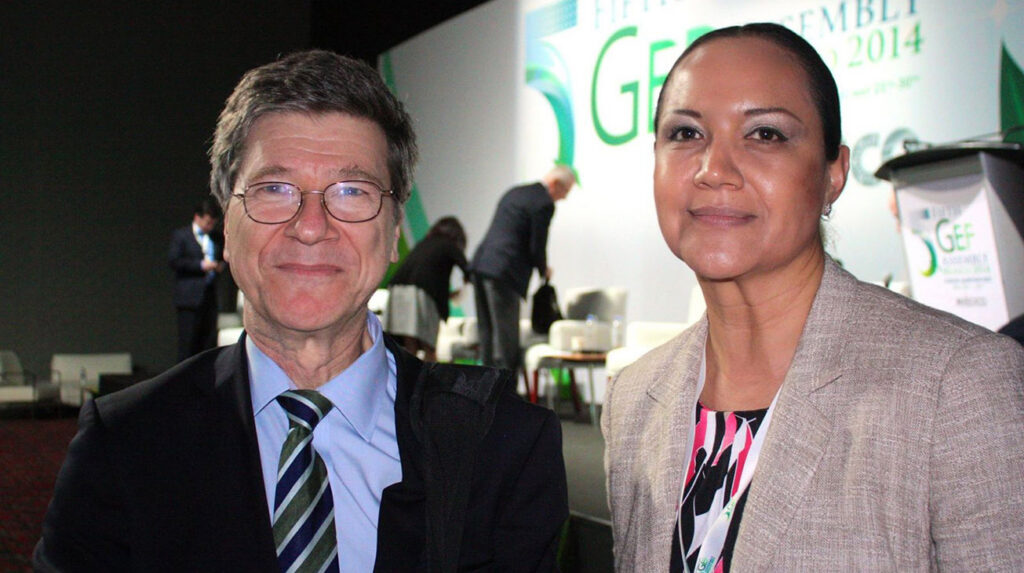
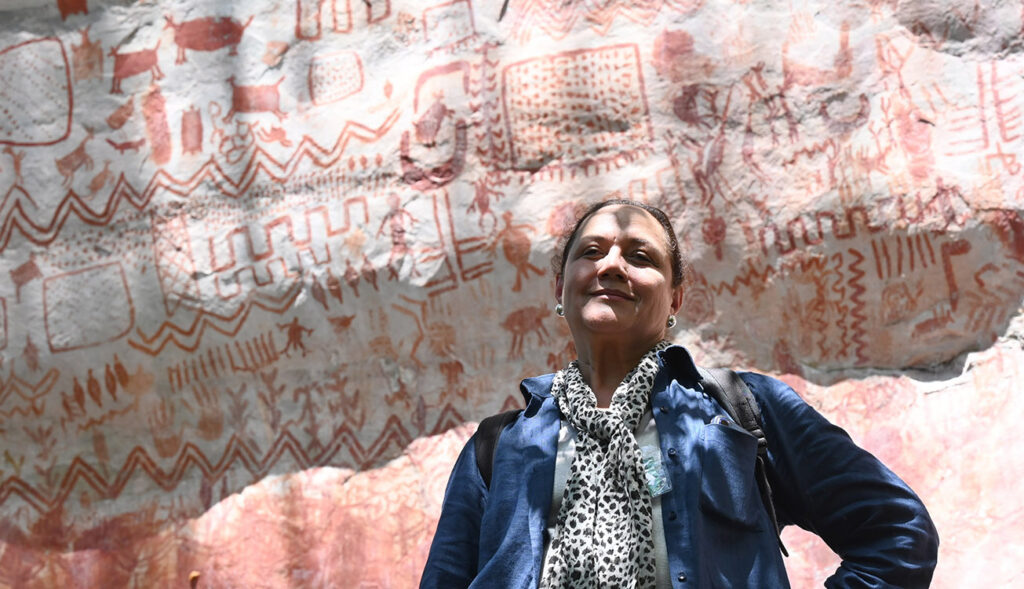
Dolores Barrientos Alemán, UNEP’s representative in Colombia and the organization’s delegate to the IRI Colombia Advisory Council, discusses the urgency of protecting the Amazon from an ethics of care perspective. In this profile, the expert reflects on the role of faith leaders as moral guides to transform consumption habits and safeguard the integrity of our common home.
“IRI’s vision is fundamental. Those who degrade these vast global ecosystems are human beings who make the decision to destroy these forests for productive activities. But these people have a sense of values, and that is where this project is aimed—at a shift in consciousness and behavior,” says Dolores Barrientos Alemán regarding the approach of the Interreligious Initiative for Tropical Forests, an organization founded by the United Nations Environment Programme (UNEP).
While IRI was officially launched in Oslo in 2017, the environmentalist was UNEP’s representative in Mexico, a position she held for thirteen years and where she led projects on biodiversity, climate change, governance, renewable energy, the circular economy, and plastic pollution, as well as the elimination of mercury in mining and the industrial sector, among others.
Despite her commitment to the environment, her career did not begin in forests or coral reefs, but in the cold corridors of development banking. “At one point, I made one of the most important decisions of my life,” says the economist from Tecnológico de Monterrey and holder of a Master’s in Public Administration from Harvard University, who more than fifteen years ago decided to contribute her knowledge and experience in the world of finance to the fight for the protection of the planet.
Her professional journey reflects the evolution of modern finance, a landscape in which the economy can no longer thrive at the expense of nature.

For more than ten years, she worked in the international finance division of Mexico’s National Foreign Trade Bank (Bancomext). Immersed in balance sheets and credit and investment projections, she began venturing into carbon markets in the early 2000s, a time when people were just beginning to talk about climate change.
“Although there is a sustainable project behind carbon credits, at the end of the day it is a financial mechanism,” explains the Mexican, who quickly understood the urgency of integrating the value of environmental sustainability into capital decisions.
This new perspective on finance and a “providential” encounter with Dr. Mario Molina—a scientist awarded the Nobel Prize in Chemistry in 1955 for demonstrating that CFC gases destroy the ozone layer, a discovery that spurred the Montreal Protocol —were the impetus she needed to immerse herself fully in environmental issues and proved crucial when she led the creation of the Mexican Carbon Fund (Fomecar), a tool created by Bancomext, the Mario Molina Center, and Mexico’s Ministry of the Environment, where the economy was, for the first time in a systemic way, put at the service of climate change mitigation.
“It was necessary to support Mexican companies that wanted to register carbon credits through a process developed by the United Nations, which was very costly,” says the economist, who managed to secure donations from Bancomext and the German government to launch the fund.
As part of Fomecar’s Technical Committee, she had the opportunity to review and promote projects related to reforestation, energy efficiency, and methane capture in the agricultural sector, among others. That was when she made the decision: “It was very scary. Even today, many people don’t know what climate change or carbon credits are; 20 years ago, it was like going to Mars. But I decided that my work should have a much more noble goal than just making money for a bank,” she states.
From the Mexican Altiplano to Andean-Amazonian biodiversity
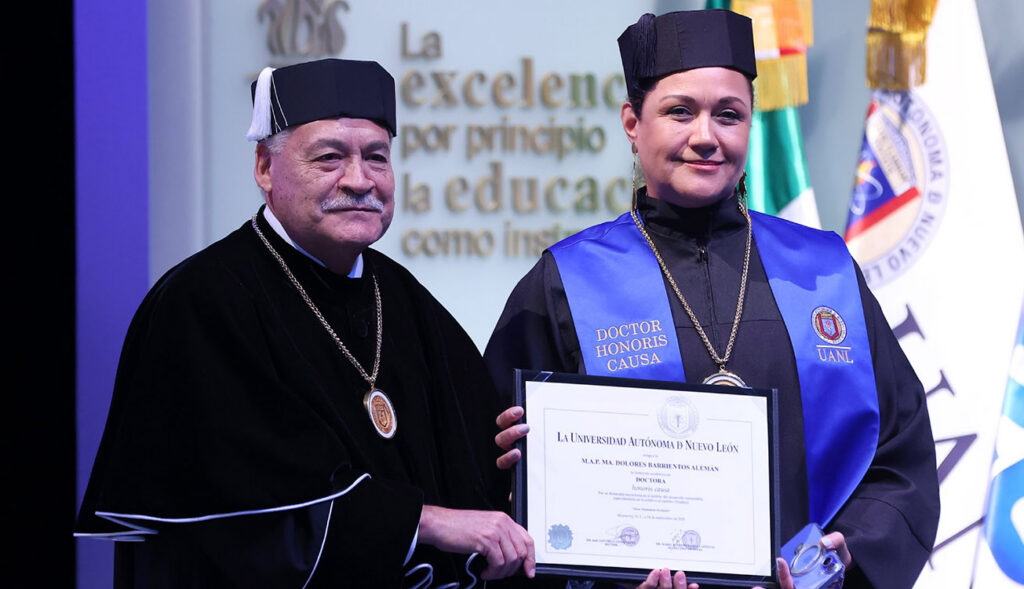
Honored by one of Mexico’s most prestigious universities, the Autonomous University of Nuevo León, with an honorary doctorate for her contributions to environmental stewardship, the fight against climate change, and sustainable development, Dolores Barrientos Alemán currently leads UNEP in Colombia, serves as the organization’s focal point for Ecuador, Peru, and Venezuela, and a member of the Advisory Council of the Interreligious Initiative for Tropical Forests (IRI-Colombia).
In February 2025, she arrived in the country from Mexico, where she founded and directed the UNEP office for 13 years. During this first year of work in Colombia, she has had the opportunity to travel throughout nearly the entire country and has dedicated herself to getting to know her counterparts and understanding the workings of institutions—public, private, and civil society.
“In Mexico, we’ve had numerous projects funded by international grants, but we started from scratch. In Colombia, we’re at that stage—just getting started,” says the economist, who has participated in some of the activities organized by IRI-Colombia, such as the political forum “Congressmen for the Life of the Amazon.”
Ethics for Our Common Home
In the words of the expert on climate change and renewable energy for the United Nations Environment Programme, IRI is a flagship project on a global scale. Since its creation in 2017, UNEP has supported this platform designed to enable churches and religious leaders worldwide to help protect tropical forests through a completely different lens: that of ethics and spirituality.
For the environmentalist and financial expert, the great potential of faith leaders’ work to care for nature lies in their ability to touch consciences and bring about behavioral change.
“Having the humility to recognize that the human species is simply one of millions of species on the planet is a first major step. Religious leaders help us with that,” she explains. Another urgent step, she warns, is to transform our consumption habits and reverse hyper-consumerism, which, according to various expert reports such as the Global Environment Outlook, produced by UNEP, is one of the main drivers of the planet’s environmental crisis.
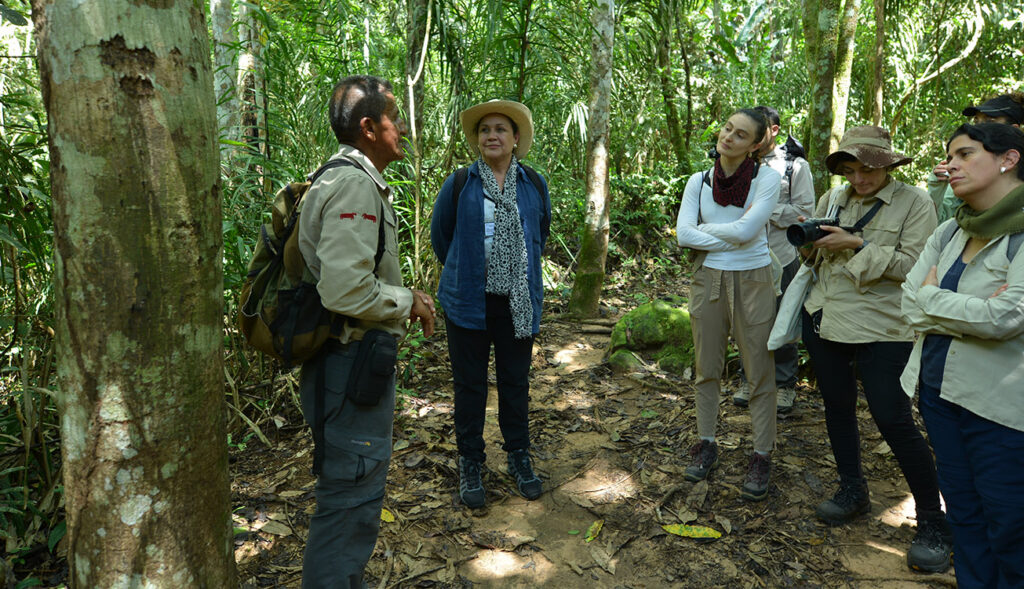
In addition to marveling at the majesty of the Colombian Amazon rainforest and witnessing firsthand the impact of deforestation on the Guaviare forest during the Scientific Immersion in the Amazon organized by the Initiative last year, he was able to see up close the potential of local leaders to become guardians of the biome.
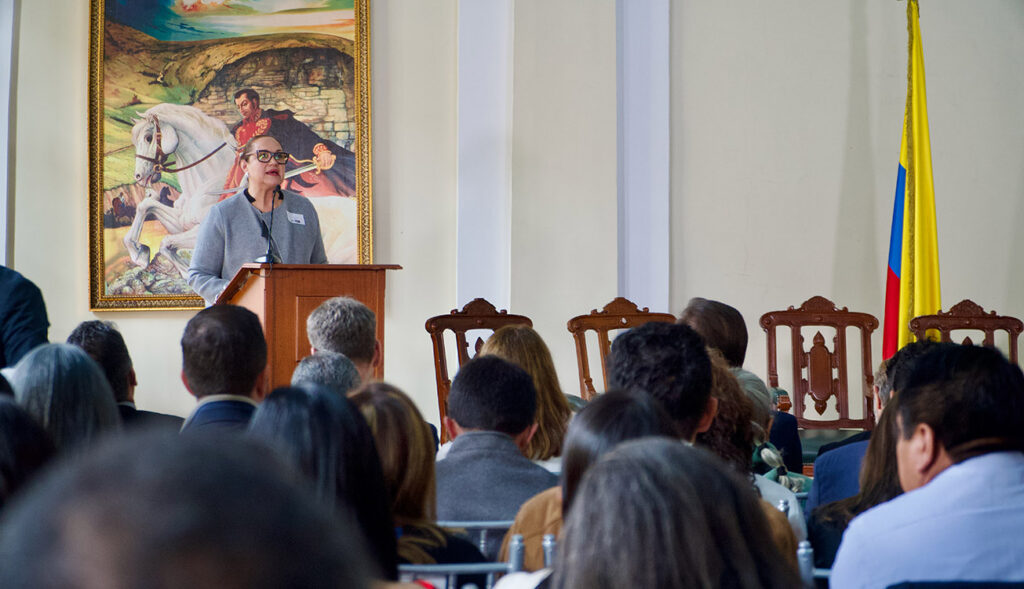
“IRI-Colombia has consolidated its presence; it has helped these religious and community leaders recognize the importance of their work in caring for the environment, but also feel like an important part of this project,” he notes.
Her expectations for the next three years of IRI-Colombia focus on consolidating legislative advocacy that promotes and ensures the protection of Amazonian forests and the control of deforestation, as well as strengthening local capacities.
The expert is confident that IRI’s local chapters in the Colombian Amazon will achieve their own cohesion. This strengthening will allow communities to stop viewing the tropical forest as a mere resource and recognize it as the essential heritage that sustains their health, well-being, and deep-rooted identity, and will drive them to actively safeguard the planet.
“The Earth is our common home,” she emphasizes. For the environmentalist, caring for it means acting with a responsibility that transcends her own generation.
The legacy she seeks to build in this new professional phase in Colombia is to support the development of an economy that respects and cares for the country’s vast natural wealth. She understands that the care, conservation, and sustainable management of tropical forests require both sound budgets and unwavering faith and awareness, and her financial perspective provides the necessary structure for environmental projects to be viable and sustainable over time.
Through her professional career, Dolores Barrientos Alemán demonstrates that there is no contradiction between the economy and ecology when both are oriented toward the common good.
“There will always be people and institutions that recognize the great importance of the Amazon for Colombia and the planet,” she concludes, addressing members of IRI-Colombia’s local chapters in remote jungle locations and reaffirming a personal and professional commitment to the Amazon and its leaders—a commitment from which there is no turning back.
Read the full issue (in Spanish) of the IRIboletín here.