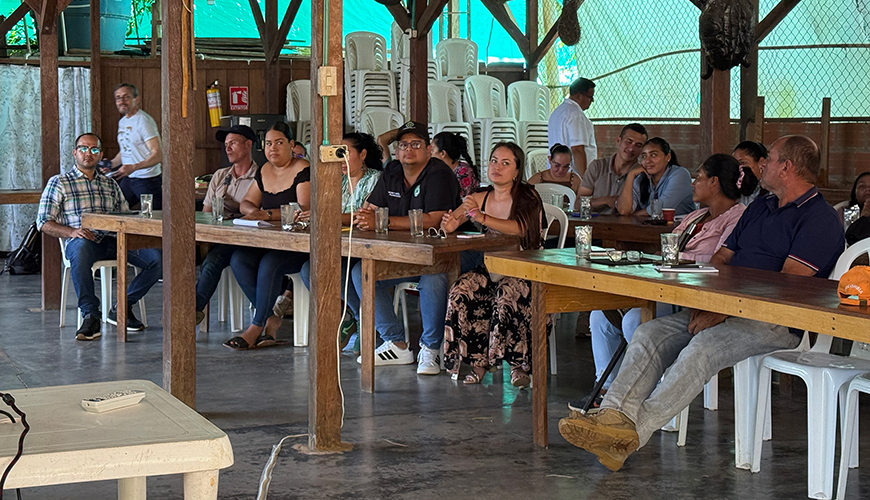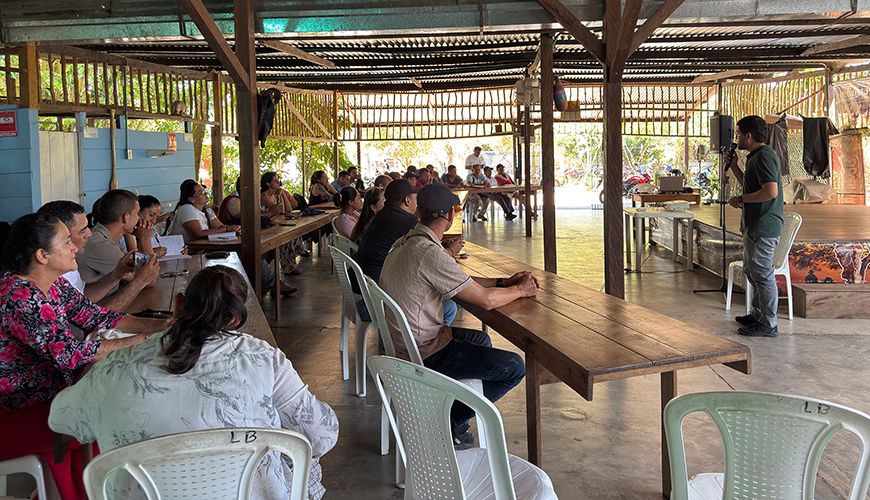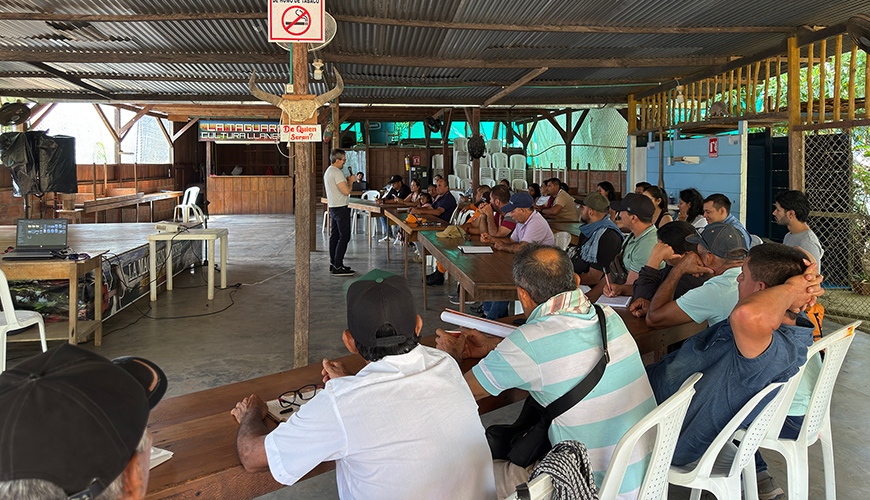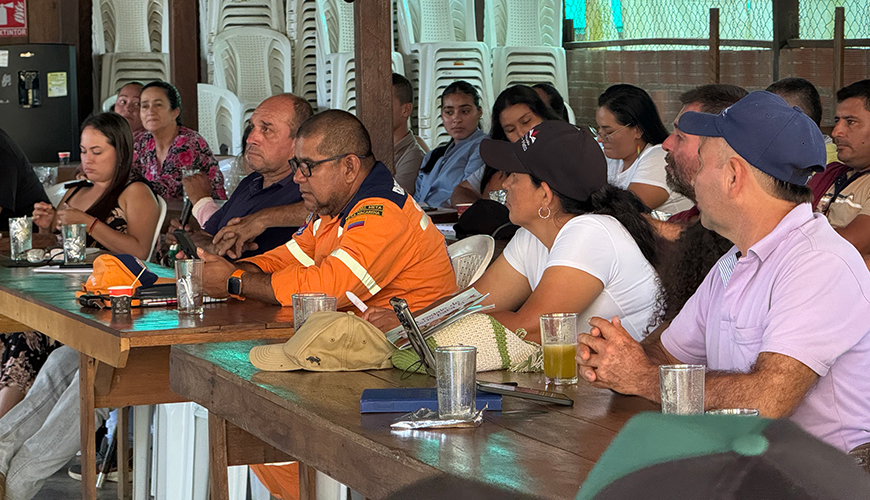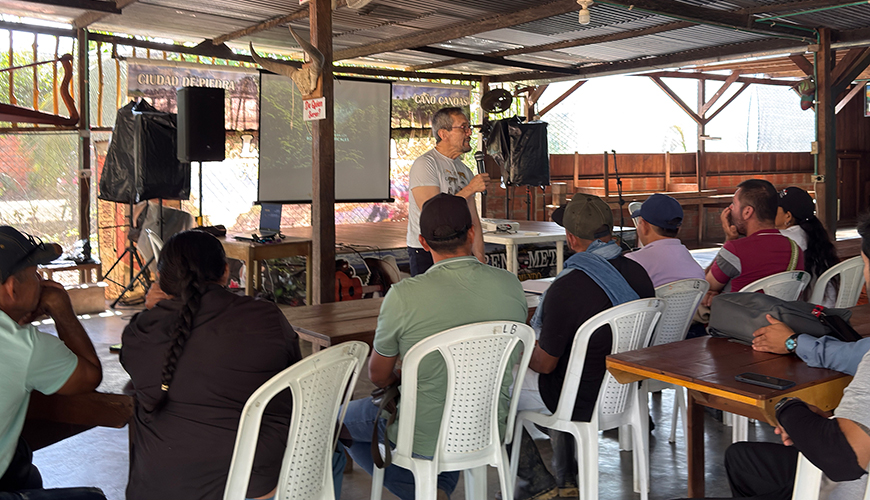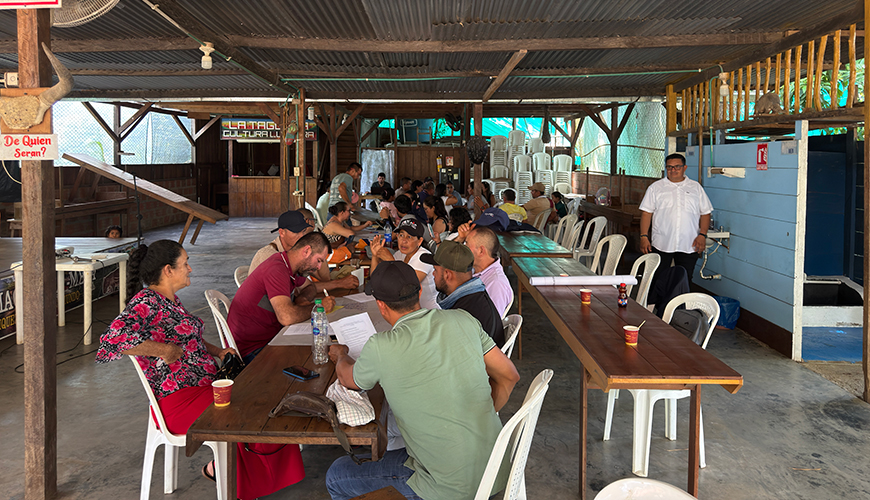
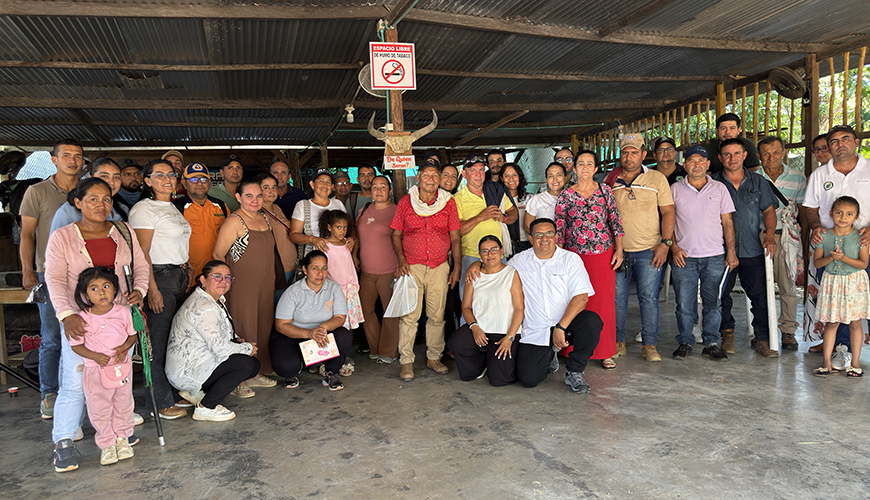
About 50 religious and community leaders, municipal council members, and local government representatives participated in a new training program organized by IRI-Colombia, held on September 24 at Estadero El Caporal in La Macarena (Meta).
In response to the urgent need to move toward more sustainable production models—to reduce pressure on forests and improve living conditions for local residents—this training session focused on agroforestry, a sustainable forest management system.
“IRI-Colombia seeks to raise awareness among each of us who care about the environment so that, in turn, we can help raise awareness among others. Only then will we begin to take measures and corrective actions to care for our Common Home,” said Pastor Martín Ramírez Arias, coordinator of the local chapters of IRI-Colombia in La Macarena.
Agroecology to Transform Production Models
The educational event, aimed at members of the Initiative’s local chapters in La Macarena, La Cristalina, and Alto Morrocoy, consisted of three parts: a lecture on agroecology, a discussion with community leaders who shared their experiences implementing agroforestry projects, and a hands-on “Talking Map” workshop.
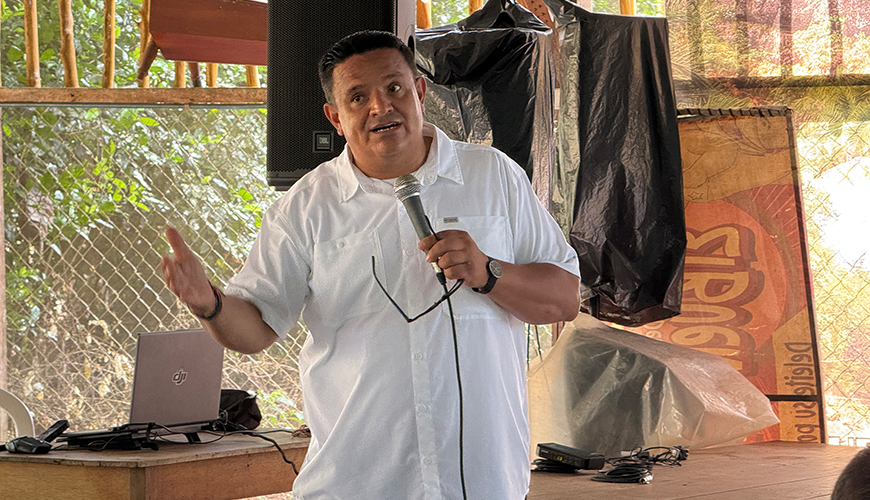
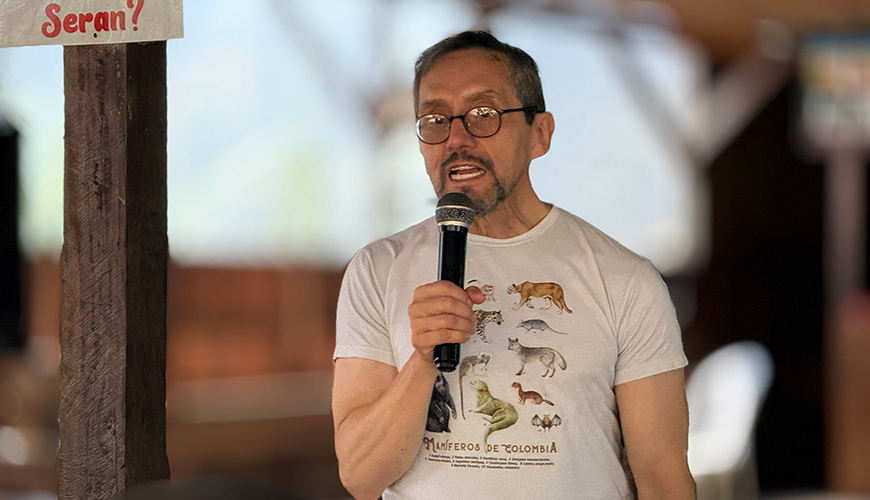
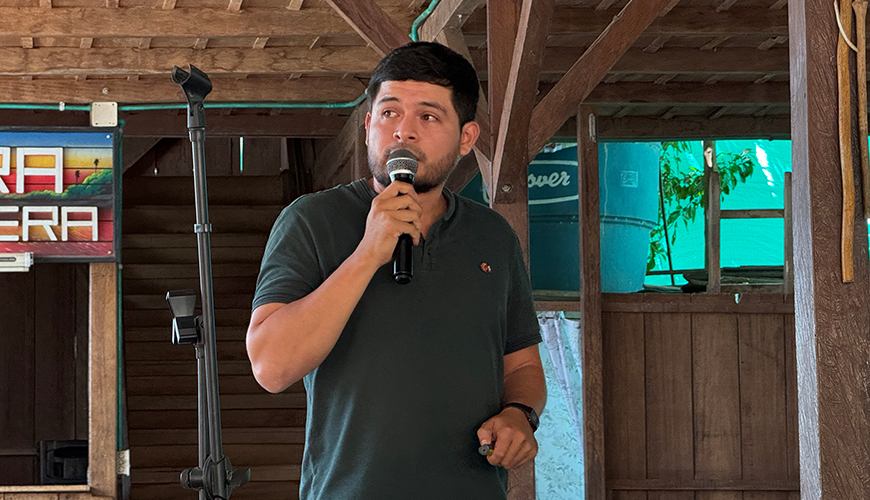
The first segment was led by Mario Angulo González. Before delving into the topic, the expert provided attendees with an overview of the geographical and ecological features of the Amazon and, in particular, of La Macarena, a municipality located in a transition zone between the Orinoquía and Colombian Amazon regions.
In his presentation, the agroecologist and professor at the University of the Amazon addressed the fundamentals of agroecology and its potential to address the territory’s environmental and economic challenges.
One of the central aspects of his presentation was an analysis of the impacts of unsustainable production models, such as extensive cattle ranching and monoculture farming. According to the expert, their consequences are not limited to environmental degradation but can also affect farm productivity, household incomes, and the availability of essential resources for communities. “Livestock farming can be carried out in a responsible and regenerative manner: reducing production costs and increasing income without causing such a devastating environmental impact on the Amazon,” he noted.
Against this backdrop, Angulo presented case studies of agroforestry projects to illustrate the factors influencing their development, the necessary technical decisions, and the processes that have contributed to their implementation. His presentation highlighted the importance of adapting initiatives to local conditions and of linking environmental restoration with economic opportunities for those who live and work in the region.
The Experiences of Rural Women: Lessons for the Region
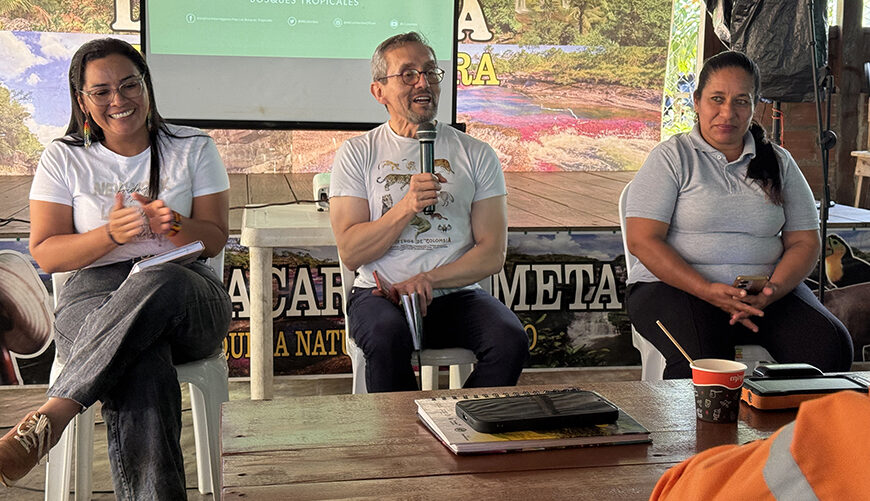
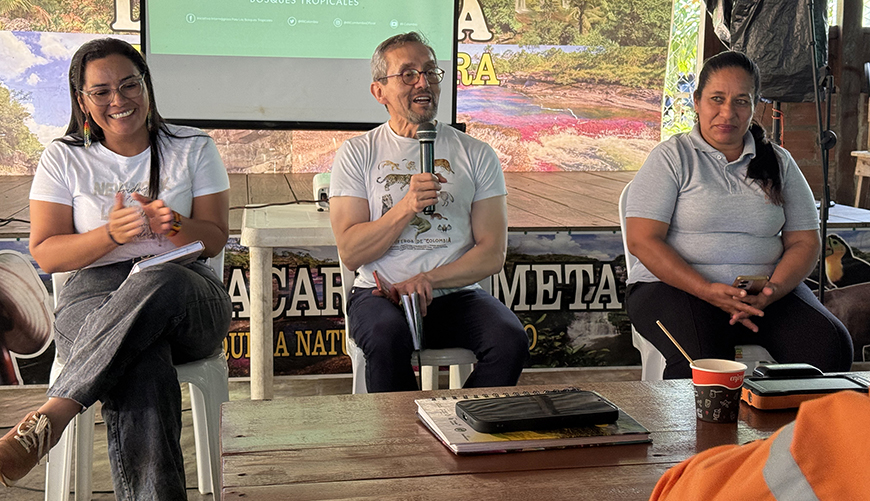
In the second segment, community leaders Xiomara Gómez, representative of the Environmental Association of Women Producers of the Llanos del Yarí (AAMPY), and Joana García, representative of the Association of Rural Women Environmentalists of Cristalina de Losada for Their Rights (ASMUCACD), shared their experiences in creating and developing agroforestry projects.
This dialogue provided insight into the progress made, the challenges they have faced, and the lessons that can guide new initiatives in the region.
Xiomara Gómez highlighted the economic benefits reported by producers affiliated with AAMPY. “Producers on farms within the sustainable productive landscape saw a notable 30% increase in their income by 2022 compared to 2019,” the leader noted, referring to the results of the Sustainable Amazon for Peace project, in which the Association participated.
Mapping the Territory to Identify Solutions
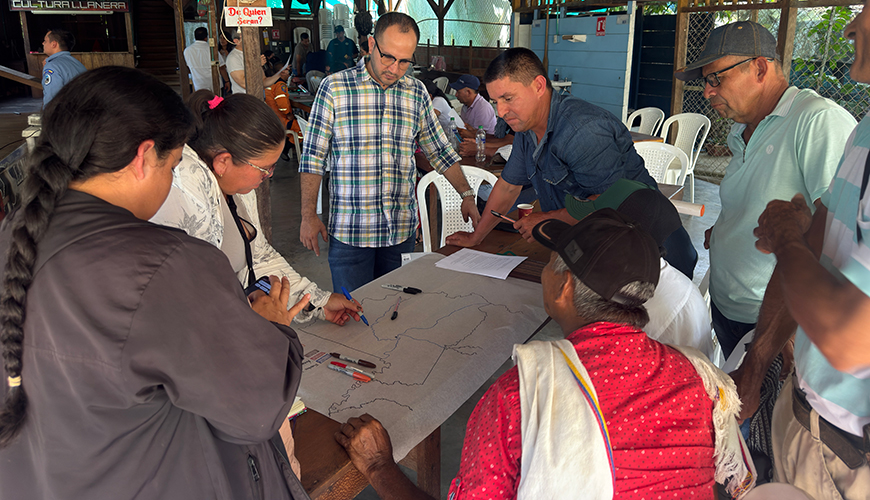
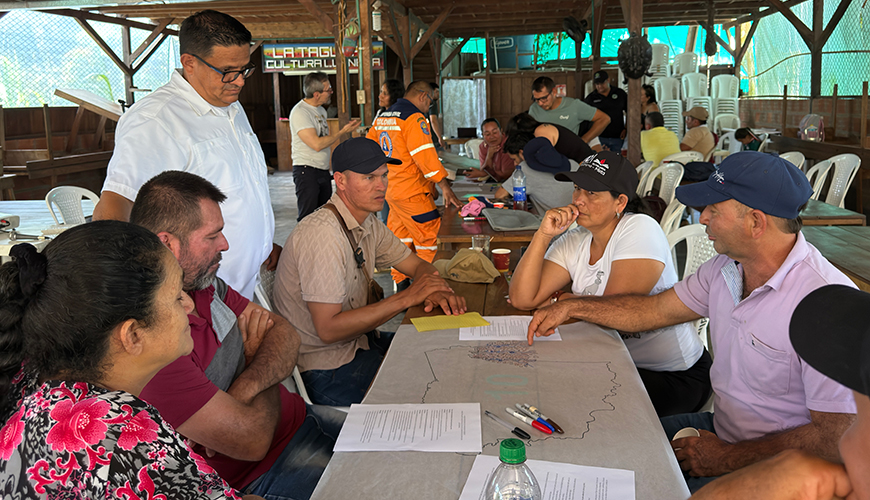
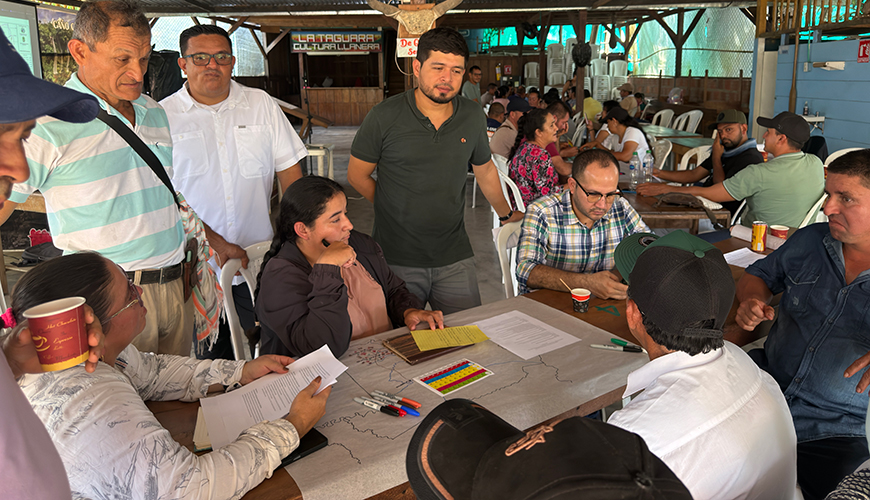
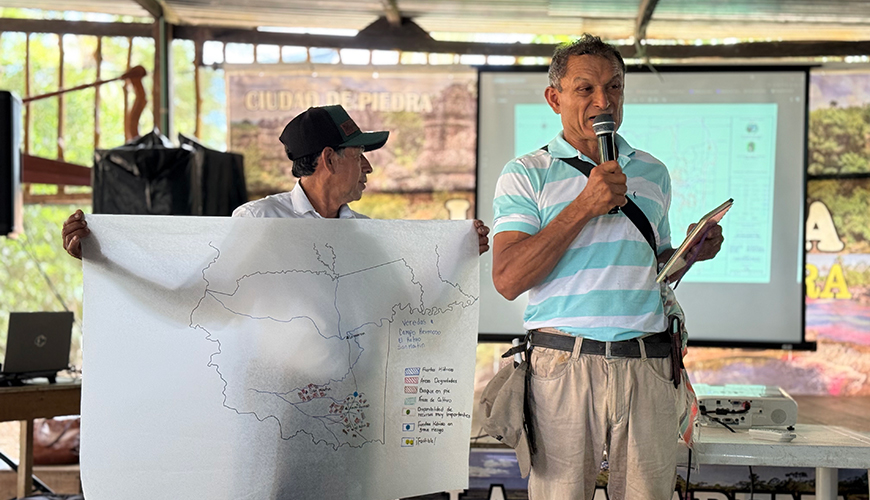
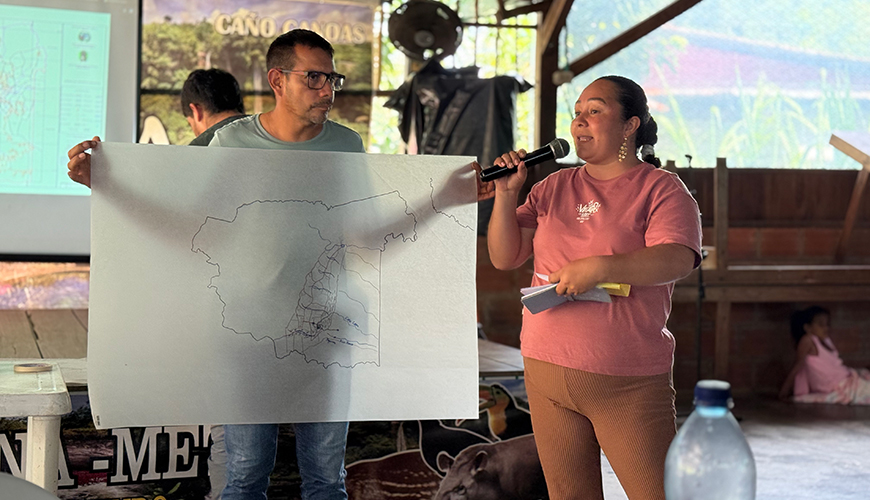
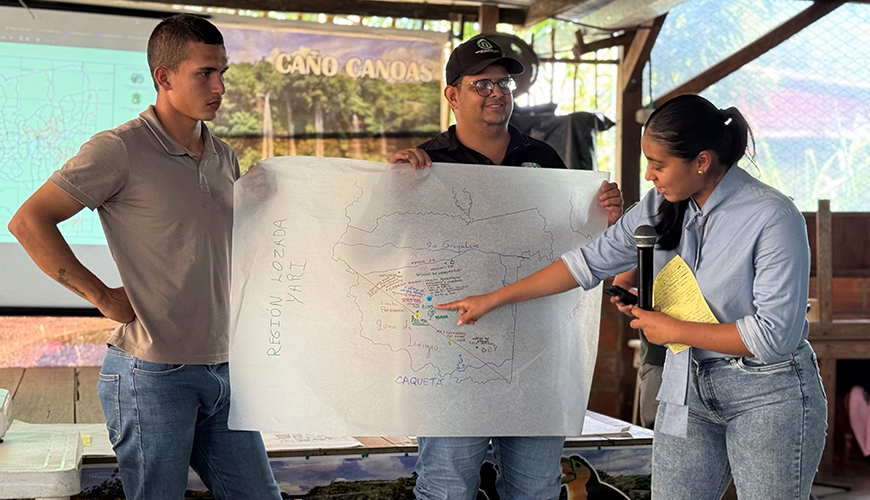
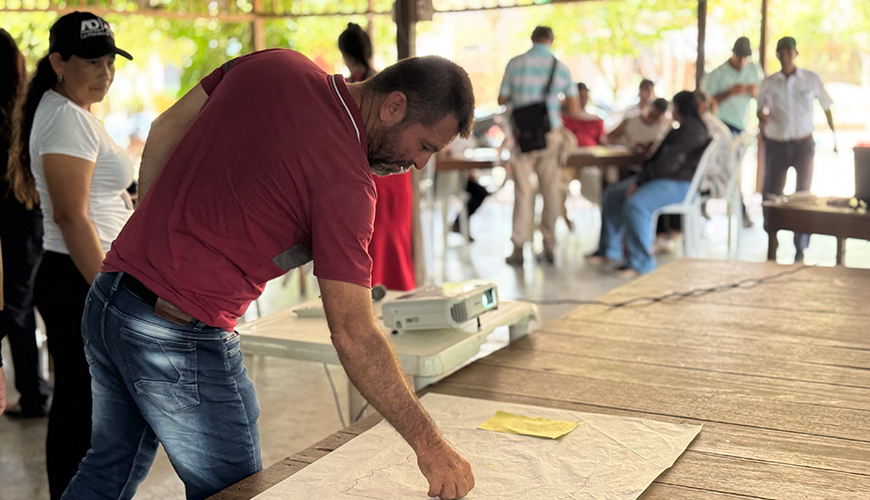
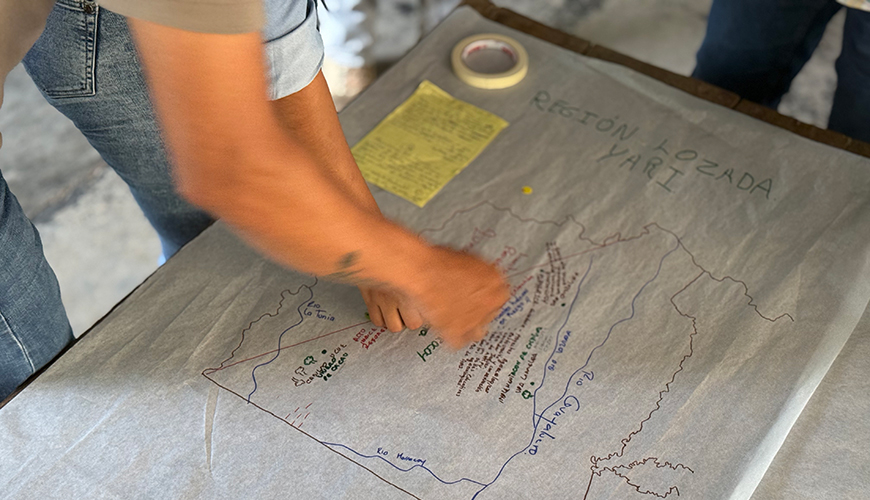
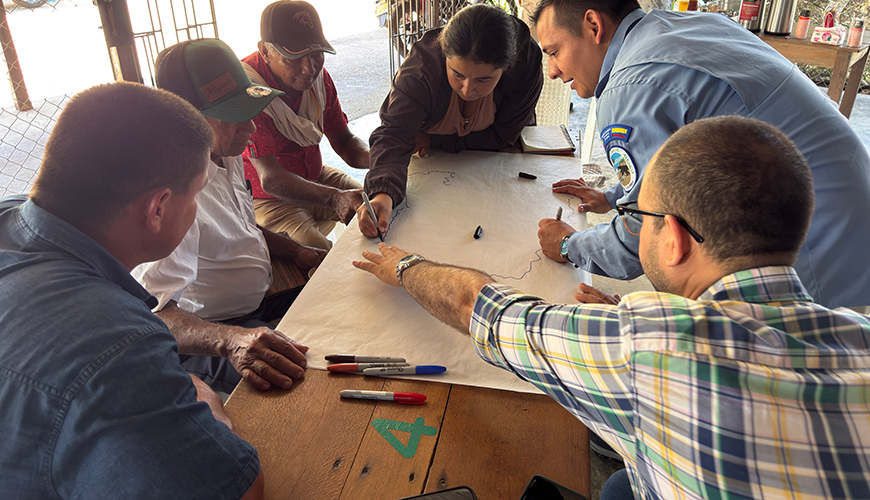
The third segment of the training session for IRI Colombia’s local chapters in La Macarena applied what participants had learned to a practical exercise based on the “Mapa Parlante” methodology.
Organized into groups based on their place of origin, the participants conducted an assessment of their territories to identify existing environmental conditions, available resources, and opportunities for restoration.
Using a map of the municipality, they identified degraded areas, zones where native forest remains intact, and spaces with potential for agroforestry transition. They also located water sources, community nurseries, croplands, and areas affected by deforestation, fires, and floods.
This exercise allowed participants to pool the knowledge of those who live in the area and recognize that communities possess valuable information to guide conservation and environmental recovery efforts.
Based on this assessment, each group selected an area where an agroforestry project could help restore ecosystems and generate benefits for the local population. Some of the proposals included the creation of community nurseries for native species; the restoration of buffer zones around water sources and ecological corridors used by wildlife; the reforestation of a spring; and the protection of a water source that supplies the municipality.
Once the groups’ results were presented, the participants deliberated to choose an initiative that could be developed as a pilot project and subsequently serve as a model for similar processes in other municipalities where IRI-Colombia is active.
This step aims to link training with concrete actions on the ground: moving from the collective identification of environmental problems to the selection of restoration alternatives that address the communities’ needs. In this way, IRI-Colombia’s local chapters in La Macarena, La Cristalina, and Alto Morrocoy strengthen their role as conservation actors and advocates for the care of our Common Home in a strategic region of the Colombian Amazon.