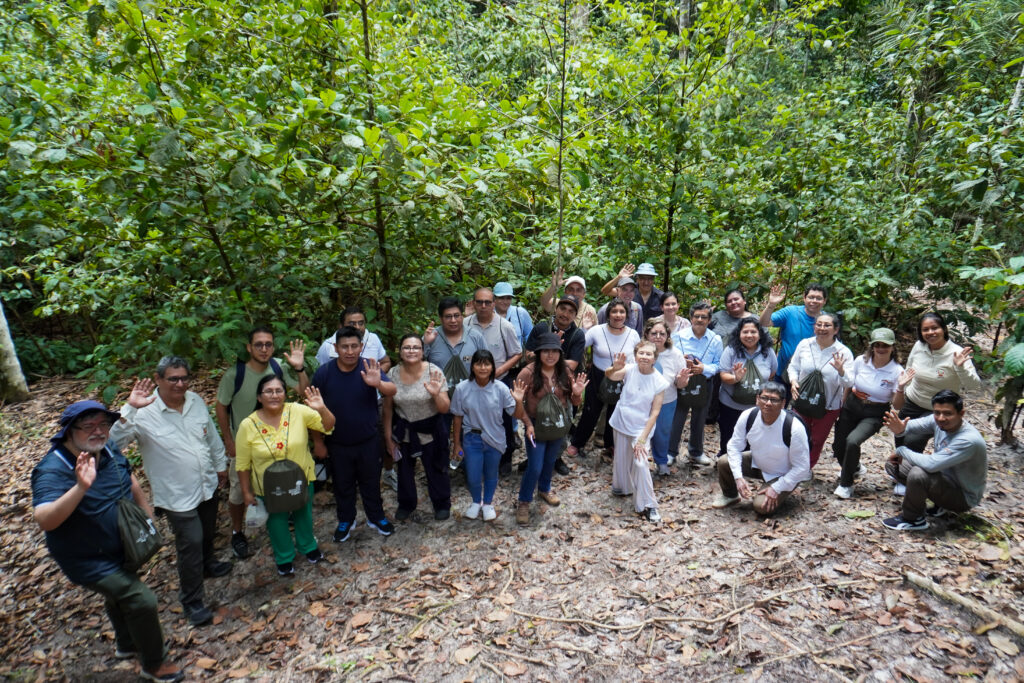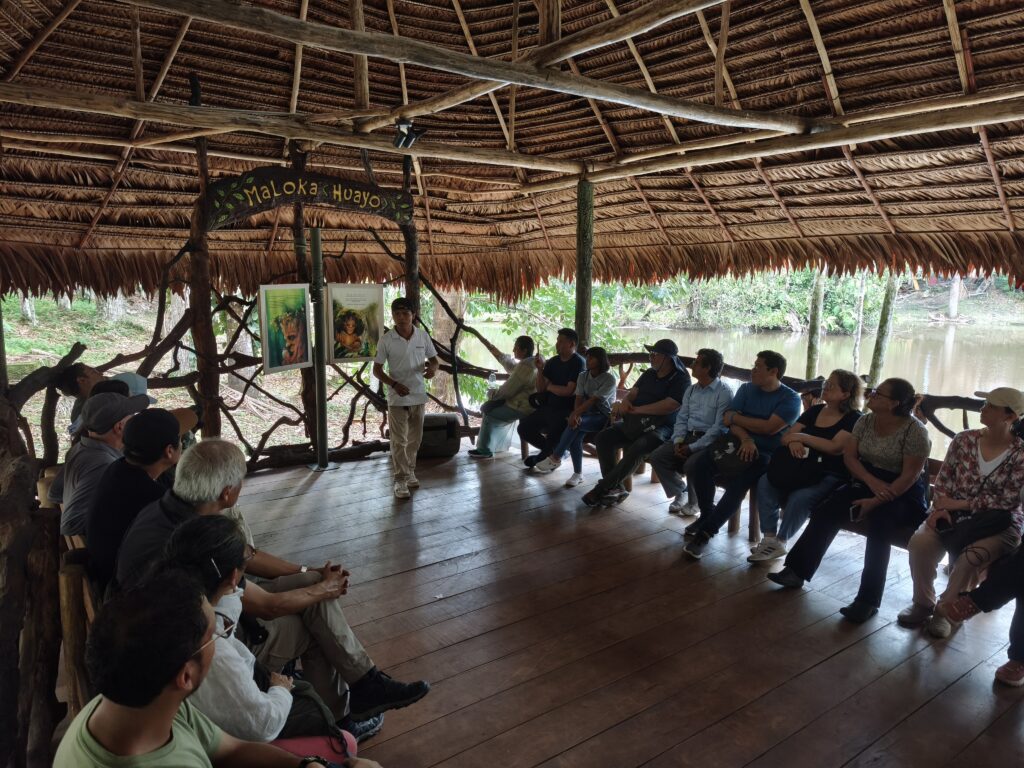
From September 15–17, more than 25 faith leaders, Indigenous Peoples representatives, and social organizations took part in a scientific immersion journey to the heart of the Peruvian Amazon. The delegation visited conservation areas, met with local authorities and researchers, and held dialogues with communities living on the frontlines of environmental change.
The objective was clear: to understand firsthand the magnitude of the socio-environmental crisis and to strengthen collective responses grounded in faith, ethics, and science. Participants visited the Allpahuayo Mishana National Reserve, a vital protected area that preserves the Amazon’s rich biodiversity — including the unique varillal forests and the floodplain forests of the Nanay River.
At the Peruvian Amazon Research Institute (IIAP), scientists shared advances in sustainable development and forest conservation. The group also visited the Amazon Rescue Center (CREA), where specialists protect native species such as manatees, macaws, and river turtles.
“Biodiversity is not just a biological asset — it is the foundation of our survival,” said José Álvarez, biologist at Asociación Amanatari, who emphasized the importance of promoting sustainable production models that respect ecological balance.
The delegation also met José Murayari, Vice President of the Organization of Indigenous Peoples of the Eastern Amazon (ORPIO), who issued a powerful plea:
“Protecting the Amazon also means defending our brothers and sisters in voluntary isolation and initial contact. Their survival depends on our actions.”
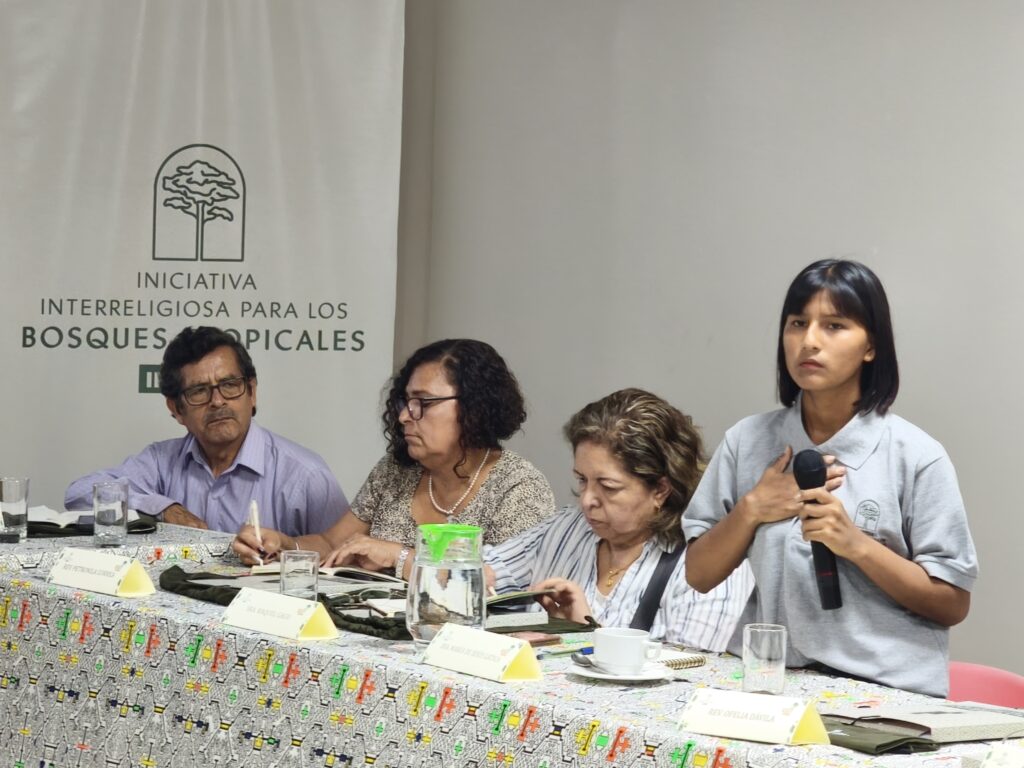
For Rev. Ofelia Dávila, President of the Lutheran Church of Peru, the journey reaffirmed a spiritual responsibility:
“It is important, as churches, that we unite to reflect and decide what we can do in favor of life. The Earth was given by God, but not to be exploited irresponsibly. Creation is not for sale.”
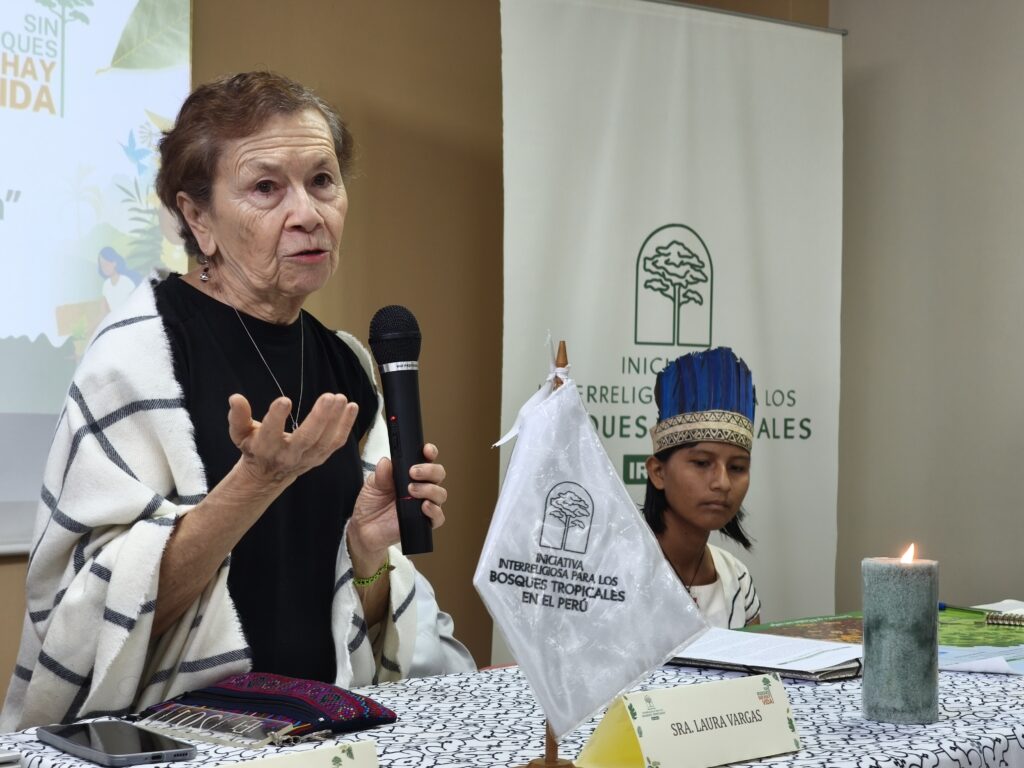
At the closing press conference, Laura Vargas, National Facilitator of IRI Peru, condemned the devastation caused by illegal gold mining:
“There are forces destroying the forests. When you navigate the Nanay or the Cenepa, you see dredges tearing the rivers apart. In Madre de Dios, La Pampa is lifeless — and it makes you want to cry. Many young people have died following a perverse logic that values quick money over life.”
Journey in Iquitos
Over 25 religious, Indigenous, and community leaders witness the region’s ecological crisis and discover opportunities for collective action.