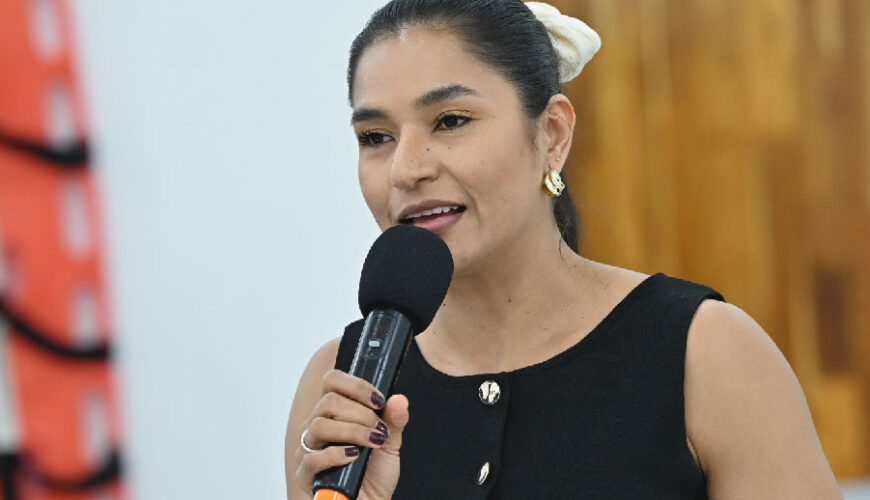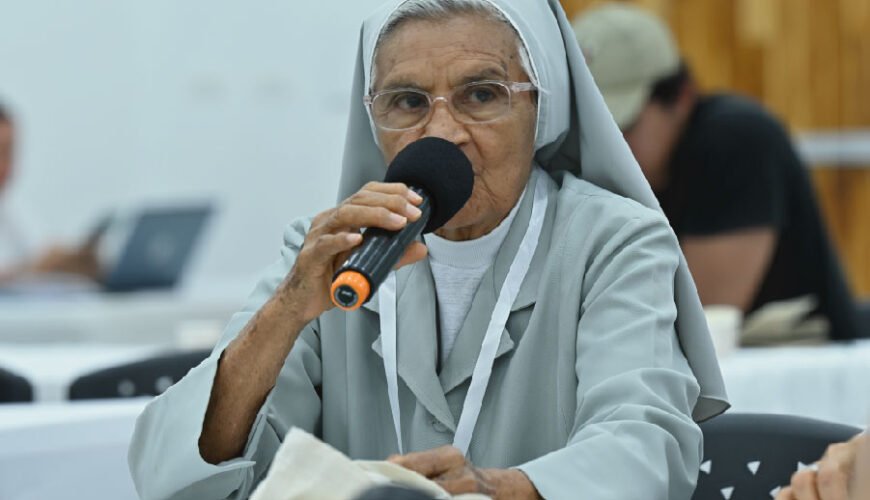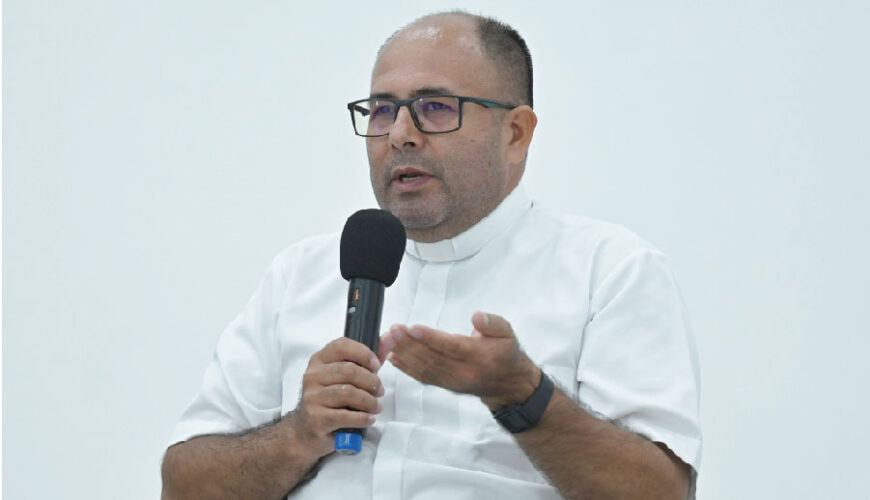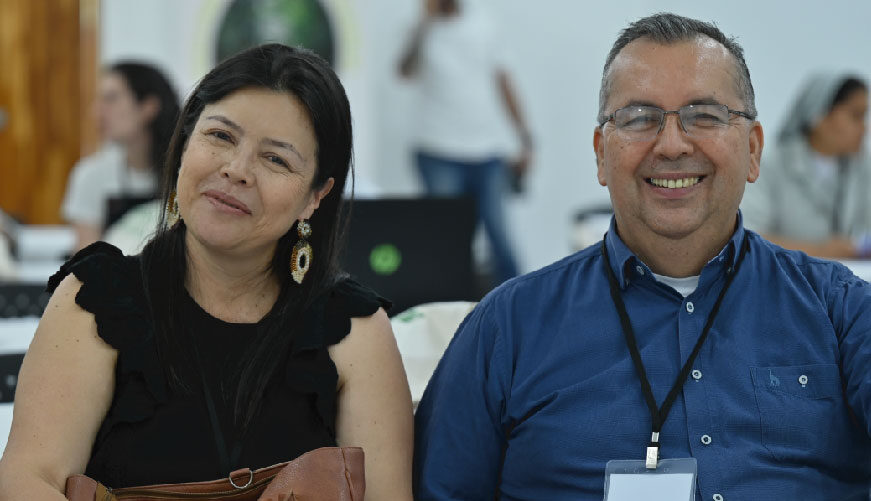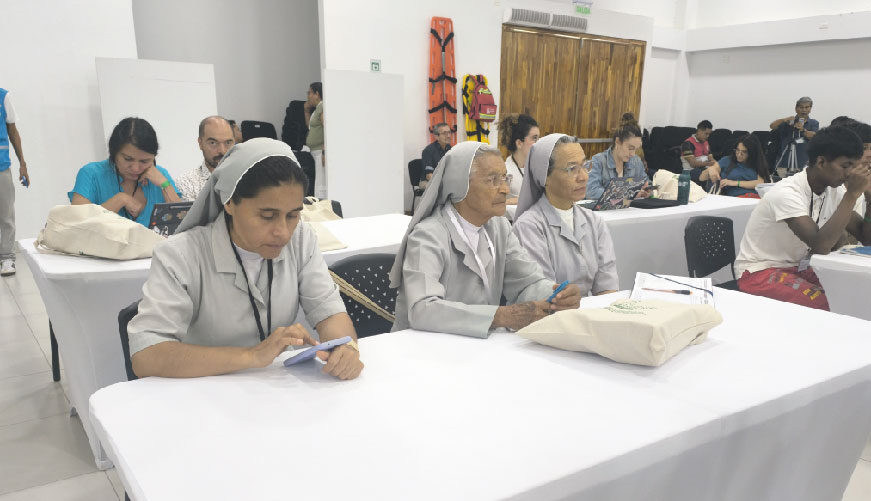

From a perspective that integrates spirituality, social justice, and integral ecology, IRI Colombia’s Scientific Immersion Day fostered a dialogue between faith, science, and community action to address the root causes of deforestation in the Amazon.
“We have witnessed the merciless exploitation of nature to commercialize trees that once provided shelter to hundreds of thousands of animals, extract minerals and fossil fuels, illegally traffic ancestral crops, and expand agricultural activities on land unsuitable for them,” said Edgar Antonio López.
This stark diagnosis of the shocking scars of deforestation observed during the flyover by some of the participants in the IRI Colombia Scientific Immersion Day was the starting point for theological reflection on the ethics of caring for creation, the central theme of the final segment of this great educational gathering of scientists and academics, communities, religious leaders, and decision-makers.
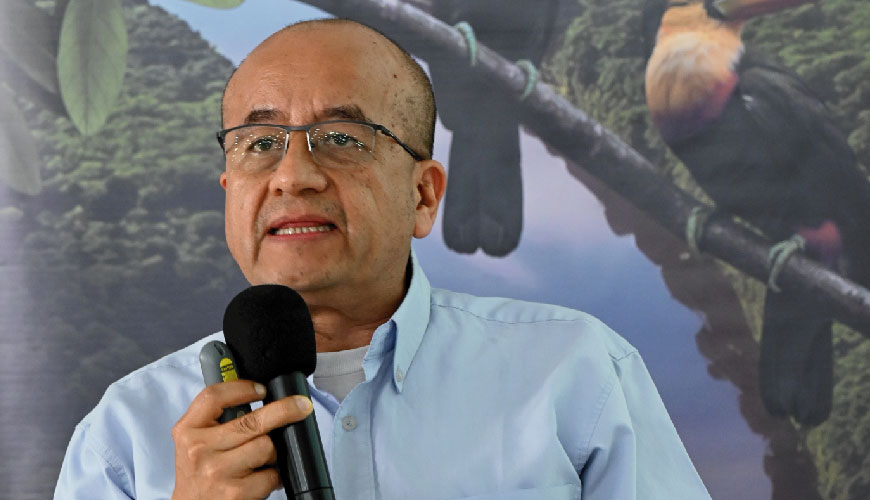
At the conference “Care for Creation, a Sacred and Shared Mission,” the professor from the Faculty of Theology at Javeriana University highlighted the relationship between spirituality, social justice, and integral ecology.
“Spirituality does not necessarily have to do with any religious system, but rather with various belief systems in which some things are considered more valuable than others,” said the philosopher and doctor of theology who, in light of the work of various theologians and biblical scholars, analyzed the salient features of the spirituality of care and the duty of justice as an inherent quality of caring for creation.
According to the expert, although care is at the very heart of Christian spirituality, recognizing the value of giving one’s life in service to others, it is not limited to the duties that human beings have toward one another, but also encompasses care for the planet, which is nothing less than a duty of social justice.
Likewise, based on an analysis of the principles of integral ecology proposed by Pope Francis in his encyclical Laudato Si’, the expert reflected on the need to understand caring for the Earth, our common home, as a shared mission.
“A broad vision of justice is required that takes into account the global dimensions of our common home,” López emphasized, adding that this condition implies not only the duties that contemporary human beings have toward each other, but also the duties they have toward future generations, other species, and all of creation.
“We relate to the Earth as if it were not part of us, as if we were not part of it. We conceive of it only as an inexhaustible source of resources that we must voraciously appropriate. Such devastating exploitation of nature can only be explained by the anthropocentrism in which we are trapped,” said the philosopher.
According to this view, forest fires, deforestation, forest fragmentation, and the accelerated expansion of extractive activities are not only environmental problems but the result of a relationship with the Earth in which humans attack their own essence.
López also highlighted Pope Francis’s postulates in his encyclical Laudato Si’, on the three fundamental and closely connected relationships on which human existence is based: the relationship with God, with our neighbors, and with the Earth. He also highlighted the concept of cultural ecology, proposed by the Pontiff, which reminds us of the urgent need to pay attention to local cultures and to bring scientific and technical language into dialogue with popular language when analyzing issues related to the environment.
“The tragedy seen this morning from the air shows how the sacralization of humanity and the subjugation of Mother Earth prevent us from converting to an integral ecology that recognizes the intrinsic value of all creatures. However, there are some signs of hope,” he concluded.
Dialogue of faith for the Amazon
The ethical framework proposed by López served as an introduction to an interfaith conversation focused on the relationship between faith, science, and public advocacy, all of which are key factors in protecting the Amazon rainforest.
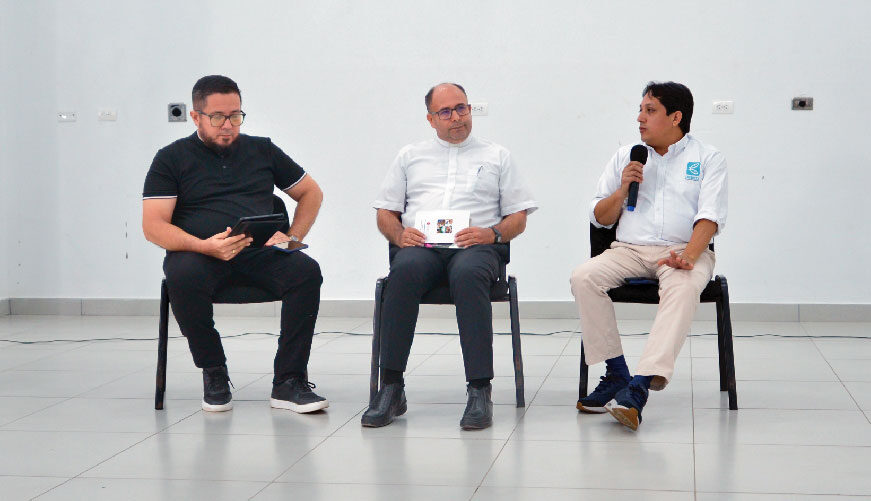
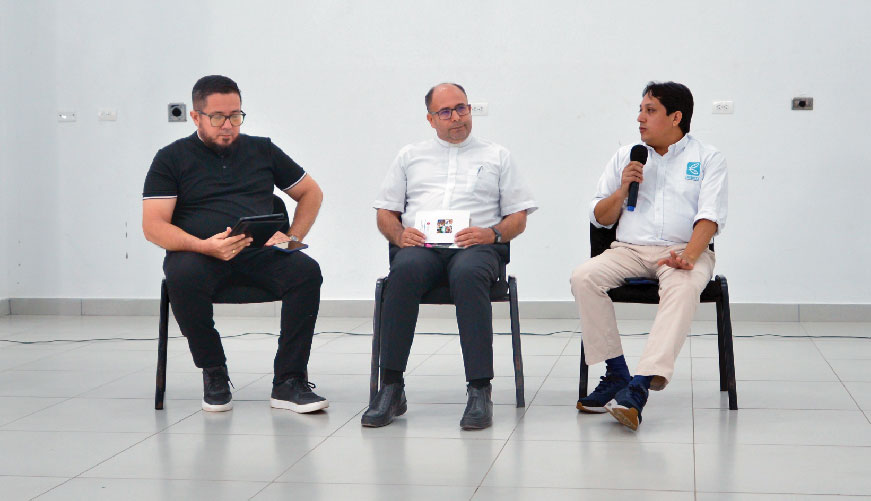
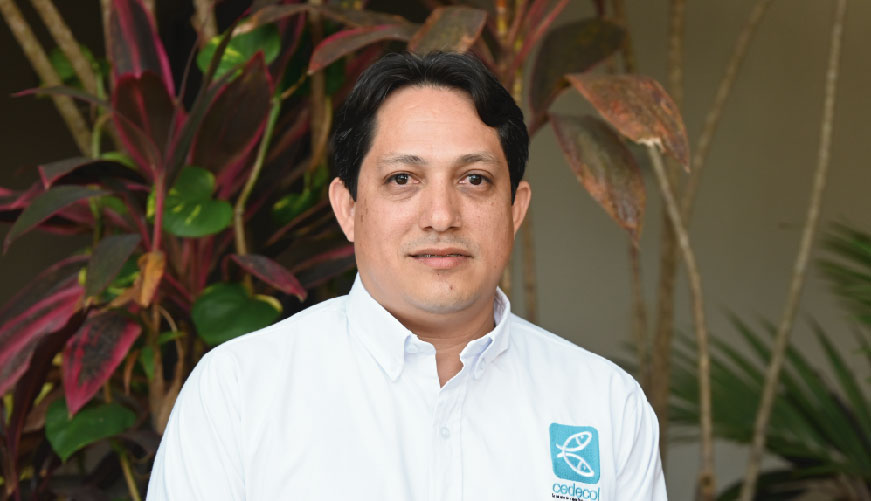
The dialogue, moderated by Janier Islen Cardona, pastor of the Pan-American Church of Colombia and coordinator of the local chapters of IRI in El Retorno, La Libertad, and El Unilla, featured the participation of Father Gregorio Chacón, from the Diocese of San José del Guaviare, and Gabriel Pérez, executive director of the Evangelical Confederation of Colombia (CEDECOL).
Religious leaders, representatives of the Catholic Church and evangelical churches, discussed ways to maximize the positive impact of these three spheres for the common good and how to build trust and a shared language between faith and science for the effective protection of the Amazon.
One of CEDECOL’s proposals is for environmental education to be integrated into all of the church’s activities, from the local to the national level. Pérez emphasized the complementary nature of faith and science as a basis for action and pointed out that understanding creation as a gift also implies protecting it with the tools offered by science and translating technical information into concrete community practices.
According to CEDECOL’s executive director, as a result of the work his organization has done with IRI Colombia over the past seven years, the National Environmental Commission was created, allowing the Confederation to continue supporting IRI Colombia, but also to replicate part of this model in places where CEDECOL has a presence through its churches. “This allows us to keep the message of caring for creation alive; that is, it is not just about coming to these conferences to learn, but about being able to ground that message and share it with those who are on the ground every day,” he added.
“Scientific data must be converted into concrete community actions,” such as protecting water sources, reforestation, waste management, and local organization. For Pérez, churches—especially in rural areas—can become spaces for learning and environmental action, true community classrooms from which responsible practices are promoted.
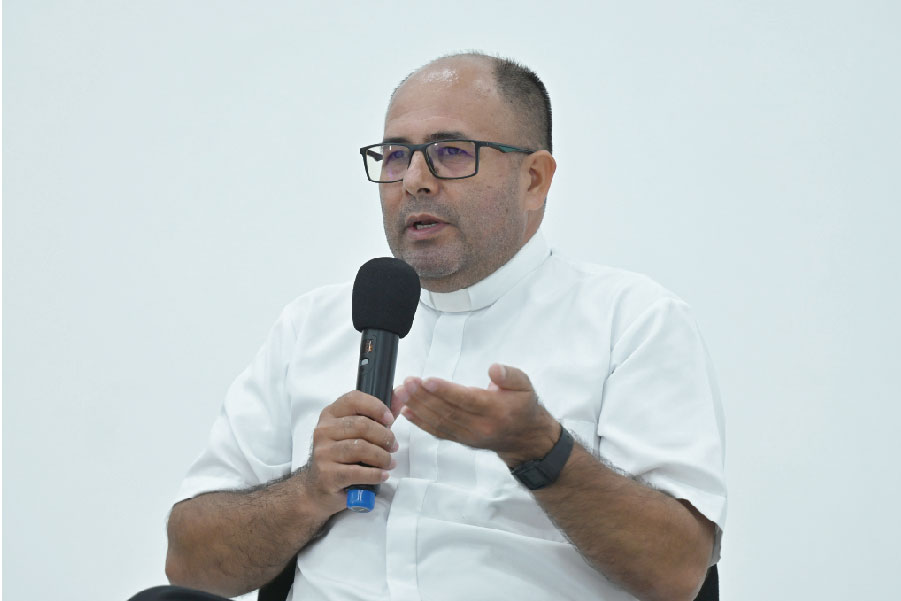
Father Gregorio Chacón, for his part, brought the conversation to the most sensitive core of the territory: the relationship between environmental crisis, armed conflict, and peace. For him, talking about caring for the forest without talking about reconciliation is insufficient. He expressed it directly: “If we don’t work on the peace process, we can’t do anything.”
Priest Chacón explained that large areas of Guaviare continue to be affected by mobility restrictions, threats, and a lack of guarantees, which limits both institutional action and community processes.
From his pastoral experience, the religious leader insisted that protecting the territory begins by listening to communities, recognizing their needs and dreams, and bringing that reality to the attention of institutions.
“We have to reach people. That starts with reality, with listening to people,” he said, warning that resources often fall short and do not reach those who truly sustain the territory. Without teamwork, the pursuit of the common good, and reconciliation, he said, diagnoses remain mere events and do not translate into real change.
In this way, the aerial journey that exposed the deep wounds of a territory reduced to merchandise and booty, at the end of this collective exercise, became an invitation to change the way we inhabit and relate to the Amazon.
Theological reflection, dialogue between faith and science, and the voices of those who accompany communities on a daily basis converged on a common message: defending forests is an environmental imperative, but also an ethical, spiritual, and social commitment that demands justice, reconciliation, and concrete action from the territories.
Only when scientific knowledge is translated into community practices, faith is embodied in the care of life, and public decisions listen to those who sustain the Amazon rainforest day after day, is it possible to move from diagnosis to transformation and sow hope where the scars of deforestation still remain today.
 Conference by Dolores Barrientos of UNEP