
For three days, congressmen, magistrates, local and regional authorities, academics, religious leaders, and communicators enjoyed an immersive experience in the Amazon, where faith, science, and territory converged: a space for collective reflection aimed at promoting urgent action to protect the Amazon.
Surrounded by the Serranía de La Lindosa mountain range, the municipality of San José del Guaviare hosted the first Scientific Immersion Workshop in the Amazon, organized by the Interreligious Initiative for Tropical Forests, from November 20 to 22.
This ambitious undertaking by IRI-Colombia was conceived with the aim of bringing decision-makers, such as congressmen and members of the high courts, closer to this region so that through dialogue between scientific knowledge, on-site observation of the Amazon rainforest and areas affected by deforestation, and consideration of the ethical and spiritual dimensions of caring for the planet, they might achieve a deeper and more transformative understanding of the Amazon crisis.
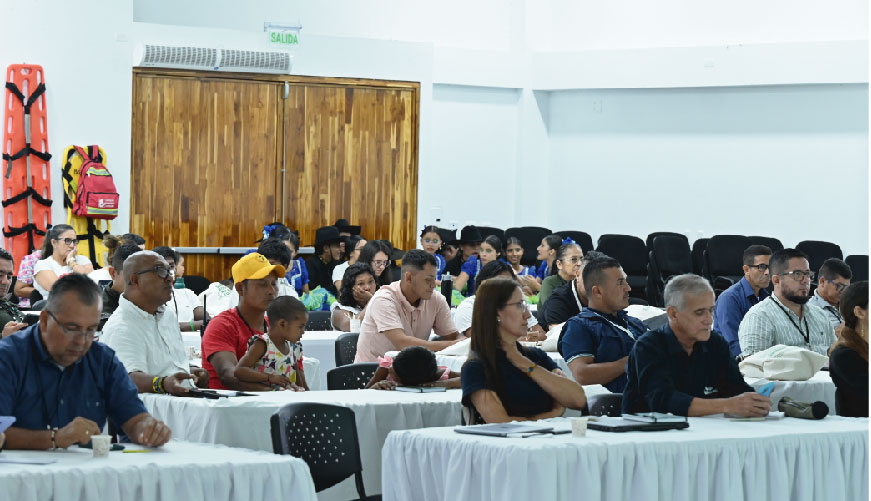
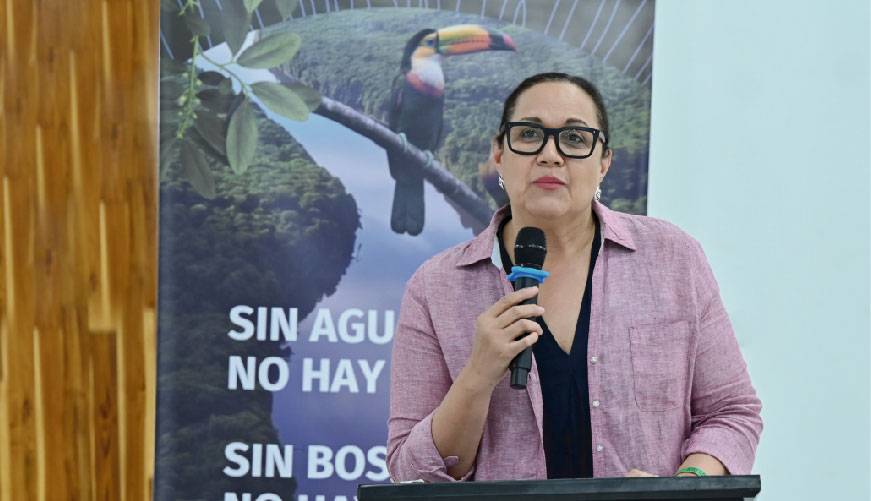
“The time for remote concern has expired. We are at a turning point. This conference is not simply a technical or academic event. It is an expedition into knowledge and awareness,” said Blanca Lucía Echeverry, who kicked off the three-day educational meeting.
In the words of the director of IRI Colombia, this conference served as an interdisciplinary laboratory where science, ethics, spirituality, institutions, justice, and cooperation intertwined to produce a deeper—and more transformative—understanding of the Amazon crisis.
Representatives from the legislative and judicial branches, multilateral organizations, and international governments, top local and regional authorities, academics, religious leaders, and journalists from national and international media outlets attended this event, where the Amazon was the star of the show.
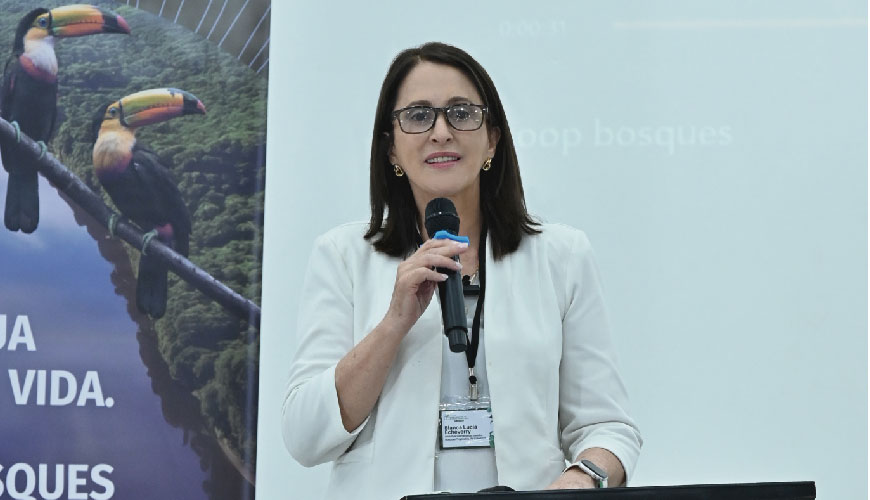
With the help of scientists and experts, more than 80 participants learned about the biological, ecological, and cultural state of this biome, which is vital for humanity. They went on an expedition through the jungle and, from the air, saw the devastation that decades of deforestation have caused.
“When institutions, governments, communities, and international cooperation sit down to talk,” she said, “it opens up the possibility of building a single direction to defend the Amazon rainforest,” said Dolores Barrientos Alemán, who opened the event with the conference “The role of the Amazon in global climate stability: the turning point for Colombia and the world.”
The Amazon region is the hub of climate stability on the continent, and protecting it is not only a national issue but a global responsibility, said the representative in Colombia of the United Nations Environment Programme (UNEP).
Trails that reveal memory, geology, and science
The Scientific Immersion Day in the Amazon was based on three central themes: recognition of the territory and its natural and cultural wealth, through a visit to Cerro Azul, in the Serranía de La Lindosa; a face-to-face encounter with deforestation and the impact of forest loss in the Guaviare region; and an introduction to scientific knowledge through lectures and discussions with experts, scientists, and academics.
In the panel discussion “Governance of the Amazon: challenges and opportunities from the territory,” Willy Alejandro Rodríguez, mayor of San José del Guaviare, and Kelly Castañeda, acting governor of Guaviare, discussed the complexity of governing a territory affected by illegal economies, deforestation, and weak state presence, but also by enormous community organizational capacity.
The national picture was completed with reflections from José Yunis Mebarak, director of Visión Amazonía, who gave a lecture in which he discussed the state of the country’s forests, the main challenges facing the nation in ending deforestation, and the steps being taken by the national government to convert areas historically affected by forest loss into centers of forestry development.
The Serranía de La Lindosa was the star of the second session of the Scientific Immersion Day. During more than four hours of walking through the jungle, participants had the opportunity to explore the Guaviare Amazon rainforest, identify some species of fauna and flora, and experience an encounter with ancient culture, captured in more than 400 meters of cave paintings at Cerro Azul, dating back more than 12,000 years.
This great expedition through the jungle was complemented by a visit to “Biofilia: a sensitive and profound connection between humans and the biodiversity of the Amazon.” The exhibition by the Sinchi Institute offered a sensory and scientific interpretation of Guaviare: Amazonian fruits, ecosystem services, coverage maps, monitoring of transformed landscapes, and narratives constructed together with the communities.
In addition, the panel discussion “From La Lindosa to Chiribiquete: the biogeographical link and the keys to protecting the great Guaviare corridor,” moderated by Marcela Lozano-Borda, manager of the Humboldt Institute’s Center for Social Appropriation of Knowledge, provided an opportunity to reflect on the importance of this biogeographical connector, which links the Serranía de La Lindosa, the Amazonian-Orinoco transition landscapes, and the Chiribiquete National Natural Park.
The conversation was attended by Magdalena Arbeláez Tobón, Climate and Forest Advisor at the Norwegian Embassy; Sandra Castro, researcher at the Sinchi Institute; Felipe Esponda, Regional Director of the Corporation for Sustainable Development of the Northern and Eastern Amazon (CDA); and Francisco Luque, Advisor to the Subdirectorate for Risk at the National Unit for Disaster Risk Management.
Seeing is believing: the flyover
The aerial survey of the territory during the third session became one of the most revealing and overwhelming moments of the Immersion Day. Aboard small aircraft, a group of twenty people witnessed the scars left on the land by deforestation and identified some of the traces of extensive livestock farming, illegal mining, and land use transformation, among other factors driving deforestation.
This experience was complemented on land with a presentation by Sandra Cortés, a researcher at the Sinchi Institute, who addressed the ecological consequences of forest loss in her talk entitled “Reading the Territory.”
Similarly, Carlos Alberto Rivera, biologist and professor at Javeriana University, gave a lecture entitled “A critical agenda: priorities for protecting the Amazon biome,” in which he analyzed the factors that currently threaten the Amazon biome: the uncontrolled expansion of the agricultural frontier, the impacts of illegal economies, the weak state presence in strategic areas, soil degradation, and the accelerated loss of ecological connectivity.
In the panel “The point of no return: analysis of the Amazon crisis,” Bernardo Giraldo, a researcher at the Sinchi Institute, and engineer Julio Roberto del Cairo, from the Corporation for Agricultural and Environmental Research and Development (Cindap), reflected, among other topics, on the biophysical and climatic indicators needed to identify the tipping point in the Amazon.
The Amazon, an ethical issue
The Scientific Immersion Day in the Amazon ended with a profound reflection on the protection of the Amazon from an ethical and spiritual perspective.
In light of the perspectives of various philosophers, theologians, and humanists, Édgar Antonio López, Doctor of Theology and professor at Javeriana University, analyzed the factors that make the preservation of the Amazon biome a sacred and shared mission that calls us to act with an ethic of universal responsibility.
Additionally, in the panel “Dialogue of Faith, Science, and Political Advocacy,” Gregorio Chacón, priest of the Diocese of San José del Guaviare, and Gabriel Pérez, executive director of the Evangelical Confederation of Colombia (CEDECOL), demonstrated that religious leaders can be strategic allies for the protection and restoration of our Amazon.

In a panel moderated by Pastor Janier Islen Cardona, coordinator of IRI-El Retorno, representatives of the Catholic Church and evangelical churches discussed the need to build trust and a shared language between faith communities and scientific circles, in order to maximize the positive impact of faith, science, and political advocacy to achieve the common good.
Next, learn more about this educational gathering, which brought together science and spirituality, public decisions, and local voices.
In the following pages, we will delve deeper into governance challenges, trends, impacts, and challenges of deforestation, the links between rock art and Amazonian worldviews, scientific research paths, and spiritual and ethical reflections on protecting the Amazon.
Join us on this journey!
Without forests, there is no future.
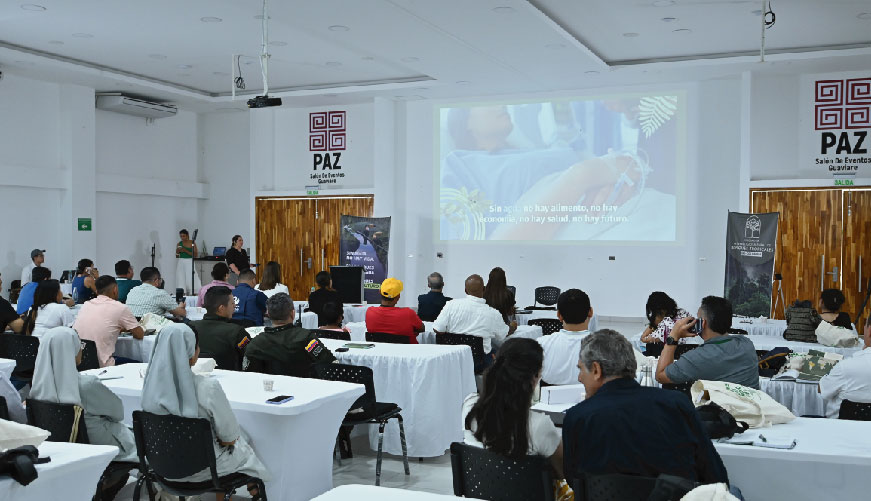
The Scientific Immersion Day in the Amazon served as the setting for the presentation of “Without forests there is no future,” a campaign by the Interreligious Initiative for Tropical Forests in Colombia, which coordinates communications, political advocacy, and work in the territory with the aim of raising awareness about the urgency of protecting the Amazonian forests to guarantee the country’s water security.
“Water is essential for life, and it is life itself that is at risk if we do not act to protect it,” warned Diana Cristina Carvajal, communications director at IRI-Colombia.