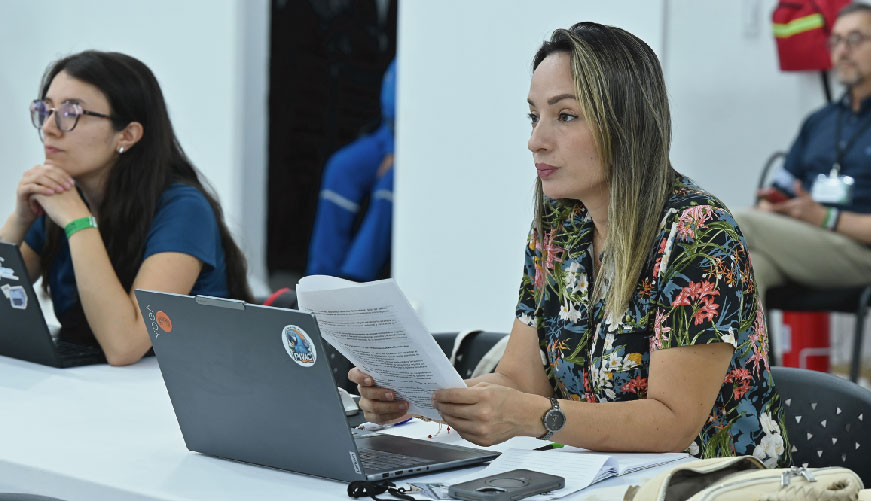
At the Scientific Immersion Day in the Amazon, organized by IRI Colombia, José Yunis and Sandra Castro offered a complementary analysis of forest loss: from historical figures and the drivers of deforestation to ecological and social impacts and the need to restore the territory with community participation.
The IRI Colombia Scientific Immersion Day was a three-day event where science, institutions, and communities discussed the future of the country’s largest tropical forest. Within this framework, two conferences were held which, without intending to do so, constructed a joint map of the fragility and resilience of the Amazon.

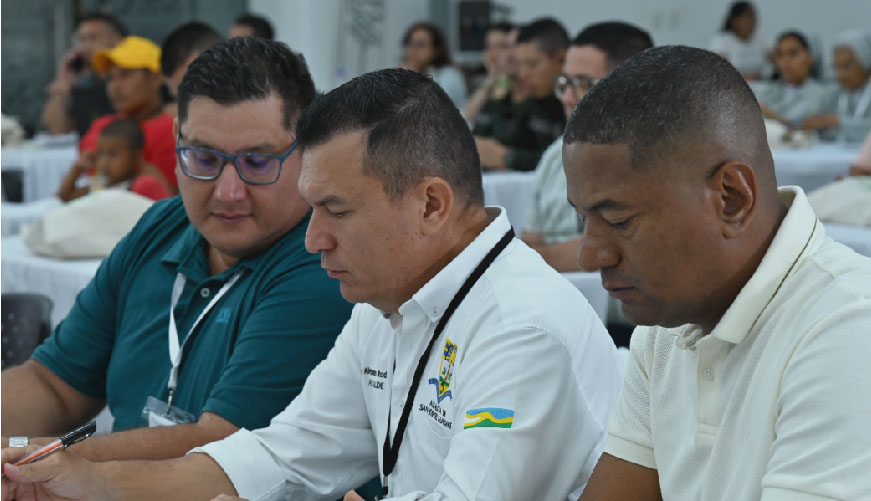
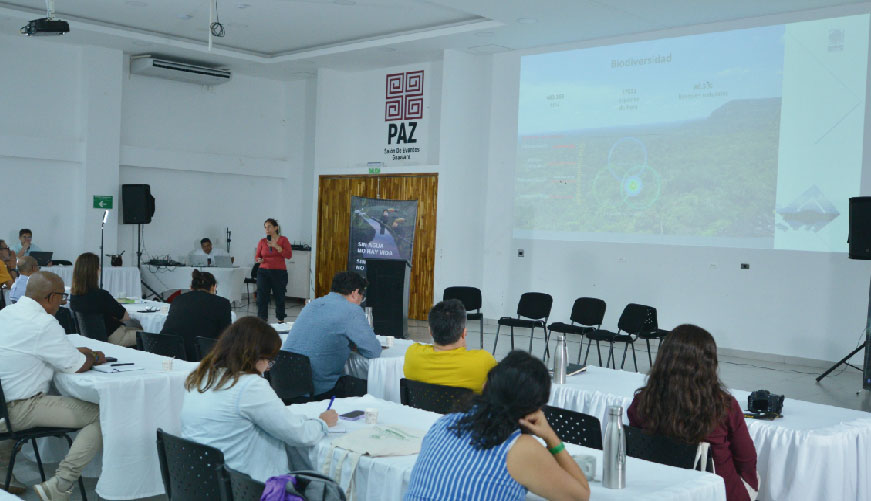
At the conference “Successes, challenges, and prospects for consolidating the reduction of deforestation in the Colombian Amazon,” the director of Visión Amazonía, José Yunis, discussed the magnitude of deforestation over the last two decades and the challenges involved in containing it.
In turn, during the presentation “Reading the Amazonian Territory,” Sinchi Institute researcher Sandra Castro analyzed the ecological and social consequences of forest loss and the urgency of restoring it from a community perspective.
The figures provide a starting point. Colombia has 59.2 million hectares of forest—52.1% of its mainland and island territory—and nearly 66% of that coverage is in the Amazon region. However, over the last two decades, our country’s forest cover has undergone serious changes. Between 2001 and 2024, the country lost almost 3.5 million hectares, with the Amazon region being the most affected, losing 2,050,893 hectares.
Added to this is the recent trend in deforestation. Last year, the country lost 113,608 hectares of forest, 77,124 of which were in the Amazon. As Yunis explained, last year’s increase must be interpreted in its historical context: “When people say that deforestation rose last year, that is true; but it must be borne in mind that it rose in comparison with the lowest rate of deforestation the region has ever experienced.”
The nuance is crucial to understanding that, although the uptick is concerning, it compares with an atypically low year, rather than with long-term structural trends.
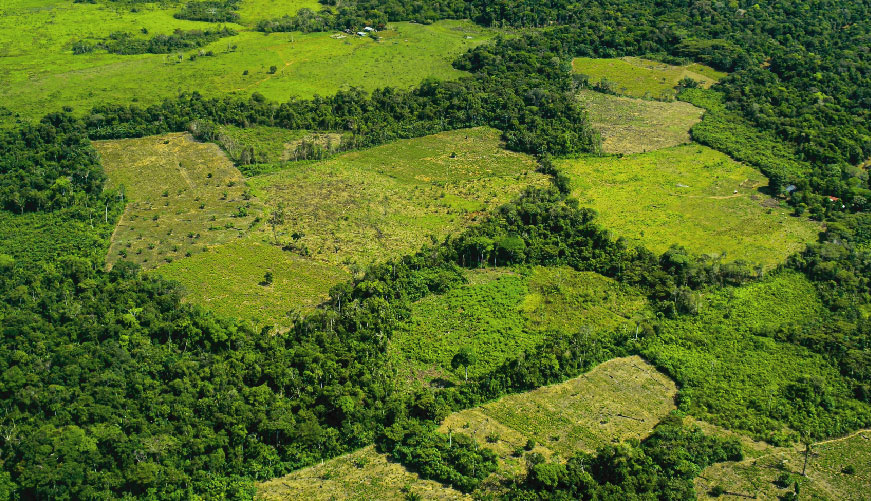
X-ray of relentless deforestation
“Colombia knows exactly how much, when, and where deforestation occurs. It knows this at the village, municipality, reserve, and national park levels. But knowing this, which is important, is one thing; what to do about it is another,” emphasized the lawyer, who is an expert in public administration and sustainability.
The problem is not only quantitative. According to Yunis, much of the deforestation occurs in areas where institutional presence is weak and where illegal economies, private interests, and a lack of productive alternatives converge.
The director of Visión Amazonía explained it frankly: “Some places are very difficult to reach. It’s not enough to know how much, when, and where; you also need to know how to get there.”
The expansion of extensive livestock farming—which occupies most of the already deforested areas—land grabbing, and illegal mineral extraction are, according to Yunis, persistent drivers that consolidate a model that sees the forest as an obstacle rather than an asset. It is not just about the loss of trees: it is the accelerated and, in many cases, irreversible transformation of a territory.
In this analysis, Yunis issued a significant warning about the role of roads in putting pressure on forests. He pointed out that road construction in highly vulnerable areas is one of the factors that most contributes to the loss of forest cover, as it opens up the territory to new occupations, illegal activities, and land grabbing. At the same time, he stressed the need to rethink regional connectivity based on environmental criteria: “Man does not live by roads alone. Territories can also be connected through river ports or airways. In terms of deforestation, some have an impact and others do not. Different policies must be adapted.”
An ecosystem that is beginning to fracture
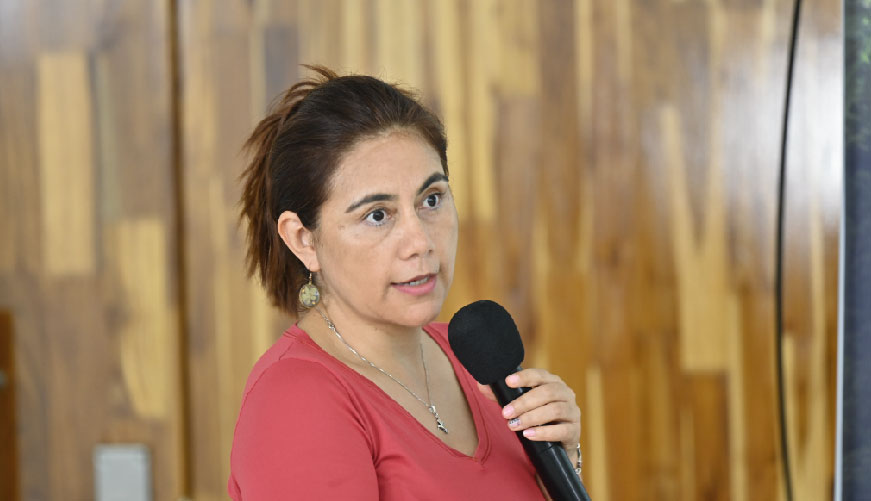
Sandra Castro’s presentation added a crucial dimension: the effects of this transformation on the Amazon. Although 80.5% of the Amazon biome still retains its natural cover, fragmentation is advancing and altering ecological processes that depend on the continuity of the forest, she noted.
The researcher from the Sinchi Amazonian Institute for Scientific Research was clear in stating that the Amazon rainforest performs essential functions for life: “It is a living system that carries out processes that allow this territory to exist as we know it,” she said.
The breakdown of Andean-Amazonian connectivity is, for Castro, one of the most sensitive issues. This connectivity is not an abstraction: it enables the movement of species, water and climate regulation, and the stability of ecosystems that, if interrupted, could not function fully. Hence his warning: “The connectivity between the Andes and the Amazon is deteriorating. If it is lost, the possibility of species moving and ecosystems functioning also disappears.”
Deforestation not only compromises biodiversity; it also affects human well-being. “When forests are cut down, communities also lose the opportunity to live off them,” he stated emphatically.
His message points to the root of the problem: without forests, there is no sustainable economic future for the region.
Castro also insisted on differentiating between the concepts of rehabilitation, recovery, and restoration. Although he did not define them rigidly, he did emphasize the social dimension of the latter process: restoration is not an isolated technical act, but rather a collective action that depends on community ownership.
“We provide technical support, but we don’t impose anything. We present a range of options, and it is the communities that decide which path to take,” he explained. This approach guides Sinchi’s work in the forestry development centers it leads in Guaviare, where communities participate in everything from planning to implementing productive and environmental alternatives.
Keep it or lose it all: the fundamental dilemma
The country is moving forward with a Deforestation Containment Plan which, according to José Yunis, seeks to coordinate sustainable forestry development, payments for environmental services, productive restructuring, strengthened indigenous governance, and continuous monitoring of the territory.
However, the director himself warned that the official goal of net zero deforestation by 2030 requires sustained effort over time: “This cannot be resolved in four years. These are 10- or 15-year processes. We don’t have that much time, but I don’t know how we can speed it up any further.”
Despite the challenges, both Yunis and Castro agree that the Amazon still has room to recover if the country decides to orient its economy toward conservation. Yunis said it unequivocally: “What we need to build is a forest economy, based on the resources here, that respects the environment. Anything that threatens the forest is useless.” Castro concluded with a reflection that seems directed at both citizens and institutions: “If we don’t know what we have, we can’t value it. And if we don’t value it, we can’t conserve it.”
IRI Colombia’s Scientific Immersion Day in the Amazon left one persistent idea hanging in the air: the Amazon is not being lost all at once, but rather through an accumulation of decisions. Similarly, it can only be saved through decisions that change course. Science has illuminated the path, institutions recognize the urgency, and communities know what is at stake. Now, the decisive factor will be what decision-makers choose to do with that clarity.