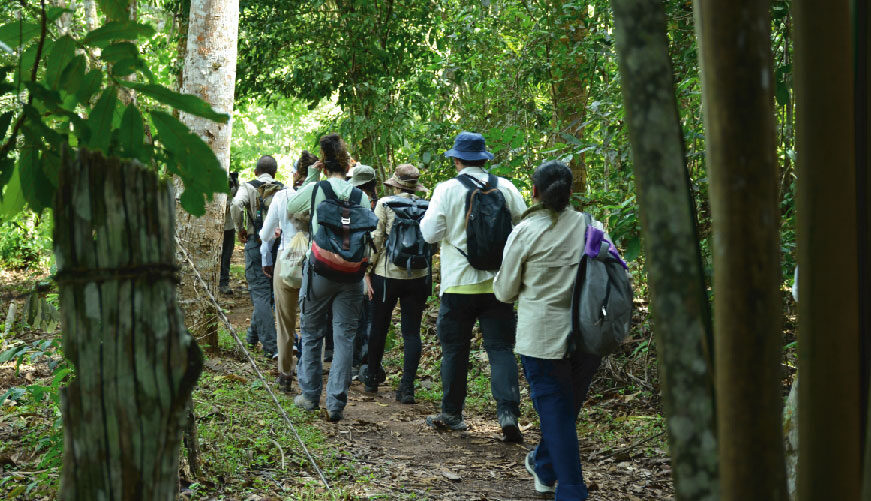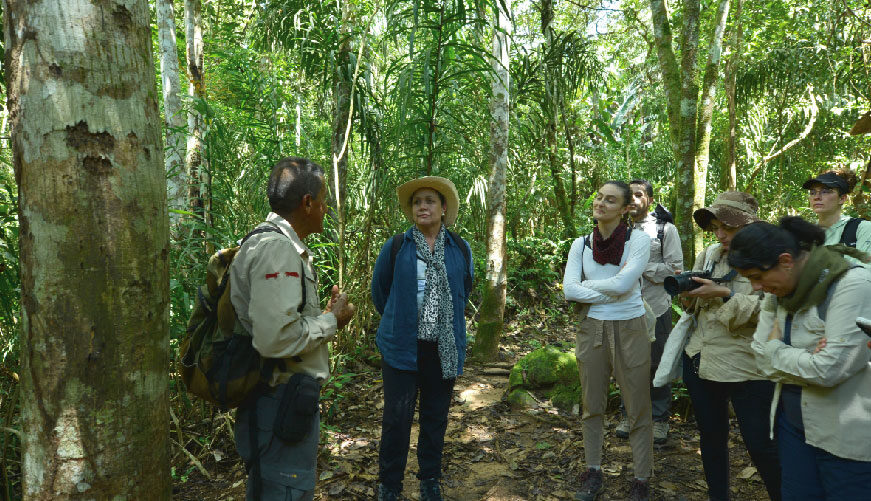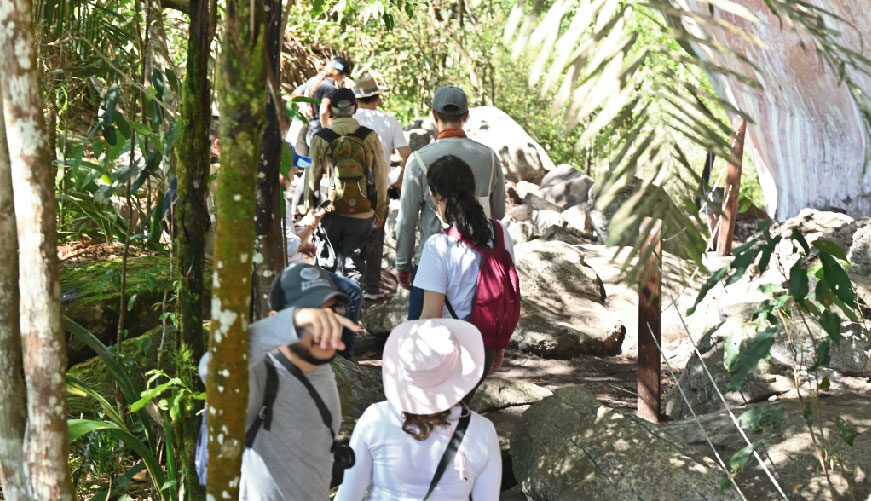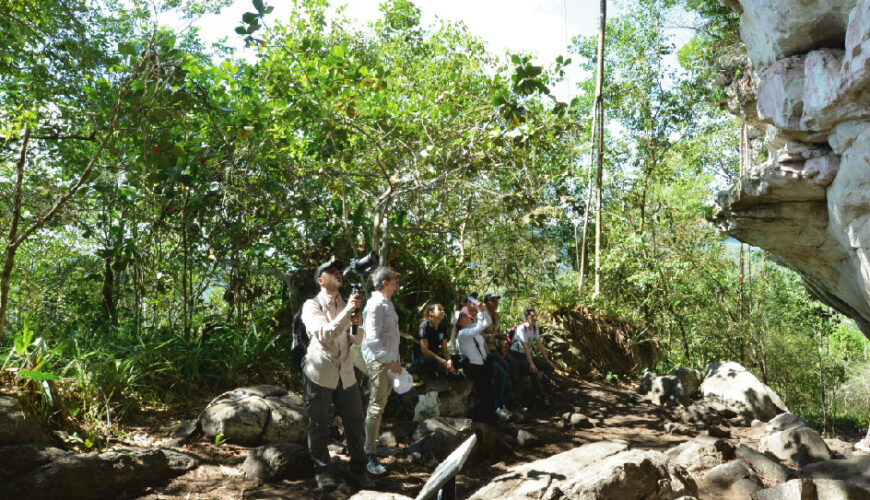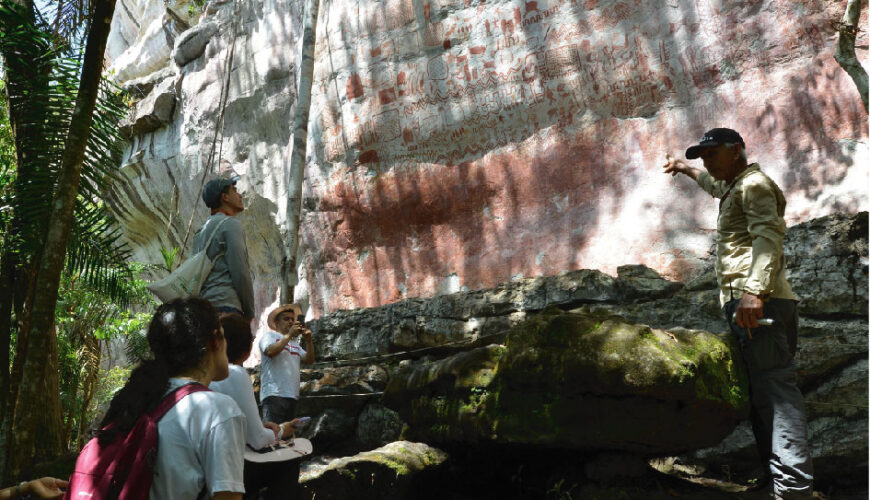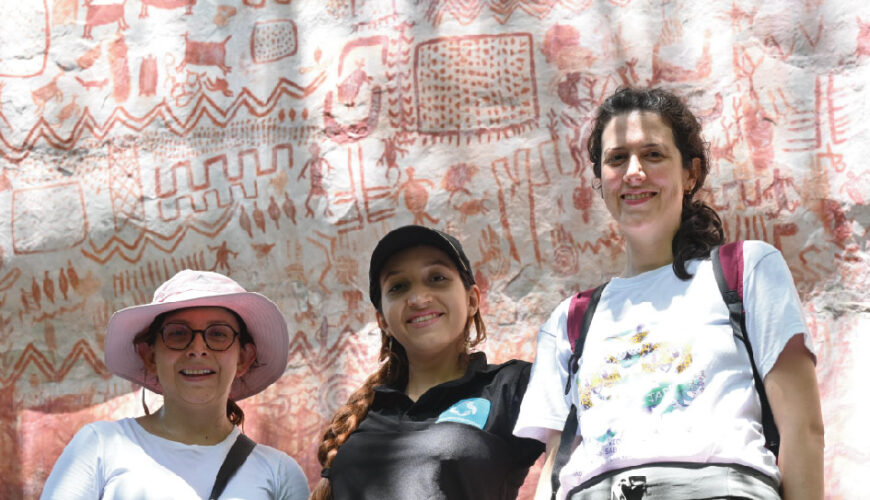
Through a tour of the Serranía de La Lindosa and Cerro Azul, the IRI Colombia Scientific Immersion Day allowed decision-makers, academics, and religious leaders to understand, from the territory itself, the strategic importance of this Amazonian landscape, its ecological fragility, and the need for effective shared responsibility for its protection
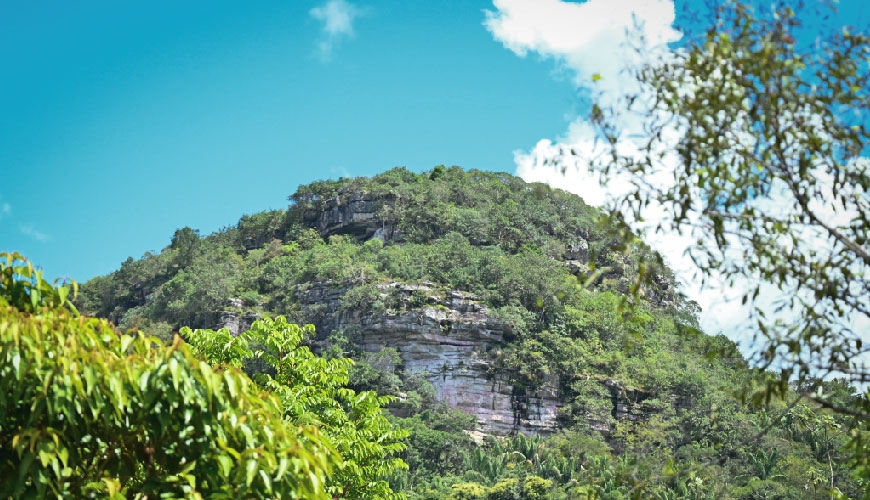
Covering an area of more than 12,000 hectares, the Serranía de La Lindosa stands imposingly in the middle of the Guaviare jungle. It forms part of the Precambrian shield of South America and its rocky outcrops, known as tepuis, are home to a biodiversity with unique characteristics. Its rocks have formed a unique landscape characterized by gullies (deep ravines), tunnels, and natural bridges, and crystal clear and reddish (due to oxides) waterways originate here, flowing into the Guaviare River and creating unparalleled aquatic habitats.
This impressive landscape was the setting for the second day of IRI Colombia’s Scientific Immersion Day.
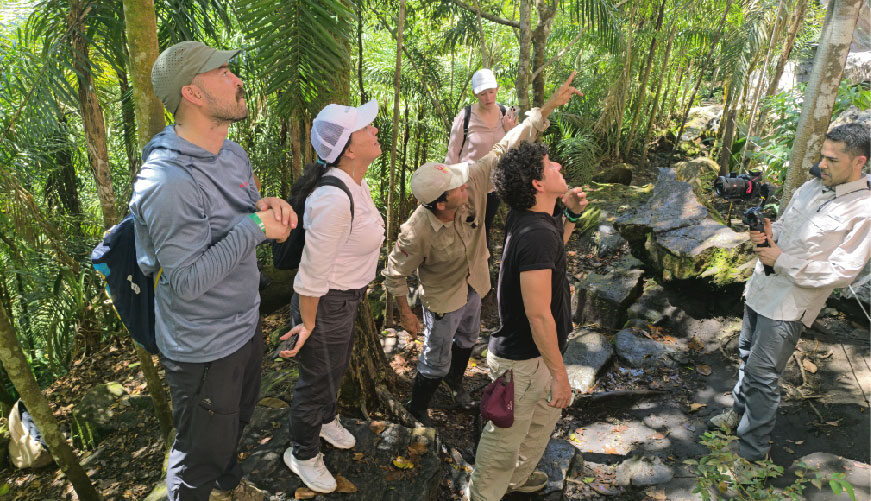
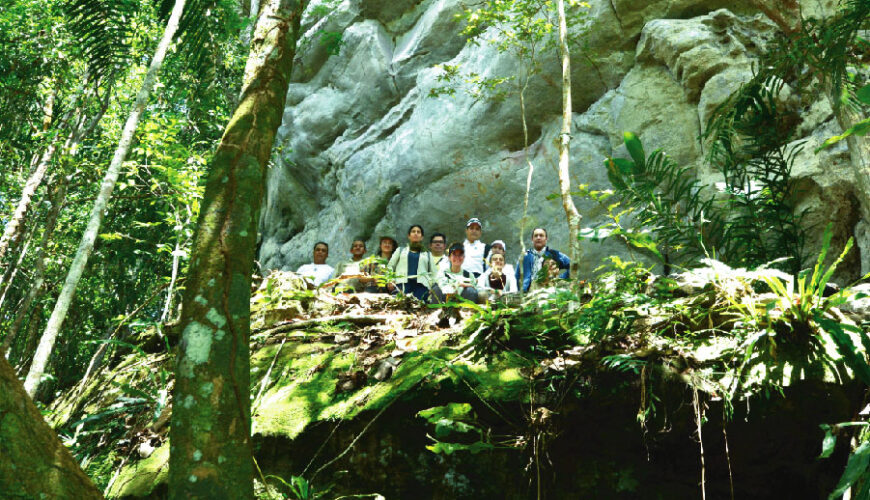
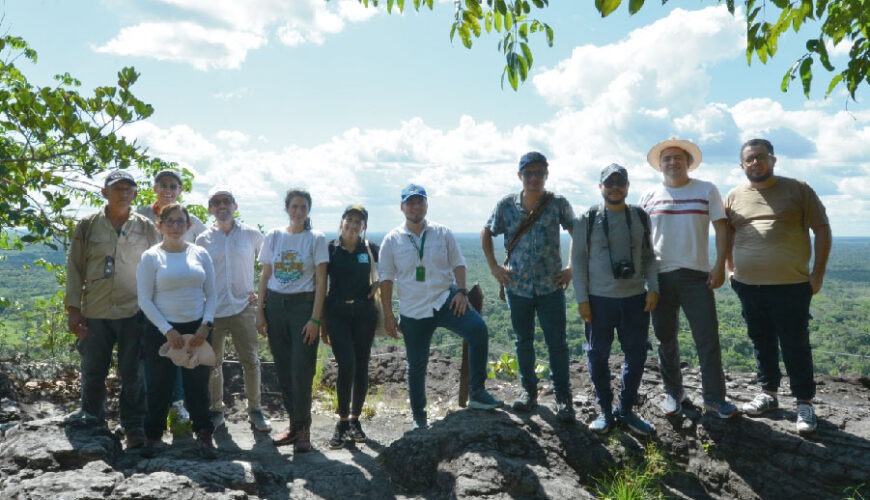
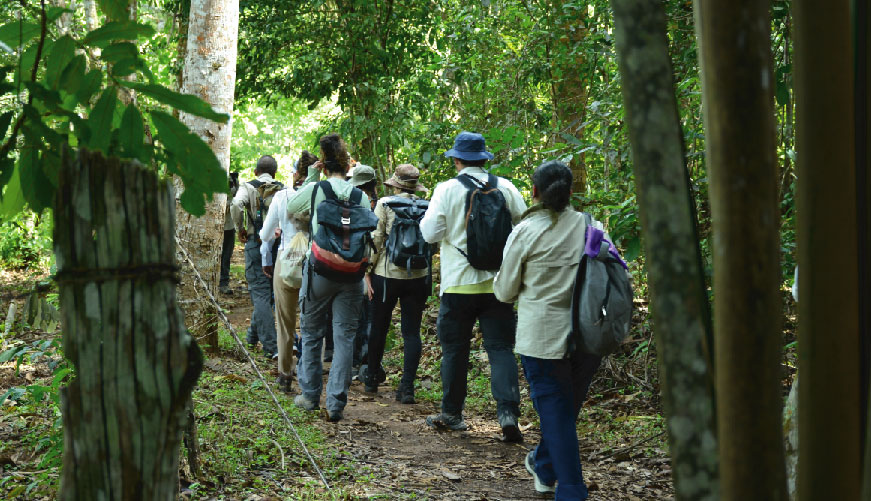
For almost four hours, the delegation—composed of members of the technical legislative units of various congressmen, magistrates, academics, representatives of multilateral organizations, religious leaders, and institutional actors—traveled through La Lindosa for more than 10 km until reaching Cerro Azul, one of the most significant natural treasures of the Colombian Amazon.
A territory where the rock tells the story of its first inhabitants
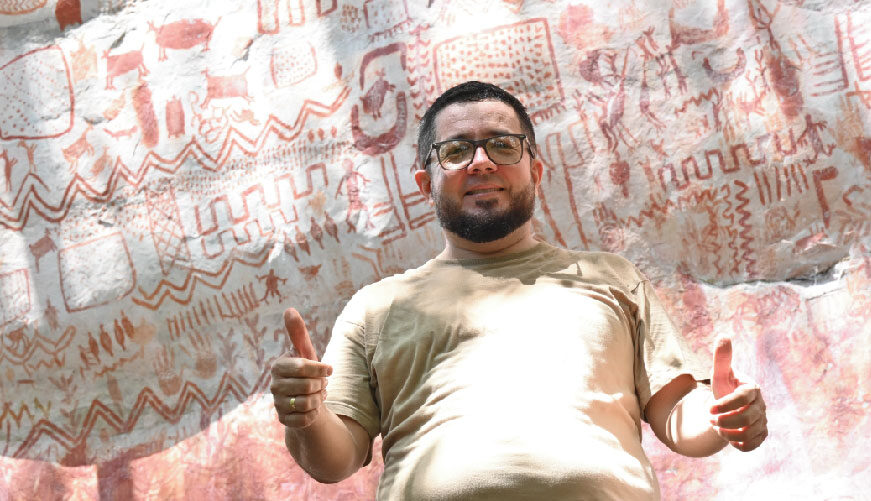
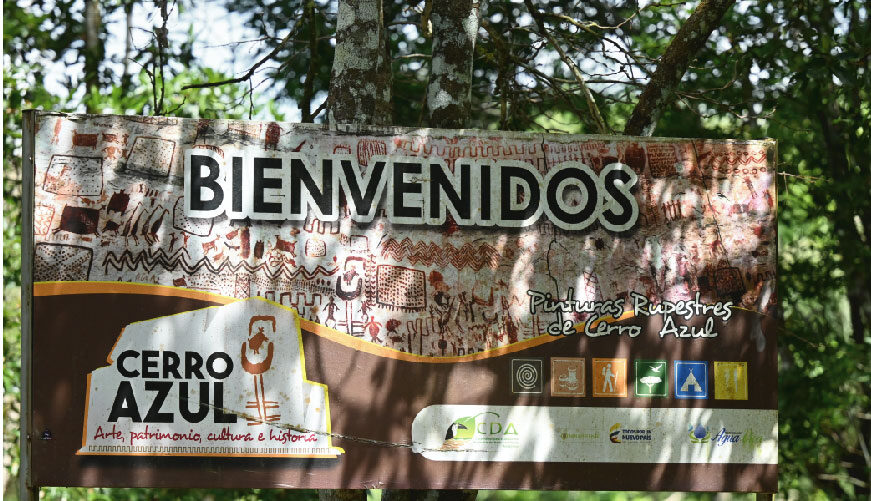
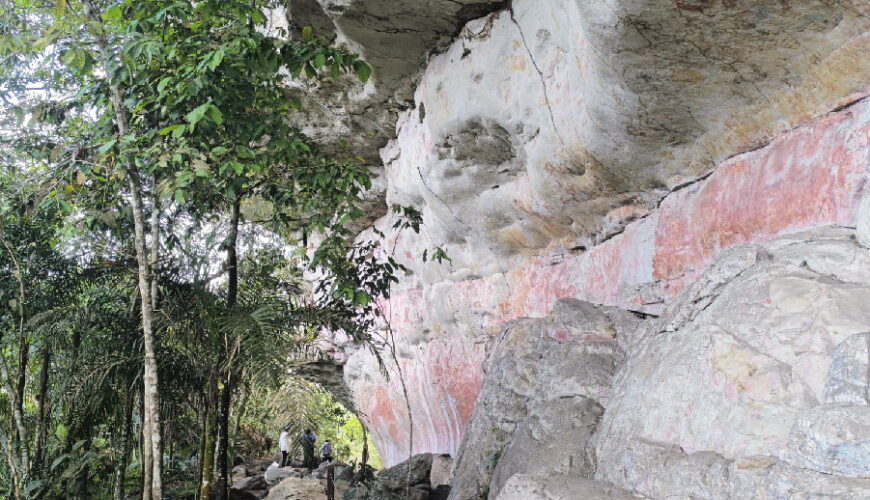
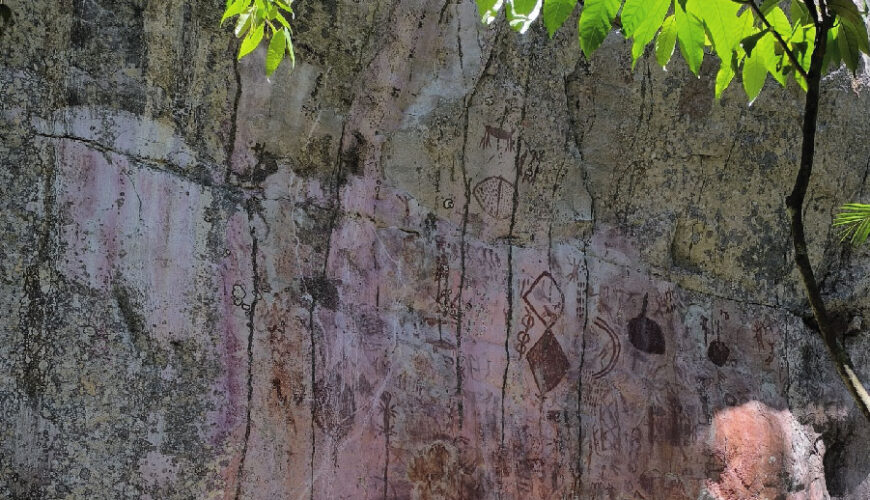
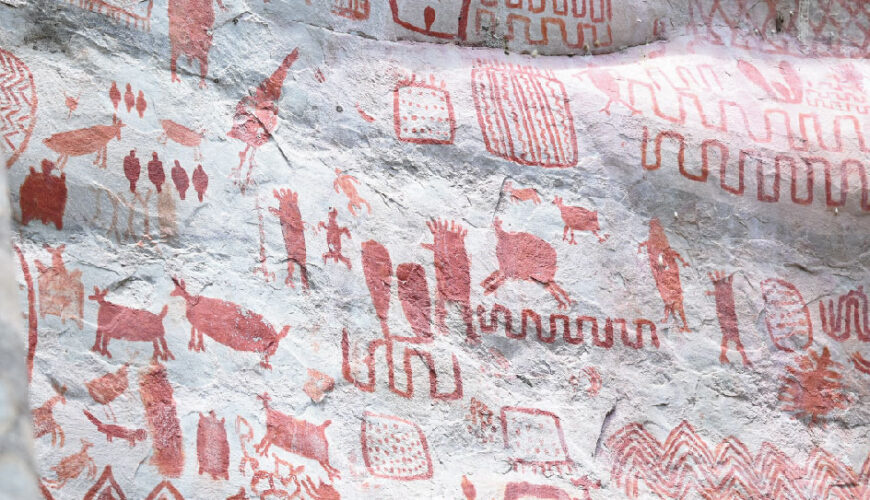
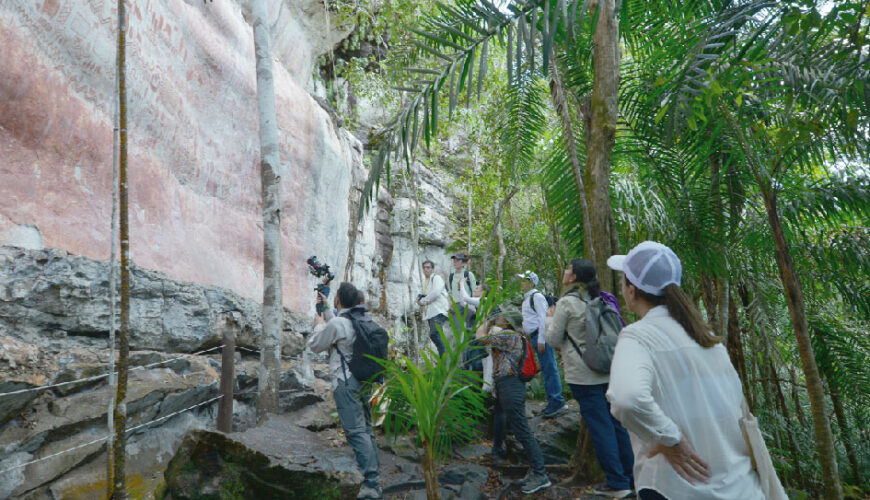
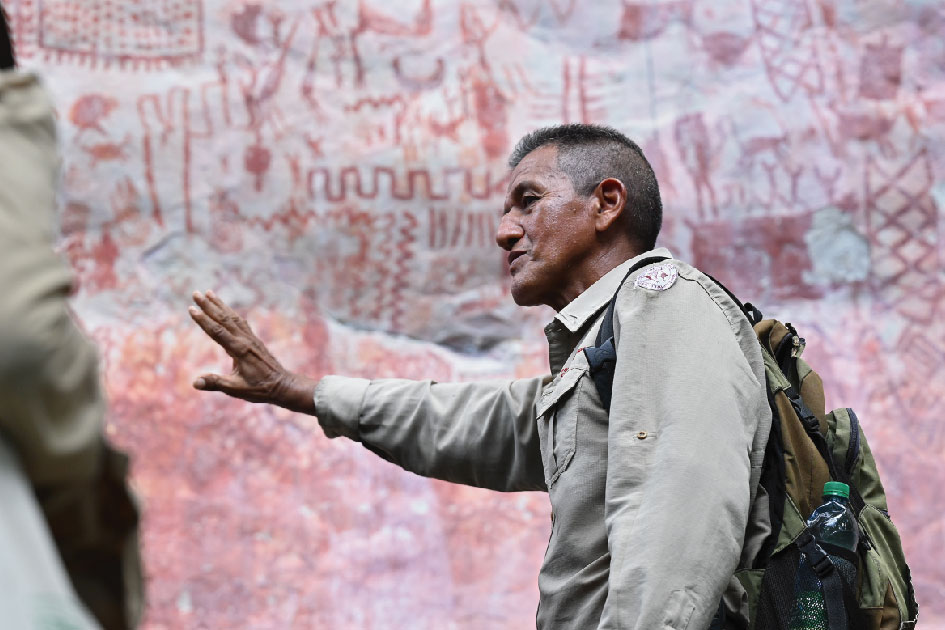
But beyond its natural grandeur, this territory holds exceptional heritage and symbolic value. La Lindosa is also renowned for its rock art sites—considered among the most important in the country—with thousands of figures distributed across rock shelters and mountain walls.
These paintings depict human figures, animals, geometric shapes, and scenes that show evidence of ancient human occupation of the territory—experts estimate more than 12,000 years.
Despite decades of research, they have not been completely deciphered: there is no single interpretation of their meaning or all their symbolic contexts, which reinforces their scientific and cultural value.
Reading the landscape throughout the journey allowed the expedition members to understand that La Lindosa is not just an archaeological site. It is a territory with invaluable wealth but high ecological fragility, located in a transition zone between the Amazon and the Orinoquía, where tourism management, access control, and environmental education are crucial for its conservation.
“In this area, we began working with communities to recover part of these areas and transform practices that were not in harmony with nature into others that recognize their strategic value for the country,” said Sandra Castro.
The researcher from the Sinchi Institute also highlighted the ecosystem role of this territory, especially in relation to water. “These areas are essential because they provide fundamental ecosystem services, such as water supply. The aqueduct that supplies San José del Guaviare is connected to this area,” she explained.
Conservation as a shared commitment
During their visit to Cerro Azul, in La Lindosa, participants in the Scientific Immersion Day were also able to observe ecological restoration processes that are now beginning to show results.
According to Felipe Esponda, the Corporation for the Sustainable Development of the Northern and Eastern Amazon (CDA) works closely with various entities and promotes natural restoration processes. “We saw it today on the tour, where cattle pastures once stood, forests are now growing,” explained the regional director of CDA.
These processes have an environmental dimension, but also a social and territorial one. Today, many of the people who guide tours in La Lindosa are local residents who have found a second chance in nature tourism and caring for the land.
In a conflict-ridden region such as Guaviare, the role of guides has changed: they not only provide guidance to visitors, but also care for, monitor, and protect the site, becoming guardians of natural and cultural heritage and key players in reconciliation.
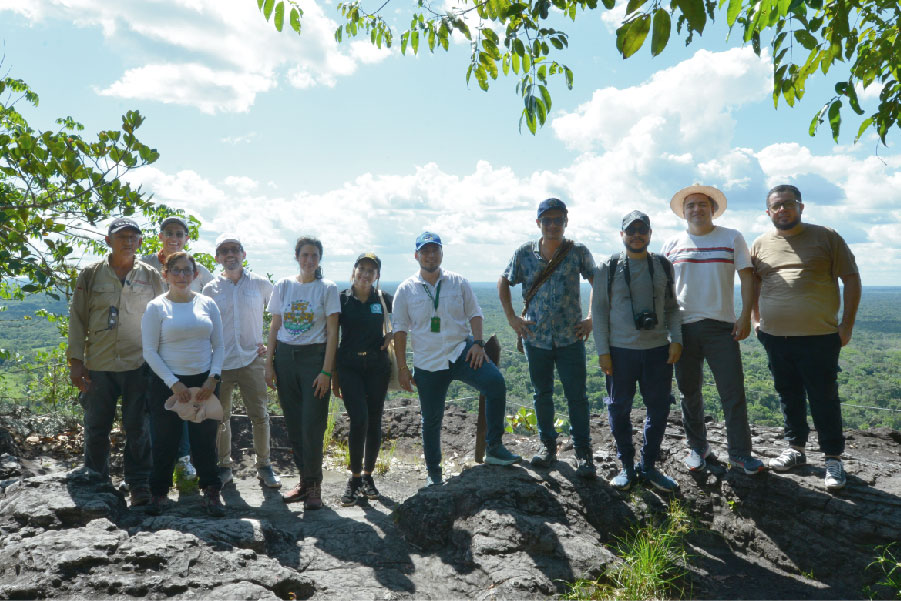
The visit to La Lindosa made it clear that conservation requires regulatory support, but it begins with how a territory is inhabited, cared for, and lived in. Protecting this landscape requires shared responsibility among decision-makers, institutions, communities, and visitors, as well as constant education about its fragility and value.
“Thanks to this immersion in the territory, we are able to transform perceptions of the Amazon held by decision-makers, academics, local authorities, and religious leaders who participated in the Scientific Immersion Day. This is vital in order to move towards a shared vision for its protection,” Marcela Lozano Borda, Humboldt Institute.
“I am amazed by the beauty of the landscape in La Serranía de La Lindosa. It is incredible not only for its environmental value, but also for the spiritual and cultural value of the pictograms and cave paintings we visited,” Johanna Cortés Nieto, assistant magistrate of the Constitutional Court.
“Colombia has the potential to be a leading country in nature tourism. It requires a strong promotion and training policy to design routes that showcase this potential. One example of this is Cerro Azul, where a community has been working for ten years on community-based tourism, showcasing the natural beauty of the Amazon and its anthropological value,” Dolores Barrientos Alemán, UNEP representative in Colombia.
“La Lindosa offers us an example of articulation. Regardless of the meaning that one tries to give to the programs, this is a manifestation of the spirit of the indigenous peoples who left us this legacy. In Cerro Azul, there is this articulation between culture, spirituality, and the environment,” he said.
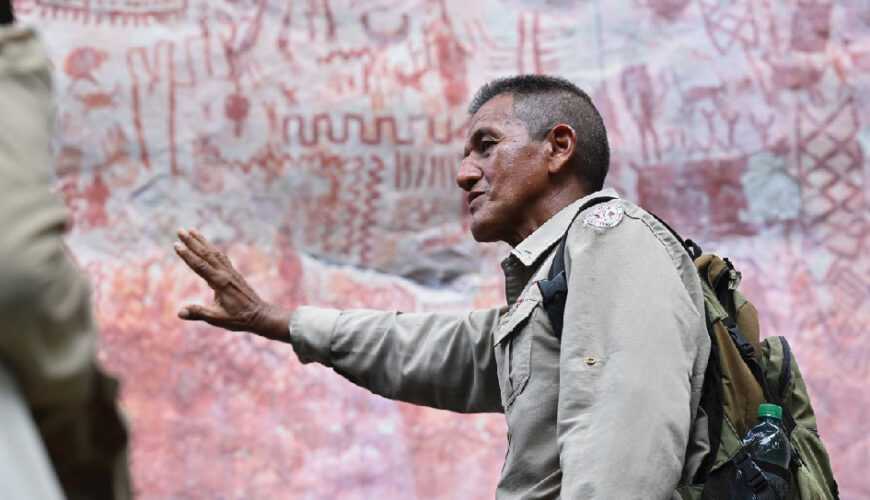 Alirio, one of the guides from the Fantasías de Cerro Azul Association, who led the tour.