
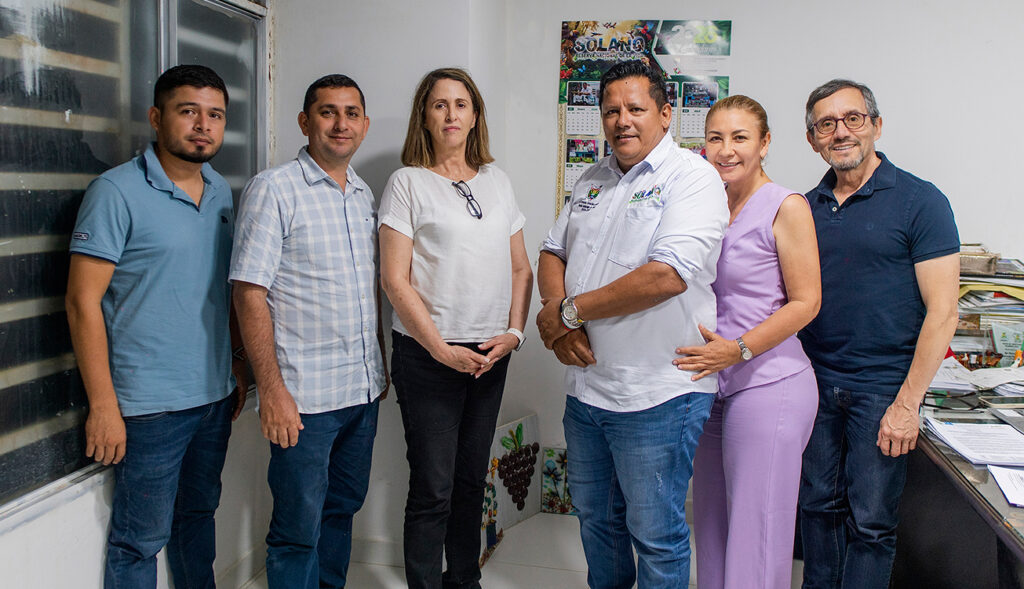
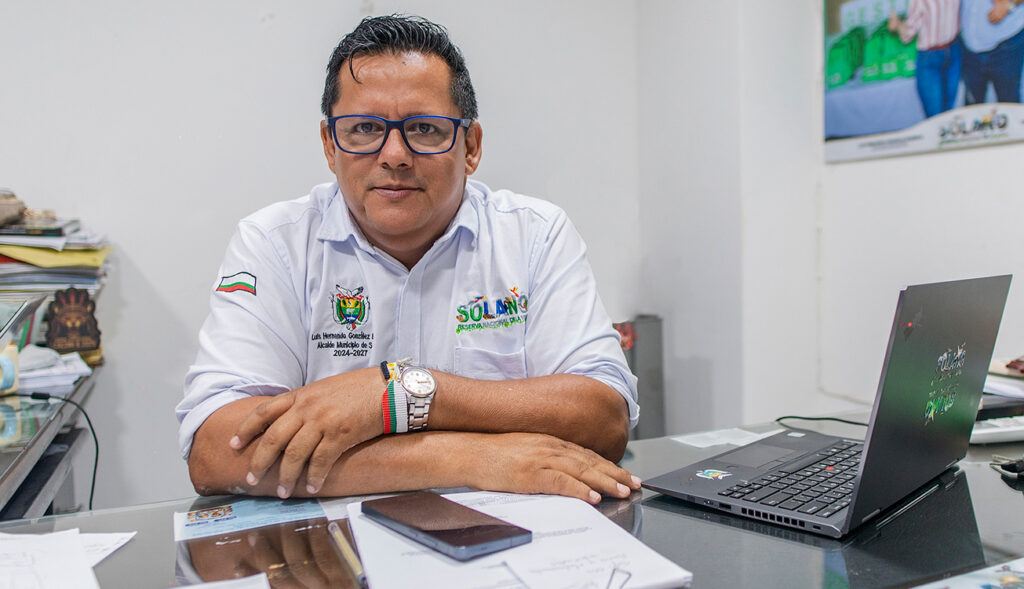
IRI-Colombia met with the mayor of Solano, Luis Hernando González, to present the Initiative’s new approach to capacity-building, learn about progress on the Municipal Development Plan, and explore avenues for collaboration between the local government and religious and community leaders from local chapters to strengthen efforts to protect the Amazon rainforest.
The meeting, held on March 24 in the municipality of Caquetá, took place within the context of the Initiative’s training cycle, which aims to train community and spiritual leaders to promote sustainable production models, such as agroforestry.
During the meeting, the mayor presented the progress of the Municipal Development Plan related to controlling deforestation and strengthening environmental policies. He also agreed with the Initiative on the need to consolidate a transition toward sustainable production models that harmonize economic growth, social well-being, and environmental protection.
For its part, IRI-Colombia highlighted the strategic role that religious leaders play in this process as agents of social transformation. “In areas where formal institutions have limited reach, religious leaders represent one of the most robust, legitimate, and widespread social infrastructures,” noted Blanca Lucía Echeverry. The director of IRI-Colombia emphasized that thanks to their moral authority, their daily closeness to communities, and their ability to influence values, behaviors, and collective decisions, religious leaders become key actors in driving real change on the ground.
For this reason, IRI-Colombia implements an approach that integrates science, ethics, territorial knowledge, and community action to advance toward a structural transformation in the relationship between communities and the forest—one that overcomes the false dichotomy between conservation and production and consolidates models of sustainable coexistence.
The meeting between IRI Colombia and the Solano Mayor’s Office represented a key moment of convergence between local institutions and communities. In this way, the Initiative reaffirms that, in addition to being an environmental challenge, the protection of Amazonian forests is a political, economic, and deeply ethical priority for territorial development.
Read the full issue of the IRIboletin here (in Spanish).