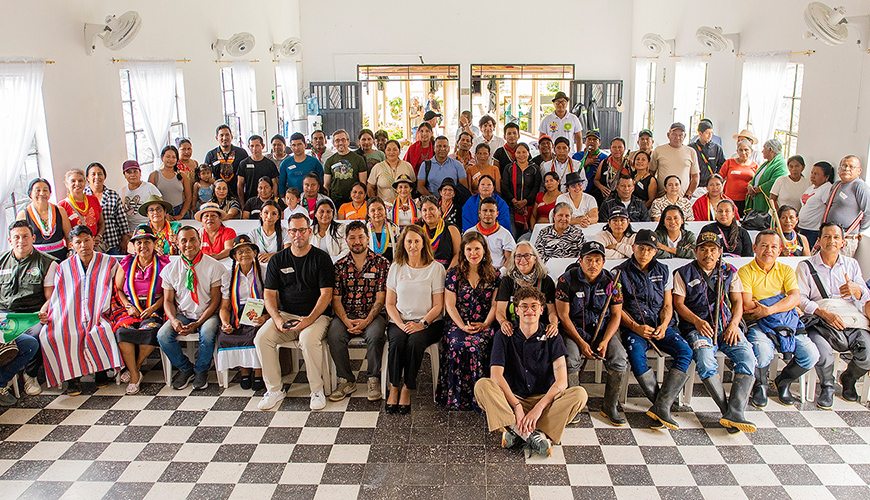
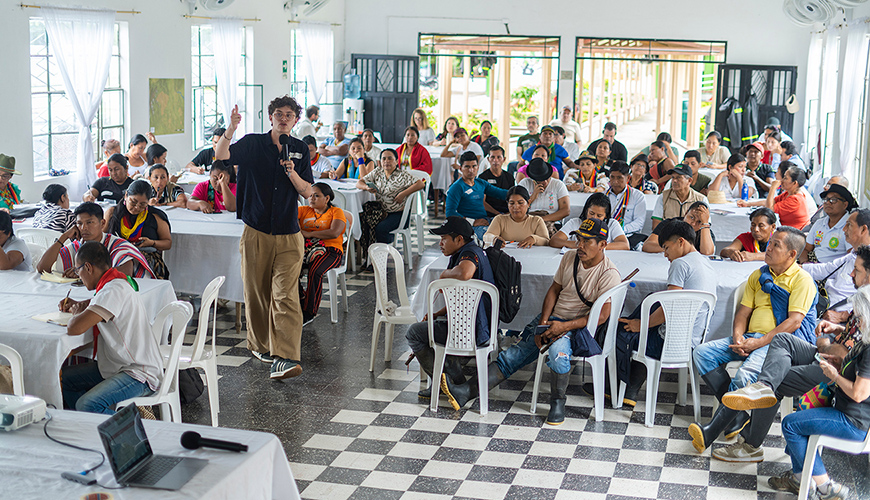
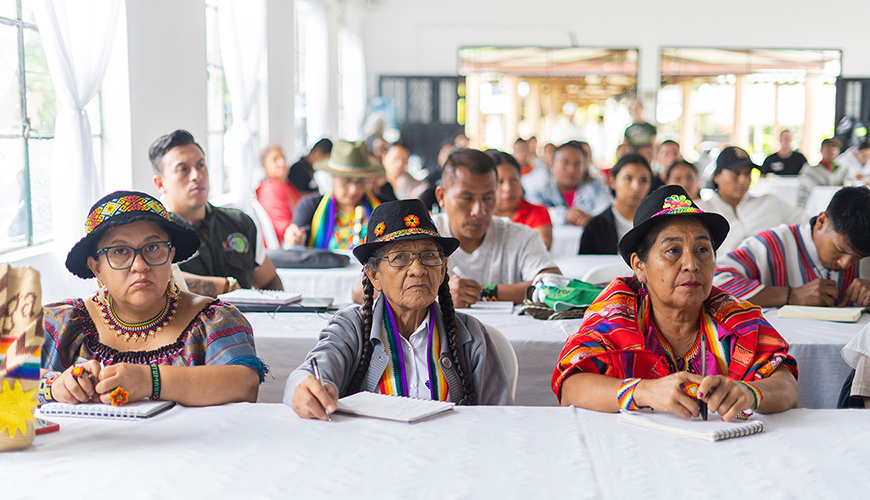
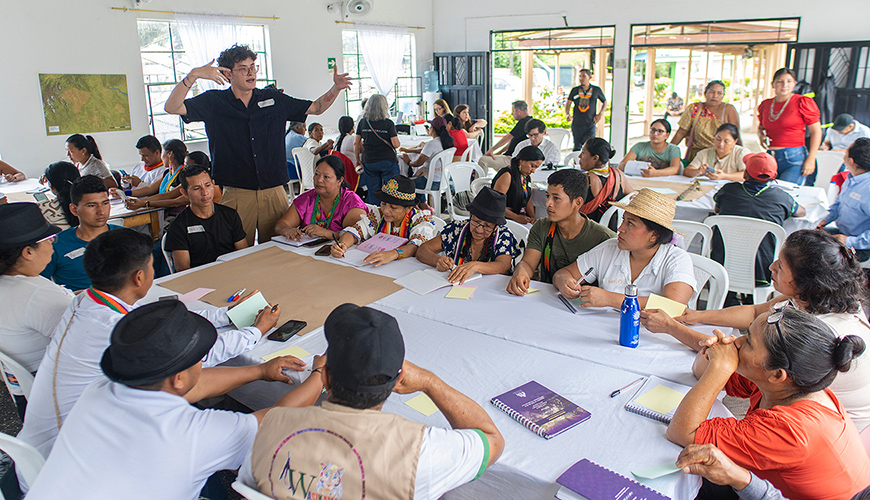
On June 9, 90 indigenous leaders and authorities from the Inga, Kamënts̈a, Awá, Nasa, Yanacona, Embera, Siona, and Murui peoples participated in IRI-Colombia’s first training session of 2026, aimed at members of our Initiative’s local chapters in the municipality of Villagarzón and the administrative districts of Puerto Umbría and La Castellana.
The training session, held in partnership with the Territorios en Común Foundation, built on the process that began in the second half of 2025, when indigenous authorities, religious leaders, partner organizations, and institutions initiated a dialogue regarding the scope of Indigenous Territorial Entities (ETIs) and their potential to strengthen the autonomy of indigenous peoples, the defense of their territories, and the conservation of the Amazon.
On this occasion, the goal of this new training cycle was to explore a possible course of action—based on the experiences and needs of each indigenous people—toward strengthening self-governance, land-use planning, and climate action from a biocultural governance perspective.
“For IRI, the defense of indigenous peoples’ territorial rights, knowledge, and leadership constitutes the core and very essence of our mission,” emphasized Joseph Corcoran, director of the Interfaith Initiative for Tropical Forests worldwide.
The director of the Global Interfaith Initiative for Tropical Forests highlighted the essential contribution of indigenous peoples to the protection of tropical forests and the importance of defending their rights and self-determination to ensure they continue to fulfill their role as guardians of the rainforest.
Understanding the Territory to Protect It
The first part of the meeting was devoted to a conceptual reflection on the Amazon region, its biodiversity, and the challenges it faces in a context marked by deforestation and climate change.
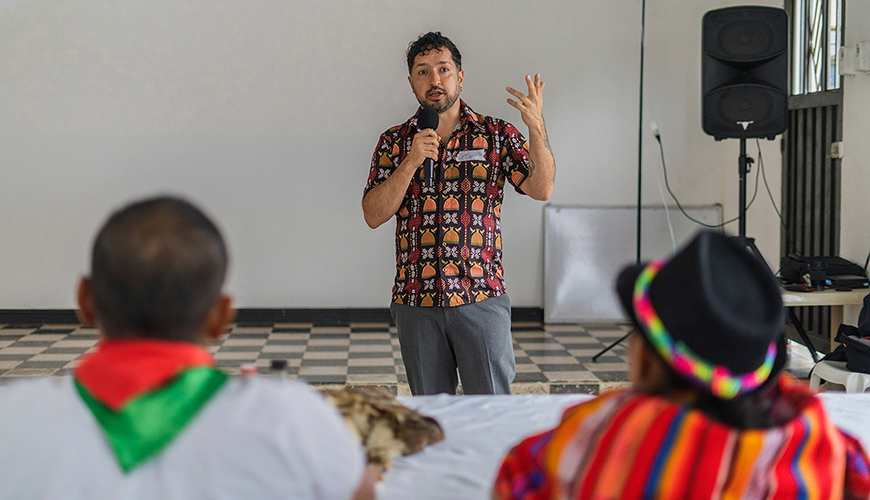
Diego Fernando Campos, a biologist with a Ph.D. in Ecology and Sustainable Development, gave a lecture on the geological history, ecological characteristics, and strategic importance of the Andean-Amazonian foothills, the region where Villagarzón is located.
During his presentation, the researcher and professor at the Universidad Distrital explained how geological processes gave rise to the Andes mountain range, the relationship between the Amazon and the so-called “flying rivers,” as well as the extraordinary biological and ecosystemic diversity that characterizes this region.
“This region of Colombia is like a geological, climatic, biological, and cultural laboratory. It is a hotspot—a focal point—for hydrology, but also for biodiversity,” noted the expert in biodiversity conservation, who also addressed climate change and the impact of deforestation on climate patterns and the emergence of extreme weather events such as severe droughts and intense storms.
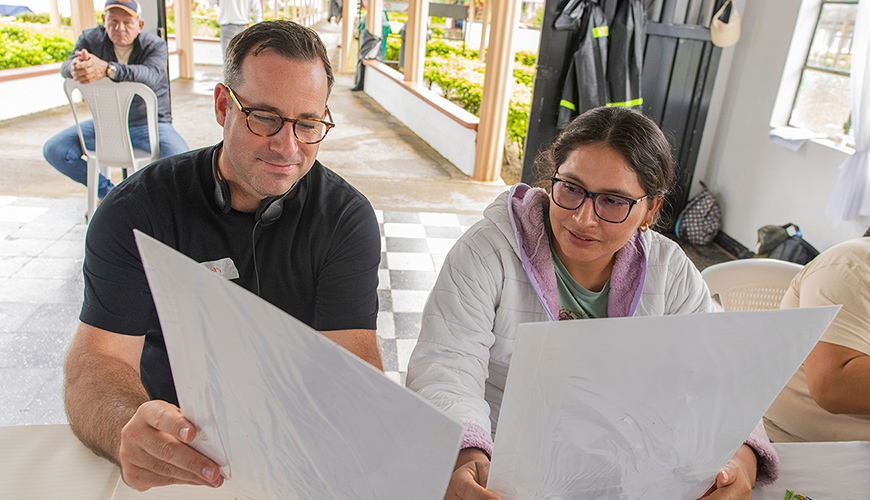
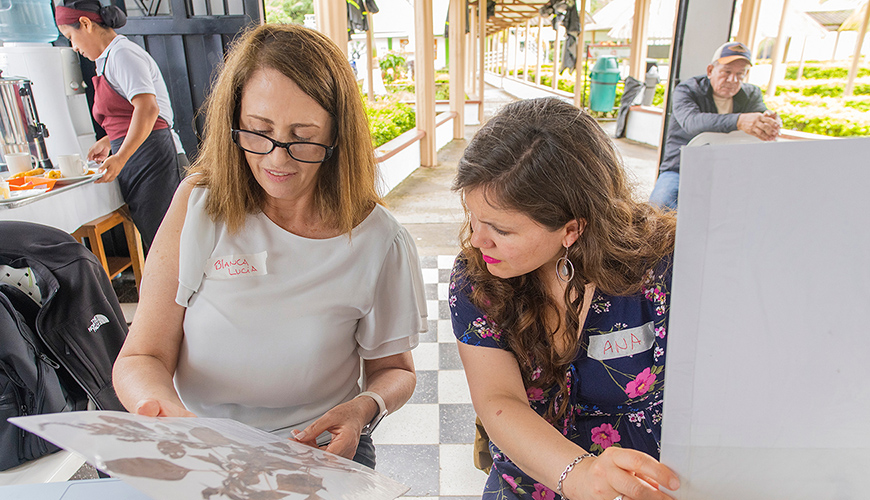
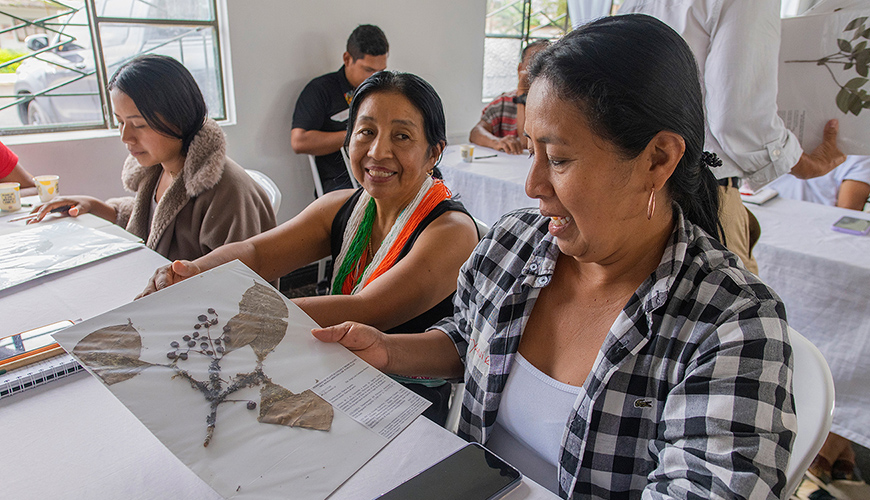
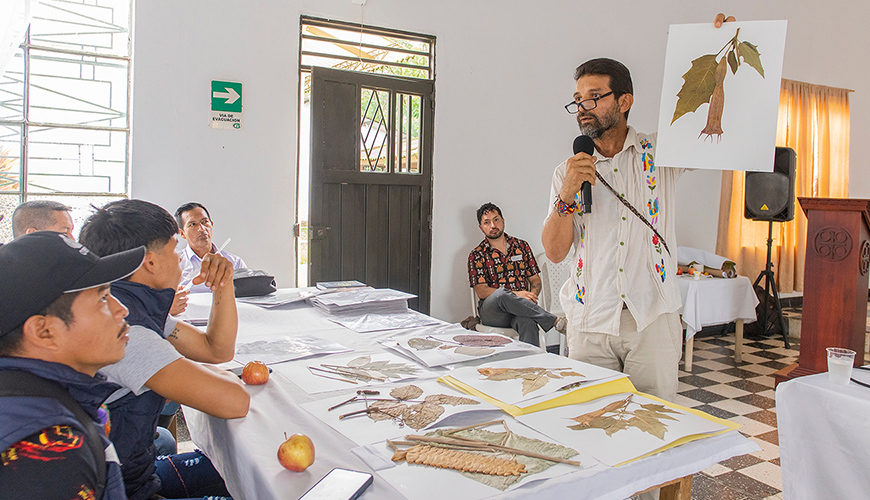
The second lecture was given by biologist and botanist Jorge Contreras, who presented the work of the Jajen Saimaá Andean-Amazonian Piedmont Ethnobotanical Herbarium, a collaborative research initiative developed in partnership with indigenous and rural communities in the region.
“By combining ancestral knowledge with scientific tools—such as identifying scientific names or cataloging threatened species—communities gain additional grounds to defend their territory against megaprojects, highways, or extractive activities,” noted the herbarium’s director.
ETI: A Historic Opportunity
“This is not about doing indigenous peoples a favor. Formalizing Indigenous Territorial Entities is a constitutional right, ratified in all international treaty processes, such as ILO Convention No. 169,” emphasized Alejandro Ballesteros, who gave a lecture on this political-administrative framework for land use planning.
The expert from the Territorios en Común Foundation, who has supported some of the ETI formalization processes in Guainía, explained to the indigenous leaders the legal, political, and administrative foundations of this land-use planning framework and the steps required for its implementation.
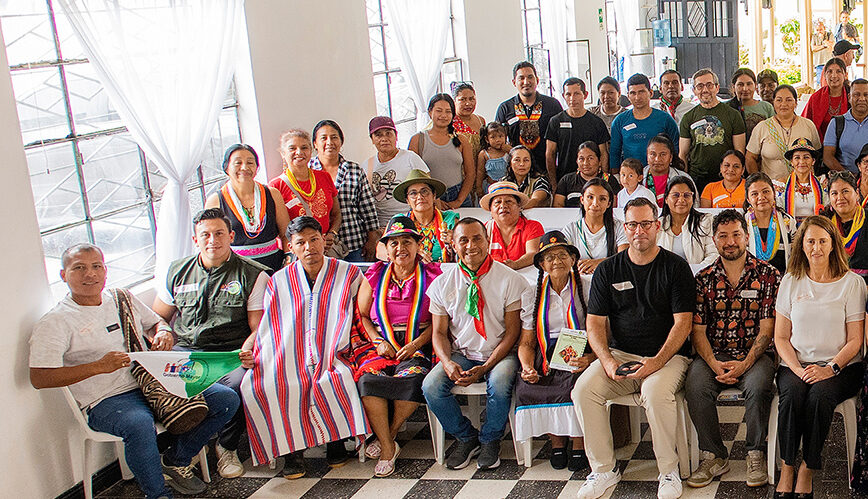
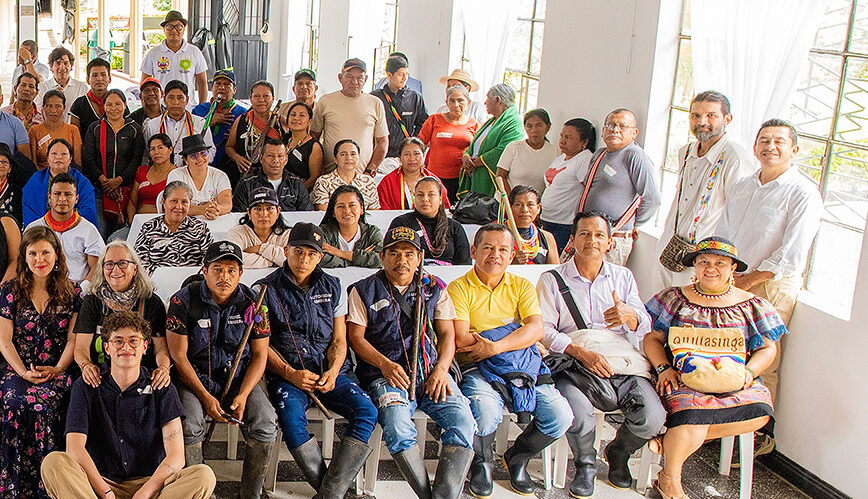
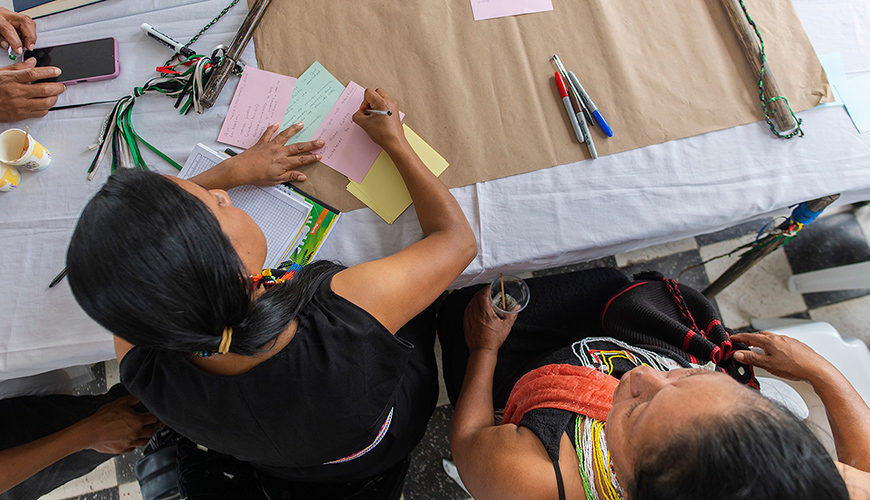
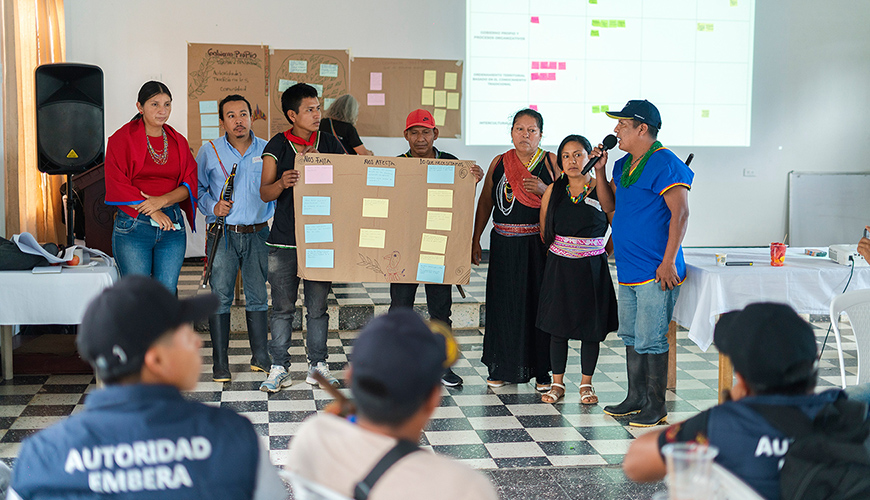
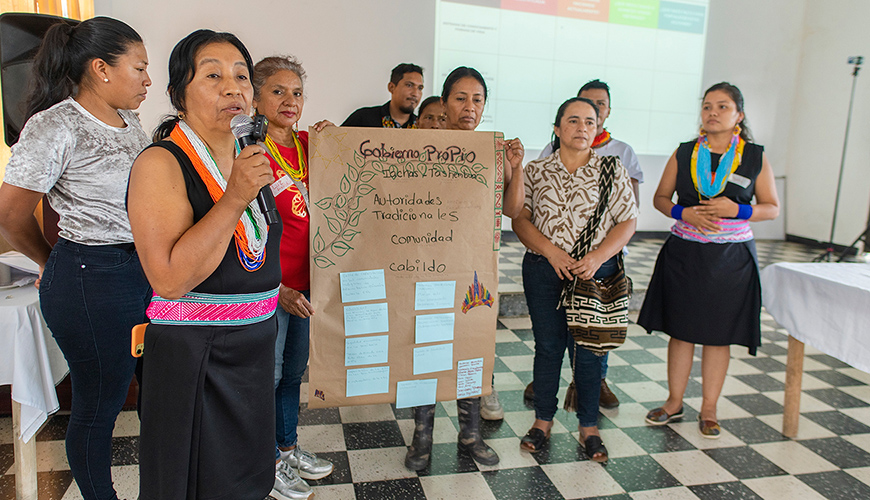
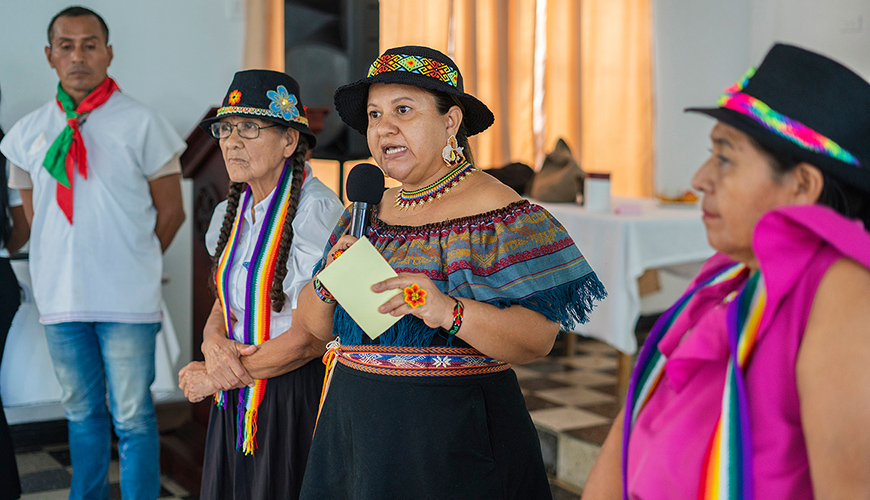
In addition to the theoretical component, the educational workshop in Villagarzón included a space for reflection and collaborative planning. Guided by Juan Camilo González, director of the Territorios en Común Foundation, the indigenous leaders participated in a practical workshop in which they analyzed the threats, pressures, strengths, and opportunities present in their territories. This exercise allowed them to reflect on the challenges currently facing indigenous peoples and to build a shared vision regarding priorities for organizational strengthening in the short, medium, and long term.
“In Putumayo, there are 15 indigenous peoples. Of the 254 reserves that exist, only 93 have been officially established by resolution, covering an area of 722,000 hectares. This means that more than 50% of us do not have territory,” explained Rosendo López Bolívar, leader of the Murui people (also known as the Uitoto or Murui-munani).
The loss of cultural identity—resulting from the lack of indigenous education systems—as well as the lack of legal security regarding territories and the need to expand them are some of the challenges faced by the department’s indigenous communities. Similarly, indigenous leaders identified other issues such as the presence of armed groups, deforestation, extractive activities, and the contamination of water sources.
As a result of this participatory exercise, a proposed roadmap was developed, focused primarily on strengthening cultural and spiritual identity, consolidating legal security over territories, strengthening organizational processes, and developing their own tools for territorial planning and management.
Other priorities identified include the identification and protection of sacred sites, the formulation of “plans for life,” the strengthening of indigenous education and health systems, and the development of regulations and tools to consolidate self-governance.
Through this new training initiative, IRI-Colombia and the Territorios en Común Foundation continue to strengthen intercultural dialogue and support indigenous authorities in building capacity for territorial governance and climate action. Beyond knowledge transfer, these initiatives aim to build lasting partnerships that will advance toward an Amazon where forest protection, the autonomy of indigenous peoples, and the well-being of communities are inseparable goals.