
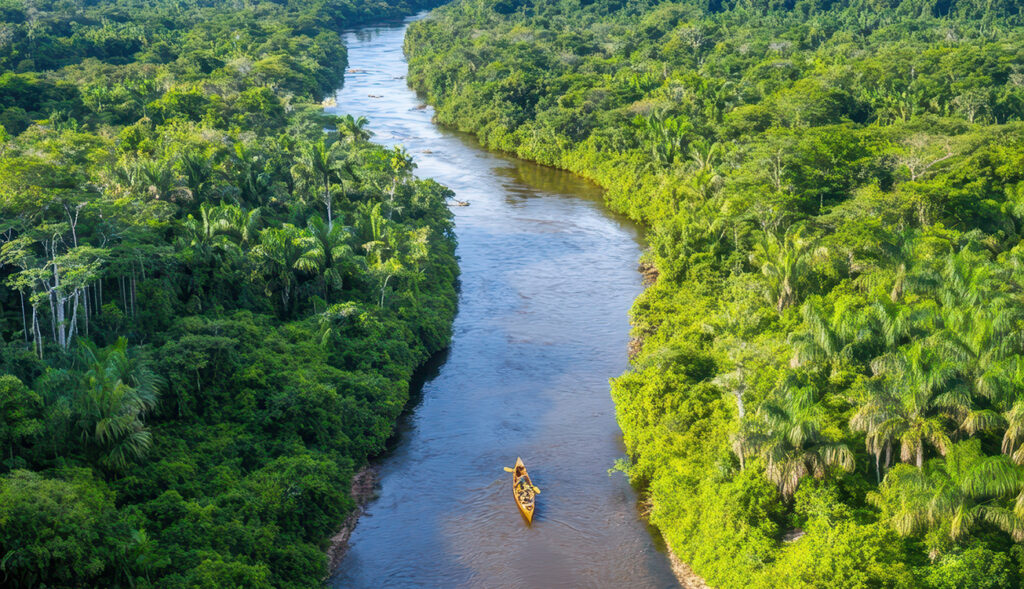
The Amazon is part of the daily lives of millions of Colombians. Its role in the water cycle, agriculture, and energy generation makes it a strategic region for the country.
“After studying water issues for more than ten years, I finally understood what many Amazon residents have known for a long time: everything is interconnected,” stated Natalia Acero as she recounted how, during a hike between Chingaza Lagoon and Villavicencio, she was able to observe the “flying rivers” that carry streams of moisture from the Orinoco and Amazon basins to the Andes.
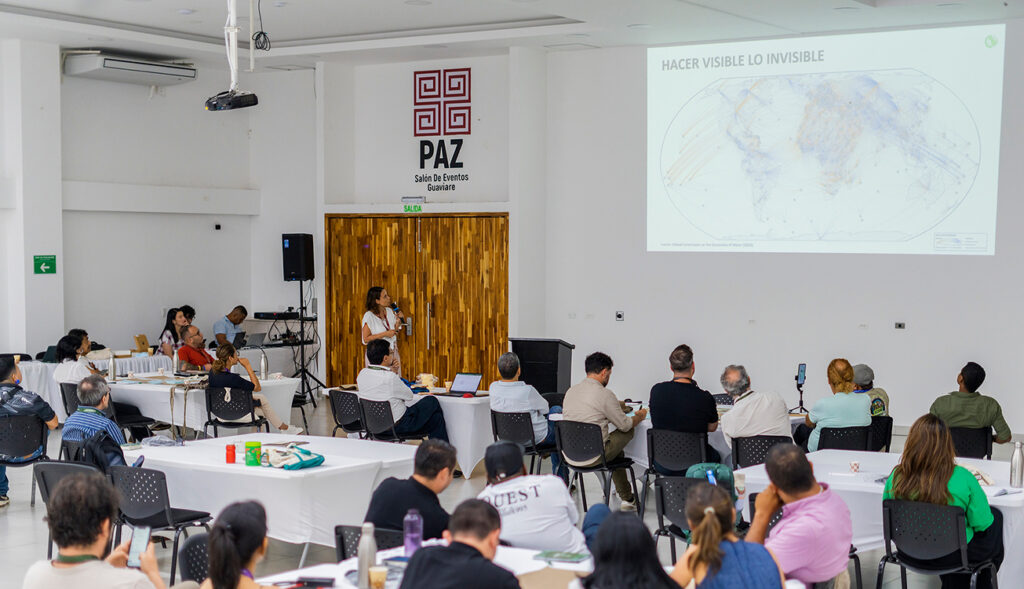
With this powerful statement, the manager of The Nature Conservancy’s (TNC Colombia) Integrated Watershed and Water Resources Management Program began her presentation at the Amazon Scientific Immersion Conference, held June 11–13 in San José del Guaviare.

The expert delivered a lecture titled “Water, Territory, and Climate Security: The Framework Colombia Must Achieve,” in which she addressed topics ranging from the central role of forests in the water cycle to the interconnections between the Amazon, the Orinoquía, and the Andean region in terms of water resources.
According to the chemical and environmental engineer, of all precipitation, nearly 40% becomes “blue water”—that is, surface and groundwater available to humans. The remaining 60%, known as “green water,” is stored in the soil or vegetation.
There are areas in the world where this type of water is generated and, thanks to topographic, wind, or climatic conditions, it migrates to other places. According to the expert, green water can travel long distances, beyond the borders of countries and continents, connecting communities, nations, and regions. “Like many large river basins and aquifers, atmospheric moisture flows are transboundary resources that carry water from one country to another,” she noted.
Source of Green Water
The Amazon basin is known for its water potential. It produces 230,000 m3 of water per second and holds the largest volume of surface freshwater, accounting for 2% of the global total.
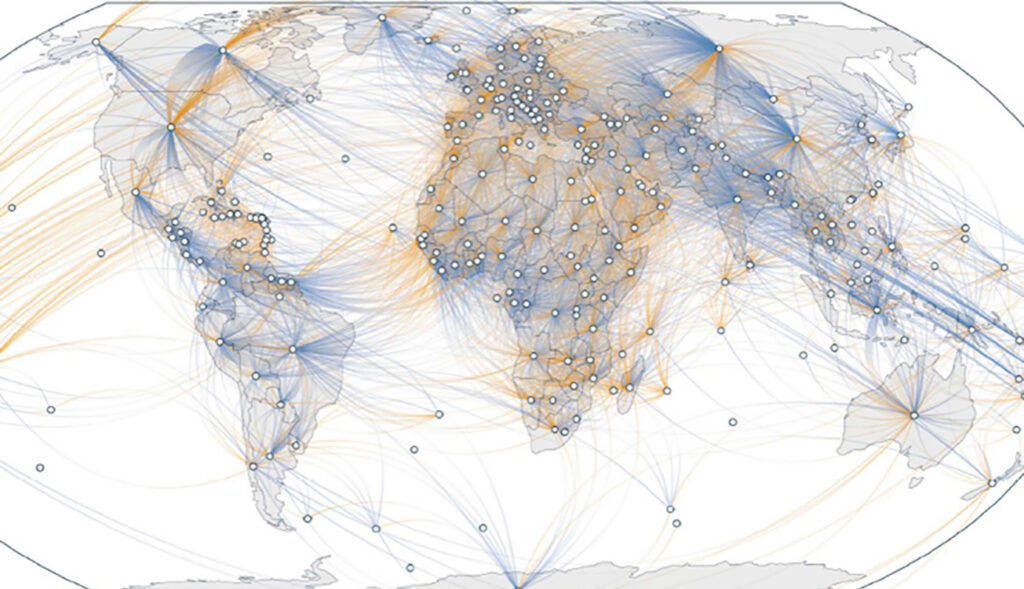
However, “only now are researchers beginning to analyze its extraordinary wealth of green water.” Through evapotranspiration, trees and vegetation return moisture to the atmosphere, where it condenses and falls back to Earth as rain. This recycling cycle occurs five to six times as trade winds cross the Amazon basin from east to west before reaching the Andes.
This flow of water is what we know as “flying rivers.”
Thanks to this process, the region produces between 10,000 and 23,000 million liters per day. “Fifty percent of that recycling depends on vegetation cover. If the Amazon is deforested, that ‘green water’ would turn into ‘blue water’ and flow into the ocean,” she emphasized.
What happens in the Amazon is felt elsewhere
This interconnectedness has impacts on the local, regional, and even global hydrological cycle, noted the scientist, who holds a master’s degree in Environmental Modeling, Monitoring, and Management.
As demonstrated in a study by the Julio Garavito Colombian School of Engineering and the IHE Delft Institute for Water Education in the Netherlands, there is a strong connection between the Amazon and Orinoco river basins and Chingaza, the system that supplies water to Bogotá.
“Twenty-four percent of the water consumed in Colombia’s capital comes from the Amazon basin, 25% from the Orinoquía basin, 37% from other regions, and 14% from the Pacific Ocean,” explained Acero.
Likewise, there is a clear connection between the hydrological cycle and deforestation. Forest loss has impacts on agriculture, water supply to major cities, and hydropower. According to a study by TNC, climate change and deforestation contribute to extreme droughts and floods in the basin and can reduce water availability by up to 75% in certain areas of the Amazon. “The water cycle is a structural pillar of the country’s social and economic development; therefore, it is essential to protect it,” she emphasized.
Restoring the Amazon as a Water Security Policy
The big question is how to ensure that this interconnectedness is reflected in the legislative agenda. For Natalia Acero, the next step is to translate scientific knowledge into laws that fund the protection of the water cycle, promote water connectivity corridors, strengthen tools to combat deforestation, incorporate Indigenous knowledge into land-use planning, and promote watershed-based restoration. “Only then will it be possible to move toward a more resilient Amazon and greater water security for the country,” she said.
In addition to the scientific arguments, during the conference, the expert in integrated water resources management presented legal, political, and economic arguments that members of Congress should consider to support new legislative actions.
One of these was Bill 129 of 2022, which, although it was ultimately shelved, sparked a debate in Congress about the relationship between deforestation and “flying rivers.” She also referred to Ruling 4360 of 2018, in which the Supreme Court of Justice recognized that the destruction of the Amazon violates fundamental rights such as the right to life, health, water, and a healthy environment.
In closing, Natalia Acero emphasized that conserving and restoring forests not only prevents losses but also generates benefits for the country. “According to the Inter-American Development Bank (IDB), preventing the Amazon from reaching a tipping point would yield a return on investment of USD 29.5 billion,” she concluded.