
Nature can no longer be understood solely as a resource. From an ecocentric and rights-based perspective, the Amazon poses new challenges for Congress. During the Legislative Clinic at IRI-Colombia’s Amazon Scientific Immersion Day, the Ombudsman’s Office presented regulatory tools and recommendations to address the biome’s environmental and climate crisis.
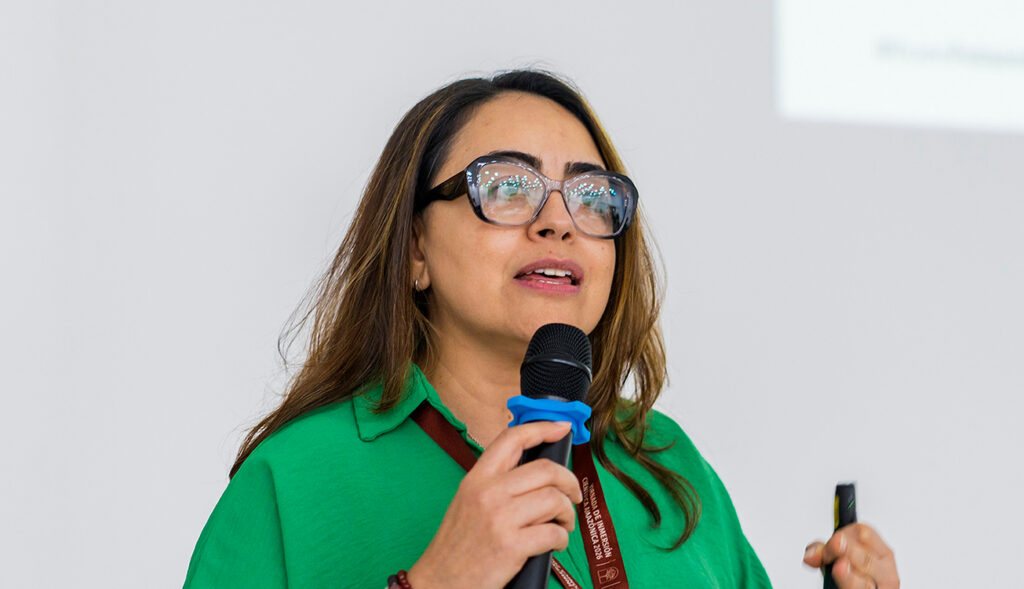
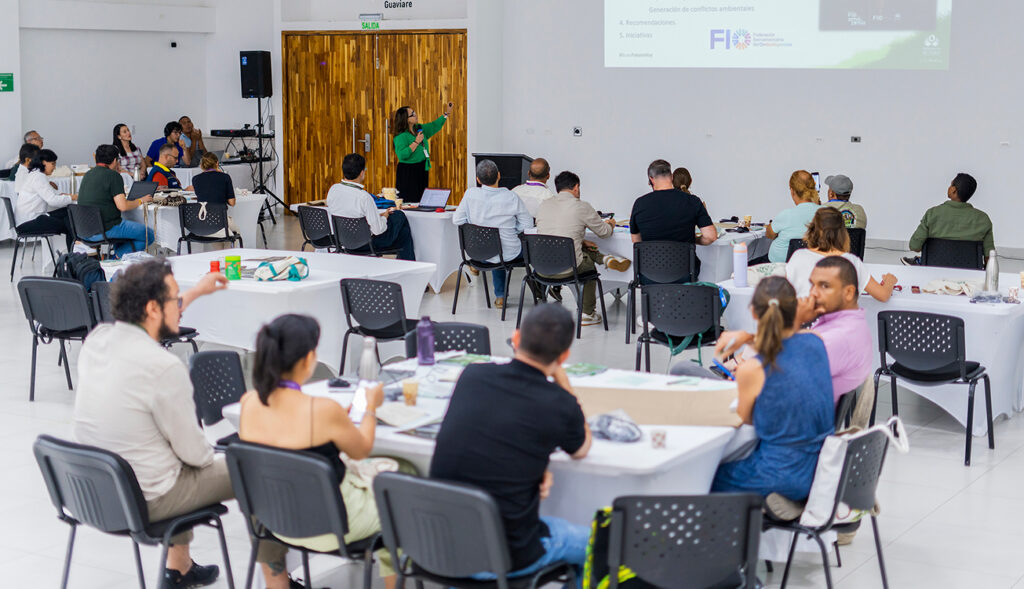
“Without nature, there is no development, nor is there peace,” emphasized Érika Castro Buitrago, Deputy Ombudsman for Collective and Environmental Rights, who highlighted the urgency of a paradigm shift in our country’s vision. The expert from the Ombudsman’s Office delivered the lecture “The Amazon and the Constitutional Order: Structural Framework, Law, and Territory on the Front Lines of the Climate Crisis” as part of IRI-Colombia’s Legislative Clinic for the 2026 Amazon Scientific Immersion Conference.
During her presentation, the attorney provided the congressmen participating in the event with a legislative overview that supports this new paradigm and offers them useful regulatory tools for enacting legislation regarding the Amazon during this four-year term. “Not only in the sense of drafting bills to be enacted as laws, but also to streamline existing laws—that is, to review what works and what doesn’t, and what needs to be harmonized,” she clarified.
A New Perspective on Nature
According to the legal expert, it is essential to understand that Colombia took a biocentric turn in 2016, when the Constitutional Court determined that the approach to nature and its rights, as enshrined in the Constitution, is ecocentric.
This new vision demands a transformation in beliefs, assumptions, methodologies, and ways of understanding reality.
“Nature is no longer a resource or a quarry; today, it is a subject. The Amazon, for example, was declared by the Supreme Court of Justice, in Ruling 4360, to be a territory with rights,” noted the deputy ombudswoman, who urged members of Congress to “give nature a seat” at the legislative table.
Castro Buitrago presented five key documents that, in addition to providing an overview of regulatory efforts regarding the Amazon, offer recommendations to the Colombian government for addressing the most recurrent issues related to human rights and the rights of nature.
The first is FIO Alert 001 of April 2024, developed by the Ibero-American Federation of Ombudspersons—of which the Ombudsman’s Office is a member. This report, prepared by Peru, Brazil, Ecuador, Bolivia, and Colombia, calls on these states to identify the most serious threats to the biome and presents four risk scenarios. Among them, one of the most critical concerns the threats faced by environmental defenders.
Some of the document’s recommendations include the necessary integration of Amazonian states, increased budgets for environmental authorities, the harmonization of legislation and public policies, the creation of incentives for forest conservation on private lands, and political oversight of compliance with international commitments regarding the environment and the rights of indigenous peoples.
An Alert and a Warning
The Ombudsman’s Office has also repeatedly addressed the critical situation facing human rights defenders and social and environmental leaders. In Early Warning 007 of 2024, it warns of the risks these individuals face in 50 municipalities and 18 non-municipal areas in the departments of Amazonas, Caquetá, Cauca, Guainía, Guaviare, Meta, Putumayo, Vaupés, and Vichada.
In addition to raising the issue, the Alert suggests as a solution the implementation of collective protection measures for environmental leaders and indigenous communities at risk, in coordination with other entities, such as the National Protection Unit and the Ministry of the Interior.
Furthermore, the document outlines the mechanisms used by illegal armed groups to circumvent environmental regulations, creating their own environmental rules within their territory.
The third, titled Warning Document: Comprehensive Management of Strategic Ecosystems and Biodiversity in Colombia, from 2024, “is the only one that contains recommendations for the Legislative Branch and presents an assessment of Colombia’s ecosystems and their protection,” stated Castro. It recommends designing, analyzing, and further developing strategies and measures aimed at addressing the risks, threats, and vulnerabilities affecting the country’s strategic ecosystems and biodiversity.
The fourth document presented by Castro, Timely Warning Report on the Risk of Human Rights Violations in the Colombian Massif, 2024, outlines the environmental and social challenges facing communities in Nariño, Cauca, Huila, Caquetá, Putumayo, and Valle. Although each department faces its own specific threats, illegal mining, deforestation, ecosystem degradation, and violence perpetrated by armed groups are common problems throughout the region.

Extreme Weather and the Amazon
The causes and risks associated with deforestation, changes in land use, communities’ difficulty accessing water, and the occurrence of droughts and floods in the Amazon are the topics investigated in the fifth document recommended by Castro, Extreme Weather Events in the Amazon Basin and Biome: Droughts and Floods.
Prepared by the Delegate Office for Collective and Environmental Rights of the Ombudsman’s Office, the report sets forth 30 recommendations addressed to more than 11 national government agencies.
Among the suggestions, Érika Castro Buitrago highlights three: consolidating a land-use regime that assigns each zone a management category in accordance with its ecological characteristics, to ensure environmental sustainability and the protection of nature; strengthening coordination among the authorities and institutions of the Amazonian countries to address these challenges; and to continuously assess the situation of indigenous leaders and communities who remain at risk due to their work in defending their territory and the environment.
Additionally, the deputy ombudswoman drew special attention to the potential impacts of the impending El Niño phenomenon, which in the past has not only produced environmental consequences but has also exacerbated violations of the population’s fundamental rights—such as access to water, food security and sovereignty, health, education, mobility, decent housing, and even the risk of forced recruitment of minors.
The Ombudsman’s Office’s Critical View of Environmental Licenses
Another factor that has contributed to the increase in environmental conflicts in the country is mining and hydrocarbon exploration, according to the deputy ombudswoman. “It is scandalous that, in Colombia, these activities do not require environmental licensing or even impact assessments,” she warned.
For this reason, Érika Castro Buitrago believes it is necessary to reflect on the regulations governing these types of activities; the coordination mechanisms between the National Mining Agency, the Ministry of the Environment, and the National Environmental Licensing Authority regarding the awarding of contracts; and the existing licenses in the country and how they are managed.
In her view, part of the problem lies in the administrative discretion—lacking technical baseline studies—with which governments have regulated this issue, without achieving the expected results so far. For this reason, she invited the congresspeople present to open a discussion on the model and structure of environmental authorities and their effectiveness in addressing the challenges facing the Amazon.
The takeaway from the second session of the Legislative Clinic is that Colombia has the tools to act: detailed assessments of the main problems facing the Amazon biome and recommendations based on scientific research and the work of experts. The challenge for new legislators is to translate that knowledge into concrete actions: ensuring compliance with existing regulations and promoting new laws that address the identified gaps.