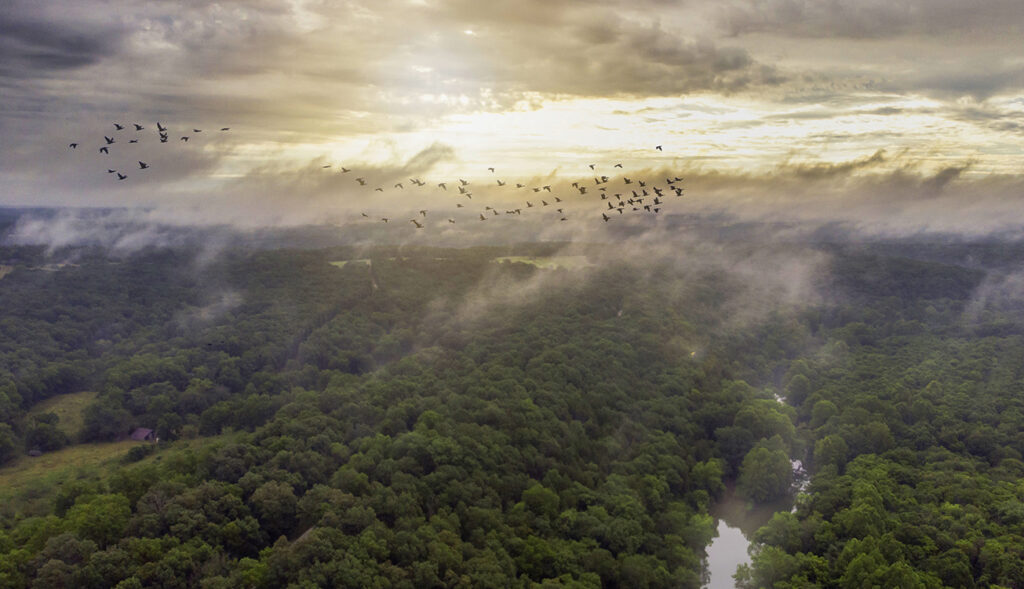
It took millions of years for one of the planet’s most complex ecological systems—the Amazon—to form. Today, various factors threaten to destroy it. At IRI-Colombia’s 2026 Amazon Scientific Immersion Conference, two experts analyzed how this biome functions, the challenges it faces, and why we still have time to protect it.
The Amazon we know today is not the same as the one that existed millions of years ago. However, the geological process of the formation of the Andes, which began about 90 million years ago, had a major impact on what we now know as the Amazon biome.
“At that time, the orogenesis of the Andes was intensifying and the mountains exceeded 2 kilometers in height. The moisture that came from the Atlantic and moved toward the Pacific stopped doing so because it encountered a physical barrier: the mountain range,” noted Edwin Agudelo Córdoba during the conference “The Amazon as a Living System: Ecological Dynamics and Current Risks,” held as part of IRI-Colombia’s 2026 Amazon Scientific Immersion Day.
To understand the complexity of the Amazon—noted the coordinator of the San José del Guaviare branch of the Amazonian Institute for Scientific Research (Sinchi)—it is necessary to examine the hydrological structure of the Amazon basin in relation to the Orinoco basin and, in turn, in relation to the tropical rainforest continuum, which spans the departments of Amazonas, Vaupés, Putumayo, Caquetá, Guaviare, Guainía, and even the southern parts of Meta and Vichada.
“The Amazon accounts for 5% of the world’s total land area and is home to more than 12% of the world’s recorded biological diversity,” said Edwin Agudelo Córdoba.
Currently, the Amazon covers an area of 7.3 million square kilometers. Although this represents just 5% of the world’s land area, the region is home to more than 12% of the world’s recorded biological diversity.
This explosion of life—represented by various biological groups such as birds, reptiles, fish, insects, and amphibians—is made possible by transformations that have taken place over time, endowing the region with extraordinary ecosystem complexity and biological richness.
The Amazon Biome in Danger
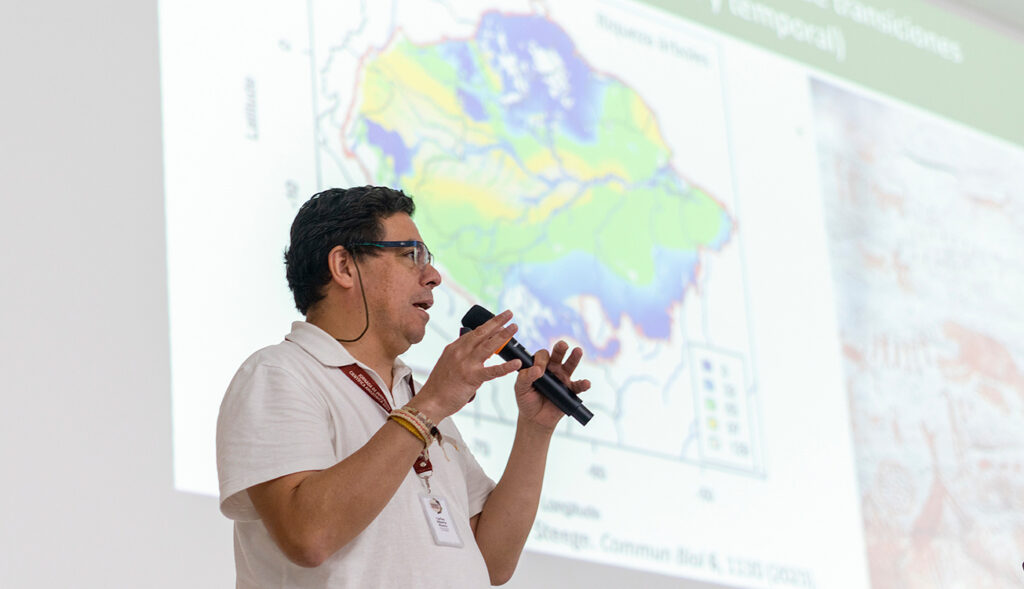
“The Amazon is a highly heterogeneous environment that changes over space and time,” emphasized Carlos Alberto Rivera, who delivered the lecture “A Critical Agenda for the Amazon: Scientific Priorities for Protecting the Amazon Biome,” in which he addressed the region’s main challenges and proposed several relevant issues that should be addressed urgently.
According to the biologist and limnologist, analyzing these transitions is essential for understanding how its geographical, biological, ecological, and hydrographic dynamics will unfold in the future—but above all, for formulating appropriate strategies aimed at ensuring its long-term protection.
In addition to biogeological transformations, human activities have also impacted the Amazon. Historical evidence shows that the arrival of Homo sapiens in places such as Africa, Australia, North America, and Madagascar significantly contributed to the decline in mammalian diversity. “We now have that information. That is why many of today’s decisions can be geared toward reducing human-caused impacts on a global scale,” Rivera noted.
The greatest impact on the Amazon biome is the loss of forest cover, caused primarily by deforestation and degradation.
“Vegetation cover is essential for ecosystem and climate stability, as well as for water availability in many areas of South America,” said Carlos Alberto Rivera.
The Amazon has lost nearly 100 million hectares in 40 years, explained Agudelo Córdoba. From 707 million in 1985, it decreased to 619 million, with southeastern Brazil being the most affected. This change in land cover is primarily linked to agricultural and livestock activities.
Furthermore, fragmentation also has a major impact because the forest begins to lose connectivity, and the small fragments left behind after deforestation cannot sustain biodiversity.
Another impact mentioned by Rivera is the deterioration of water and air quality as a result of mining and forest fires. On the one hand, wildfires—which are becoming increasingly frequent due to rising temperatures—have serious consequences not only in terms of forest loss but also in terms of contamination of water sources.
Furthermore, various studies have shown that illegal mining contaminates rivers and affects fish populations and local indigenous communities. “The Amazon is interconnected throughout its entire hydrographic network. Even mining in seemingly remote areas has implications for the entire watershed,” emphasized the professor and researcher at Javeriana University.
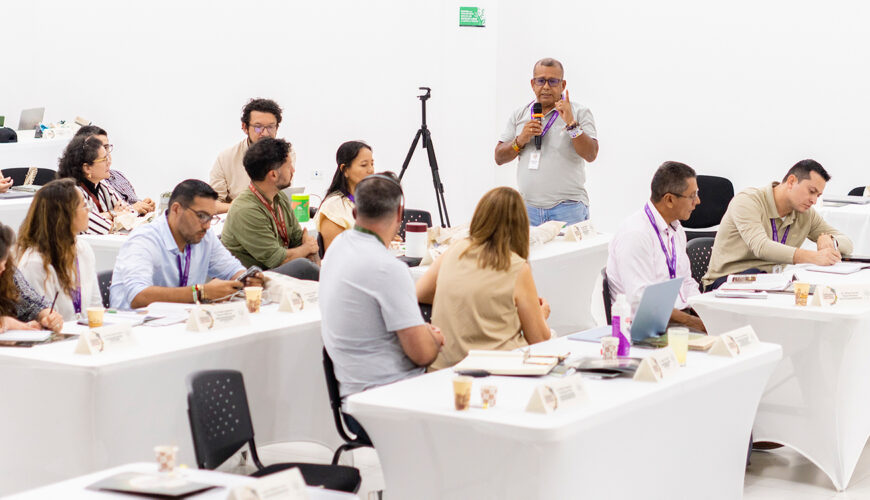
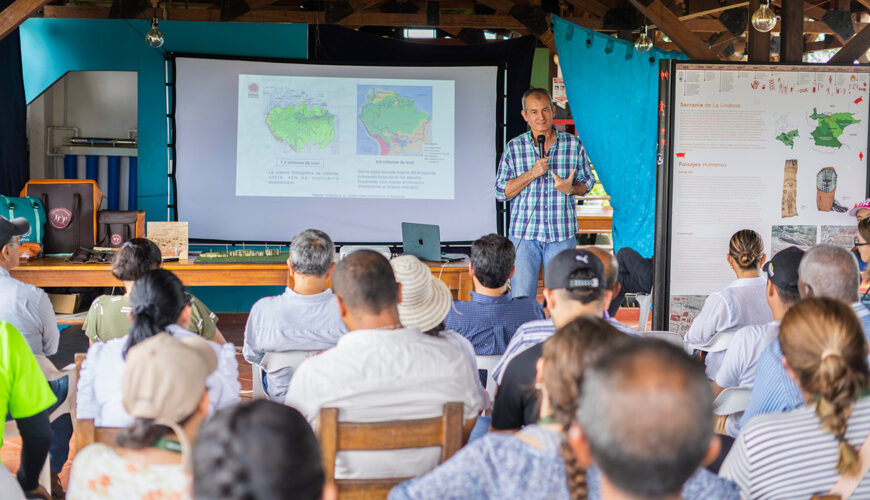 Edwin Agudelo Córdoba, director of the San José del Guaviare branch of the Sinchi Institute. Photo: IRI-Colombia.


The Amazon on the Brink of Savannization
One of the Amazon biome’s key strengths is its ability—thanks to the forest’s biophysical and ecosystem processes—to generate immense moisture currents that transport water from the Atlantic to the southern part of the continent, known as “flying rivers.”
When it rains, the trees absorb water from the soil and aquifers through their roots. Subsequently, through evapotranspiration, the forest releases large amounts of water vapor into the atmosphere, which forms clouds. Driven by the winds, these clouds travel from the Amazon until they encounter the natural barrier of the Andes mountain range. There, they rise, cool, and release much of their moisture as rain, supplying water to much of the Andean region.
It is estimated that the Amazon has lost between 14% and 17% of its forests—some experts even cite 20%—bringing it dangerously close to the point of no return, estimated by scientists at 25%.
This concept refers to the critical threshold at which the biome would lose its basic functions and its ability to regenerate, and a process of savannization would begin. The transformation of the Amazon into a savanna would directly affect climate patterns and water production for the continent.
“The Amazon biome encompasses a wide variety of ecosystems distributed throughout the Amazon River basin,” said Carlos Alberto Rivera.
“It is inevitable that in 200 years, part of the Amazon will become savanna, but we can prevent it from turning into savanna entirely, so that it continues to provide these important services,” Rivera emphasized.
Edwin Agudelo Córdoba, an expert from the Sinchi Institute, recalled the nine proposals put forward by the Scientific Panel for the Amazon, which range from actions to control deforestation and restore ecosystems to the development of a socio-bioeconomy for the forest and legislative changes that promote the rights of the Amazon.
Carlos Alberto Rivera, for his part, proposed a series of priority issues to ensure the biome’s stability. Among them are building corridors to connect the large national parks; viewing the territory as a mixed landscape that allows local populations on the edge of deforestation to sustain themselves; coordinating restoration efforts around aquatic ecosystems; anticipating the impact of demographic change; and reconciling visions of the Amazon’s future based on its changing reality.
“The biome has undergone both positive and negative changes. But we cannot lose hope of solving the problem of deforestation in the Amazon. It must be an active hope, backed by determination and actions for the future of the forests,” concluded the scientist, who holds a Ph.D. in Fundamental and Applied Ecology.
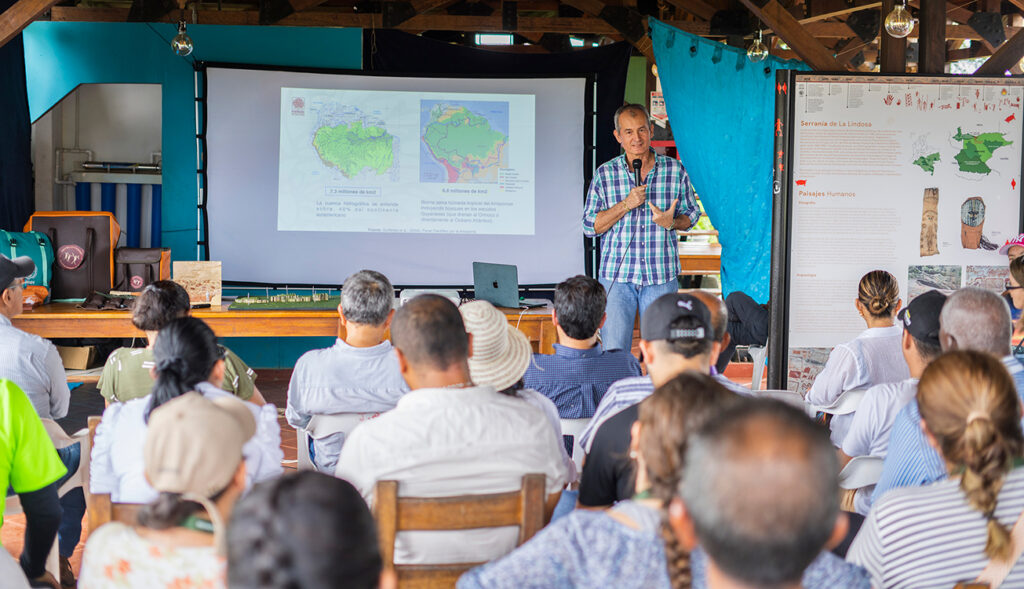
“The accumulation of moisture in the lowlands, combined with certain soil conditions, has, over millions of years, given rise to a level of biological diversity in the Amazon that we have yet to fully understand,” said Edwin Agudelo Córdoba.