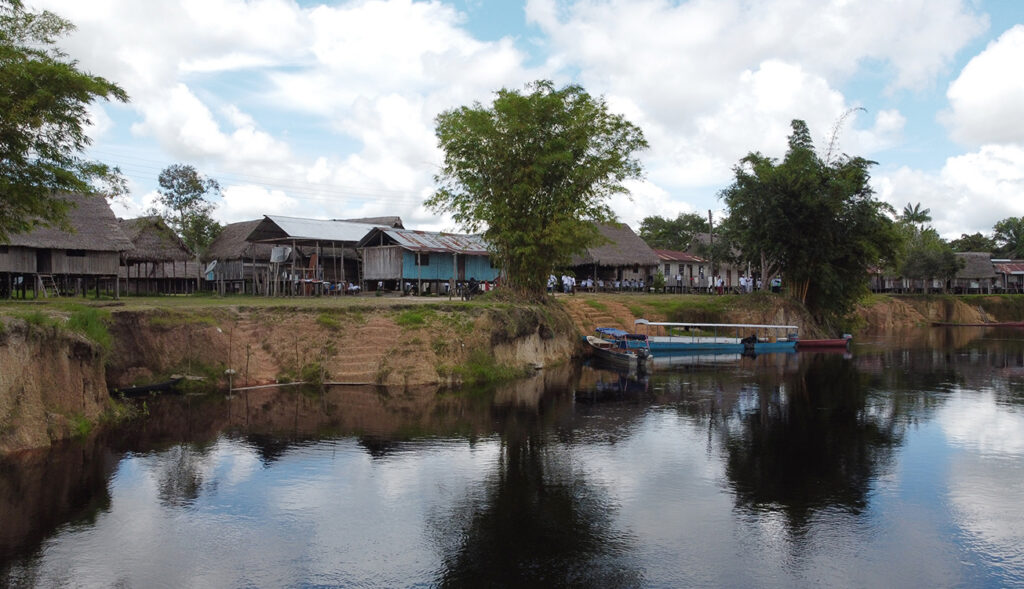
Colombia stands as the only country in the Amazon biome to have transformed its political governance by granting indigenous communities full administrative rights over their territories. This progress is a cornerstone for environmental, ecosystem, and cultural preservation, both in the region and throughout the country.
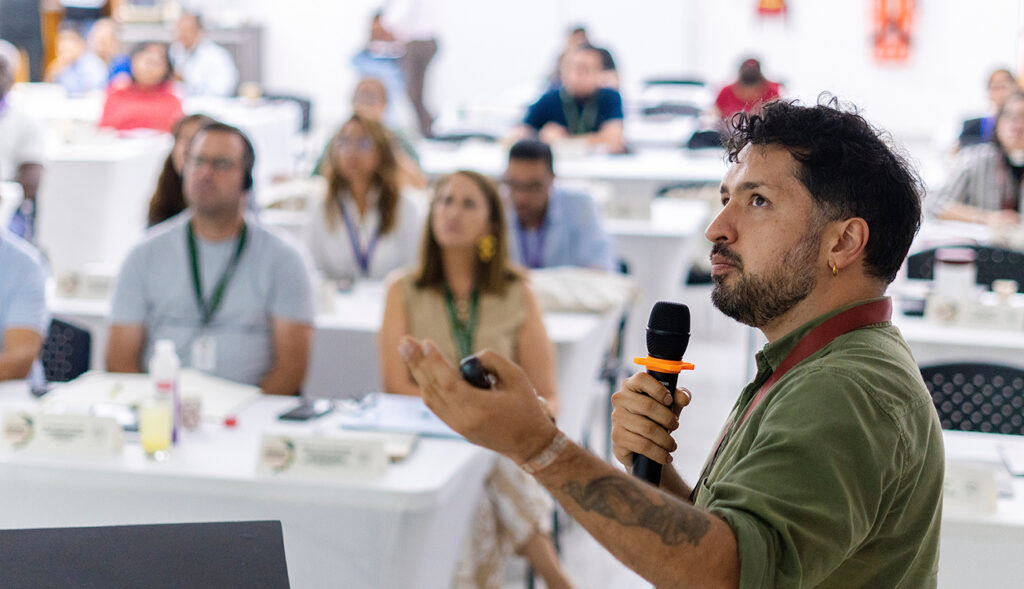
“There can be no preservation of the Amazon without rights that are effectively realized on the ground,” warned Juan Camilo González during the first session of IRI-Colombia’s 2026 Amazon Scientific Immersion Conference.
In his lecture “Territorial Entities and Indigenous Governance: Pillars of Amazonian Stability,” the director of the Territorios en Común Foundation provided a comprehensive overview of Indigenous Territorial Entities (ETI), progress in their implementation, and their potential as a tool to overcome the moral crisis of civilization currently facing the planet.
Phenomena such as Amazonian deforestation, the climate crisis, the criminal governance of armed groups, and the impact of mining and other extractive activities—which contaminate water sources and jeopardize the food security and health of indigenous peoples in the Amazon biome—are manifestations of this crisis.
Currently, 65% of national deforestation occurs in this region, with critical hotspots in the departments of Meta, Caquetá, and Guaviare. This scourge not only destroys the rainforest but also disrupts the flow of nutrients and fractures ecological connectivity between the Andes and the Amazon, threatening not only biodiversity but also the human dignity of its inhabitants.
This is where indigenous knowledge comes into play, as it has fostered harmonious coexistence between humans and nature for centuries.
“Indigenous peoples and their governance are a vital component for connectivity, biodiversity conservation, and the survival of all human beings.”
Many of the terms indigenous peoples use to refer to themselves are related to the concept of “people,” the expert explained. Such is the case with the Tucano people, who identify as Ye’pâ-masa, which means “people of the territory.” “It is not trivial to reflect on how peoples name themselves,” the anthropologist emphasized, since speaking of “people” refers to a series of kinship ties, reciprocity, and shared obligations.
For most Amazonian indigenous peoples, this also extends to non-human beings. “It includes spiritual beings, animals, or elements of the territory,” he added.
These kinship relationships shape their relationship with nature. For example, for the Whótuha people, the tapir is their uncle, and therefore there is a familial obligation of care, responsibility, respect, and reciprocity.
“It is in this idea of reciprocity that the foundation of self-governance lies,” noted González, since it is based on these relationships that indigenous peoples organize the territory, food production, the way they interact with others or with the state, and how they make political decisions regarding land use planning.
Thanks to this way of understanding their place in the world, ancestral communities are the forest’s primary protectors. 99.5% of the Amazon’s natural forest cover remains intact in the territories where they exercise comprehensive self-governance, “something that no other conservation initiative—whether by the state or private organizations—has achieved in the Colombian Amazon.”
A Long Road
According to the anthropologist, the establishment of the ETIs is one of the most significant transformations the country’s political and administrative order has undergone in recent years, as indigenous governments were finally recognized as public authorities of the state. This unprecedented development could mark a turning point in the management of the Amazonian biome.
For González, the issue of indigenous governance must be addressed through the lens of biocultural governance—an integrated system of norms, values, traditional knowledge, decision-making, and practices that guide economic management and contribute to the care of life.
This biocultural governance is built on four pillars: knowledge systems and ways of life—the foundations that organize the social and ecological life of indigenous peoples within their territories; self-governance and organizational processes, which refer to the ways of organizing indigenous authority in relation to the state, but also within the territories themselves; land-use planning based on traditional knowledge; and interculturality, which refers to the need for tools of dialogue with shared elements that allow for an understanding of these distinct ways of viewing the world, managing the territory, and organizing indigenous peoples.
“Without the Amazon, there is no global climate stability, but without indigenous governments, there is no Amazon.”
“When we say it is important to establish indigenous territorial entities in the Amazon and throughout the country, we are seeking to fulfill these four conditions,” emphasized the anthropologist, who has been supporting various processes to establish indigenous territorial entities (ETIs) in Guainía.
The ETIs were established under the 1991 Constitution. According to Article 286, the country’s political-administrative organization comprises four categories of territorial entities: departments, municipalities, districts, and indigenous territorial entities (ETIs); however, it took nearly 35 years for the latter to be implemented, as the presidential decrees making them effective were not signed until December 17, 2025.
On April 10, 2018, Decree 632 was issued—the first regulatory instrument to put them into operation and recognize their self-government structures as public authorities of the Colombian State.
On May 1, during the 2025 Indigenous Minga, progress was made on the creation of Decree 488 of 2025, which filled some gaps in Decree 632 of 2018, particularly regarding the financing of the ETI and the possibility of establishing them throughout the country. Decrees 480 of 2025 (SISPI), 481 of 2025 (SEIP), and 482 of 2025—the latter focusing on the transitional regime for the indigenous territory of Alta Guajira—were also developed, in addition to Decree 462 of 2025, which addresses the multipurpose indigenous land registry. Finally, on December 17, 2025, the country’s first eight ETIs began operations, and by 2026, nine had been formally established, with 23 indigenous councils registered and in the process of being regulated.

The Operational ETIs
To understand their role in territorial administration, Juan Camilo González explained during his lecture: “Just as a department has a governor and a municipality has a mayor, the ETIs have an indigenous governing council that is formed voluntarily, defined by the traditional authorities of each territory, and selected according to their customs and traditions.” Each indigenous community determines how that council functions: whether members are elected by vote, serve for life, or decisions are made by consensus. In other words, they structure their own government based on their culture and way of thinking.
According to the director of the Territorios en Común Foundation, the success of the ETIs depends on the state guaranteeing their autonomy on three fronts: the political front, which defines the structure of self-government; the administrative front, which empowers indigenous peoples to design and implement their public policies in a horizontal relationship of equals with the state; and the financial front, focused on the direct administration of their public resources.
“In none of the other countries of the Amazon is there a legal framework recognizing these forms of indigenous governance.”
Moving forward with this model requires an intercultural pact covering political and administrative matters. To this end, it is essential that public officials understand the logic of ancestral territories and that, conversely, indigenous leaders master the State’s institutional structure to ensure effective coordination.
In this way, Colombia’s political-administrative map begins to transform beyond the page. This is not an immediate change, but rather a gradual process that seeks to integrate the State’s technical expertise with ancestral knowledge, unifying efforts in favor of the comprehensive preservation of the Amazon biome.