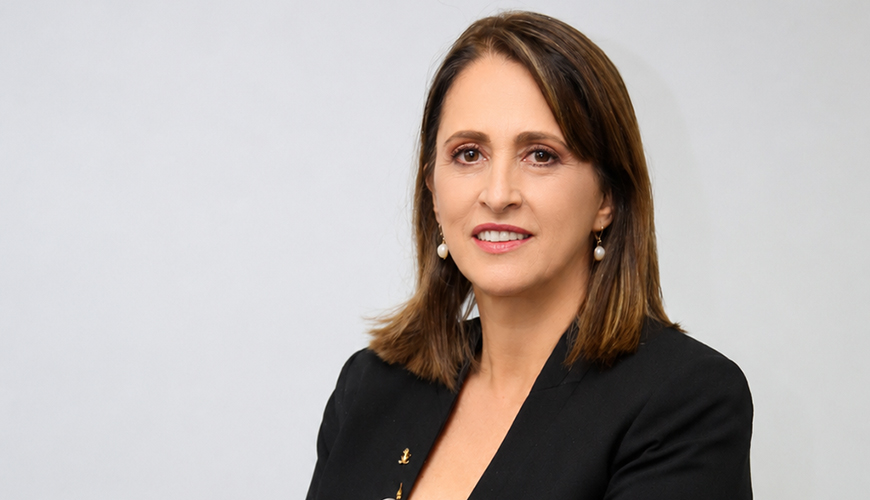
Blanca Lucía Echeverry Bedoya, Director of IRI-Colombia
There are places that cannot be understood from behind a desk. The Amazon is unique. We can analyze maps, examine deforestation figures, and discuss public policies; but when we enter the forest, listen to those who live there, and observe the pressures threatening its integrity, we understand the magnitude of what is at stake.
With this conviction, IRI-Colombia organized the Amazon Scientific Immersion Workshop from June 11 to 14, 2026, in San José del Guaviare, with members of Congress elected for the 2026–2030 term. We started with a simple yet powerful premise: to legislate on the Amazon, one must know it; to protect it, one must understand it.
It was not a conventional seminar. We designed an on-the-ground experience capable of connecting three dimensions that typically operate separately: scientific evidence, local realities, and political decision-making.
More than 70 participants—including members of Congress, scientists, experts, leaders, and representatives of organizations—discussed the dynamics transforming the Colombian Amazon. Evidence was presented on deforestation, biodiversity, climate change, land-use planning, Amazonian economies, the rights of indigenous peoples, and forest governance.
But science didn’t remain confined to an auditorium.
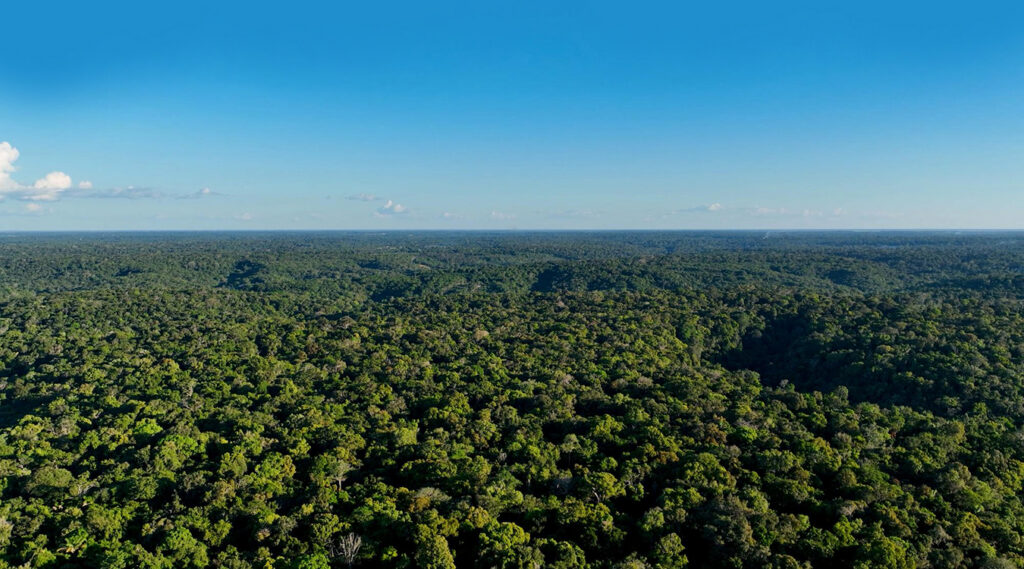
The immersion included a tour of La Lindosa, a landscape rich in natural, cultural, and archaeological heritage in Guaviare, and a flyover that allowed us to observe what statistics describe in abstract terms: the boundary between preserved forest and transformed areas, the scars of deforestation, and the scale of the decisions Colombia must make.
From the air, a hectare ceases to be merely a unit of measurement. Forest loss takes on a physical dimension: every fragment that disappears affects water regulation, carbon storage, species connectivity, and climate stability.
This understanding is important for those responsible for making laws.
The Amazon accounts for nearly 42% of Colombia’s continental territory and constitutes one of our natural heritage sites. Its protection is not exclusively an environmental issue: it is a matter of water and climate security, human rights, rural development, territorial sovereignty, and intergenerational justice.
One of the outcomes of the conference was to translate knowledge into legislative action. Through a Legislative Workshop, members of Congress made progress on mechanisms to permanently place the Amazon on the congressional agenda.
This exercise resulted in a roadmap for parliamentary coordination that includes the establishment of an Ad Hoc Commission for the Amazon as a forum for coordination, monitoring, and dialogue with the scientific community, local territories, indigenous peoples, institutions, and civil society, with the goal of eventually establishing a permanent legislative body.
The experience confirmed something we have learned over years of work at IRI-Colombia: transformation begins when knowledge creates connections, and those connections foster shared responsibility.
Our contribution, as the Interreligious Initiative for Tropical Forests, stems from this convergence. Science allows us to understand what is happening; politics can transform that knowledge into regulations, budgets, and institutions; indigenous peoples and communities contribute local knowledge and territorial experience; and religions and faith communities bring an indispensable dimension: ethical responsibility toward life.
Protecting the Amazon cannot depend solely on the fear of a future catastrophe. It must also stem from a present moral conviction: the forest possesses a value that transcends what we can extract from it. Its rivers, trees, species, and cultures sustain a web of life of which we are a part.
Now is the time to transform knowledge into decisions, local experience into political will, and that will into institutional frameworks. Colombia has a historic opportunity: to demonstrate that protecting the Amazon is not the responsibility of a single political sector, institution, or generation, but rather a national mission.
At IRI-Colombia, we will continue to build bridges between Congress, the scientific community, local territories, and faith-based communities, so that decision-makers can learn about and understand the Amazon before legislating on it.
Because when a member of Congress observes the forest from the air, talks with a scientist, and listens to those who live in the Amazon, the discussion ceases to be merely about the environment. It becomes a question about the country we want to build.
Because the forest is life. And protecting it means protecting our future.