
During the second session of IRI-Colombia’s Amazon Scientific Immersion Day, lawmakers, religious and community leaders, scientists, and journalists visited the La Lindosa mountain range—a living laboratory where natural wealth and cultural heritage demonstrate why protecting the Amazon also means preserving humanity’s memory.
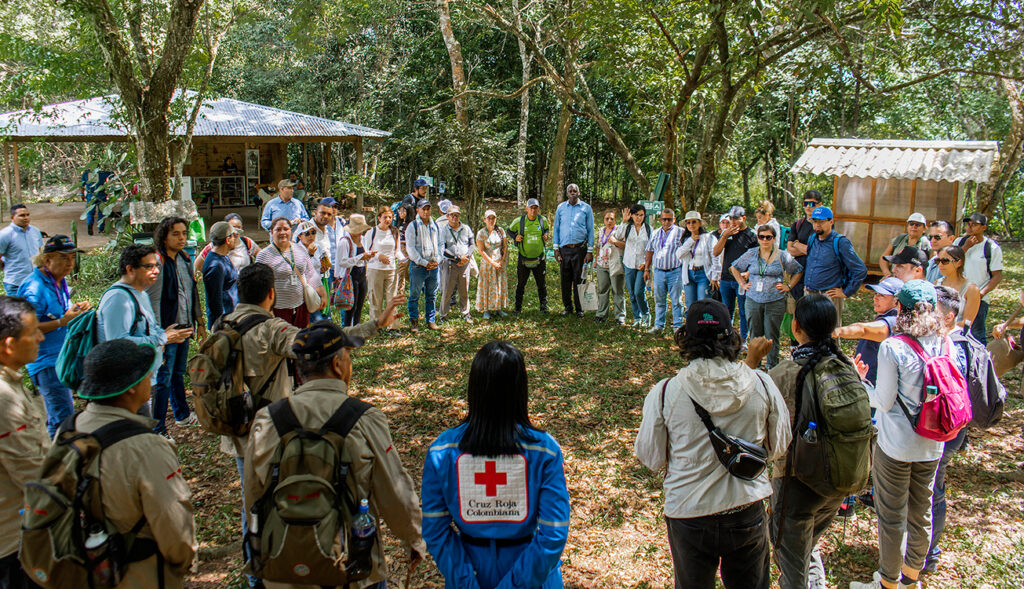
On June 12, a group of 48 people traveled in six jeeps from San José del Guaviare to the La Florida farm in the La Lindosa mountain range, where the journey to Cerro Azul begins. Cerro Azul is a rocky plateau with flat summits and vertical walls—known as a tepuy—that forms part of one of the oldest geological structures on the planet, the Guiana Shield—and is considered the gateway to the Serranía de Chiribiquete.
The group consisted of 17 members of the House of Representatives and their staff; religious leaders from the local chapters of IRI-Colombia in San José del Guaviare, El Retorno, Calamar, and Miraflores; community leaders from the region; scientists; and journalists, all of whom participated in IRI-Colombia’s second Amazon Scientific Immersion Workshop.
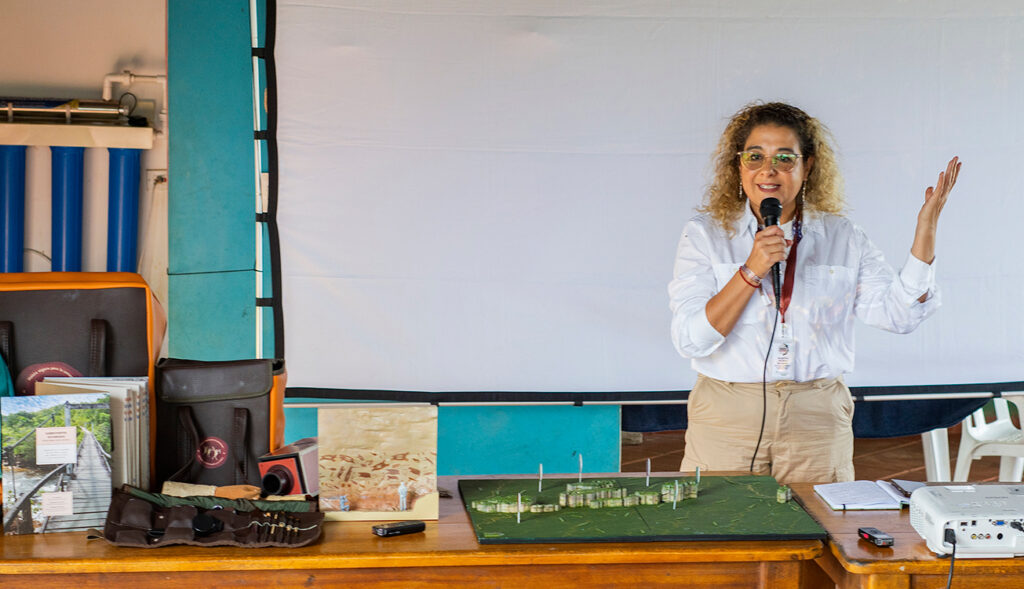
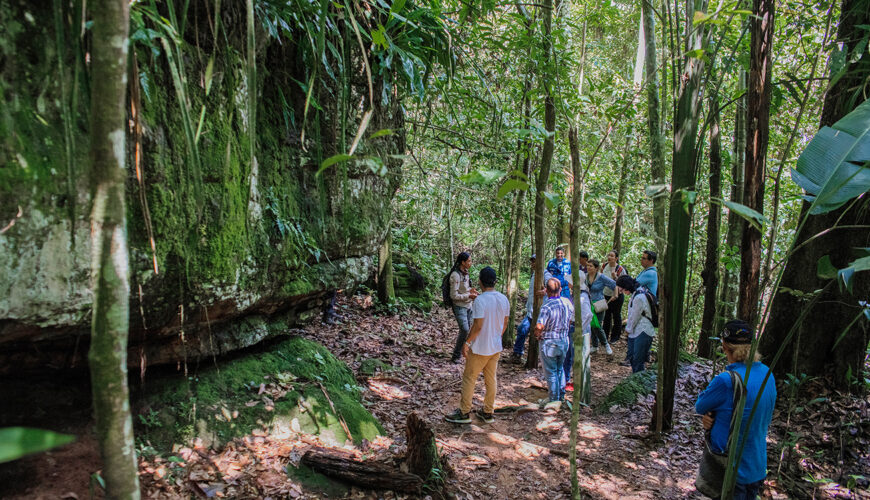
“The Amazon extends far beyond natural boundaries or political-administrative divisions,” noted Angélica Medina Mendoza during the conference “Memory, Culture, and Territory: Profound Meanings of the Amazonian Territory,” held at the foot of the hill before the tour began.
It is a territory woven from human stories that can only be understood in light of its various sociocultural contexts and different historical moments, explained the deputy director of Social Appropriation at the Colombian Institute of Anthropology and History (ICANH).
According to the anthropologist, it is not the same to analyze it from the perspective of the conquest—which viewed it as an empty territory, devoid of peoples or cultures—when in reality it was inhabited and home to an enormous diversity of knowledge. Nor is it the same as the mercantilist perspective of the late 19th century, which reduced it to a source of resources to be exploited for products such as cinchona bark, cinnamon, hides, and rubber. Or as we understand it today: a territory with cultural rights, inhabited by a great diversity of peoples, communities, and ethnic groups.
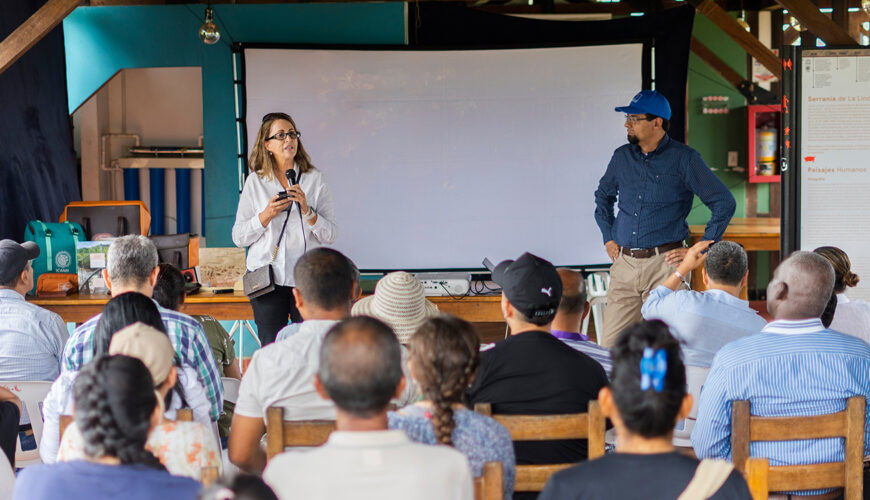 Blanca Lucía Echeverry and Javier Eduardo Mendoza, of IRI-Colombia. Photo: IRI-Colombia.

The Journey Begins
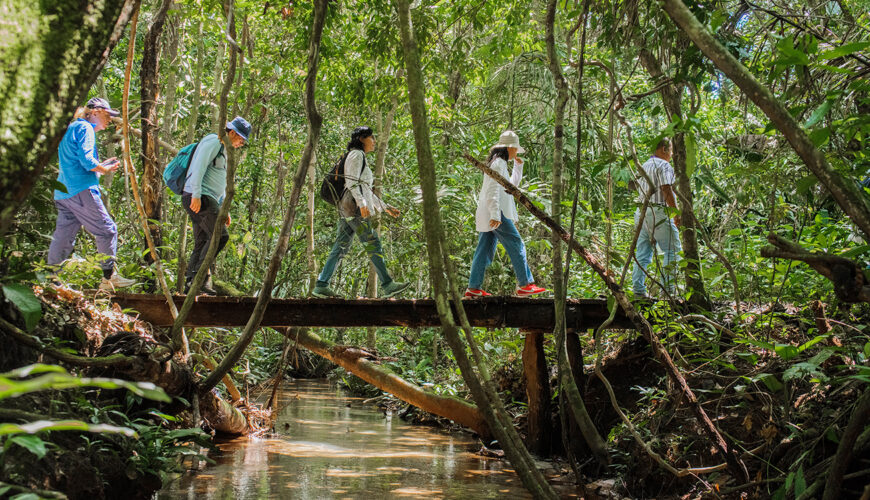
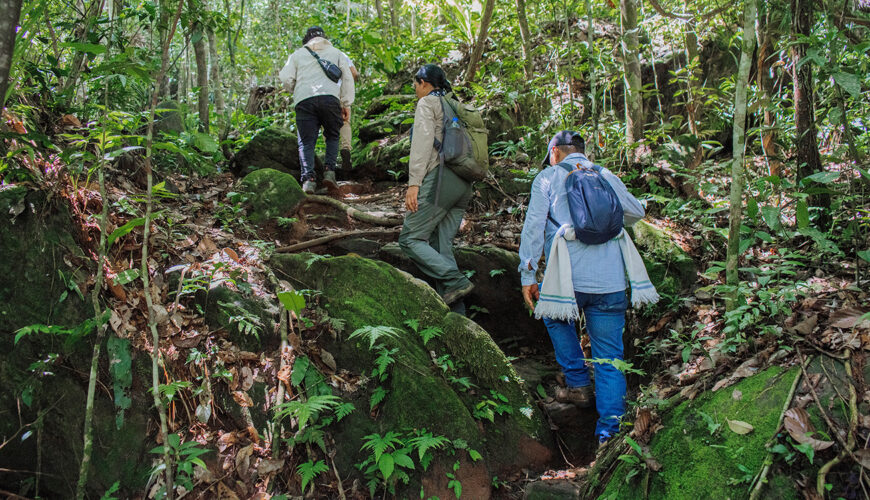
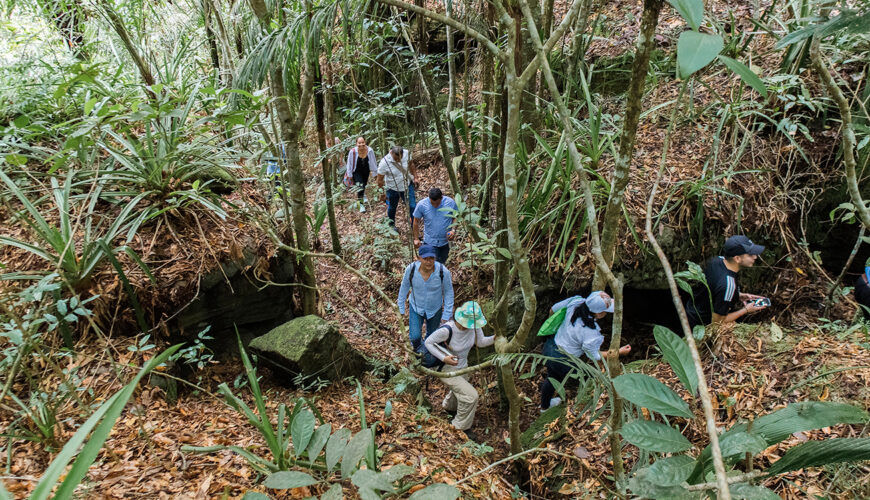
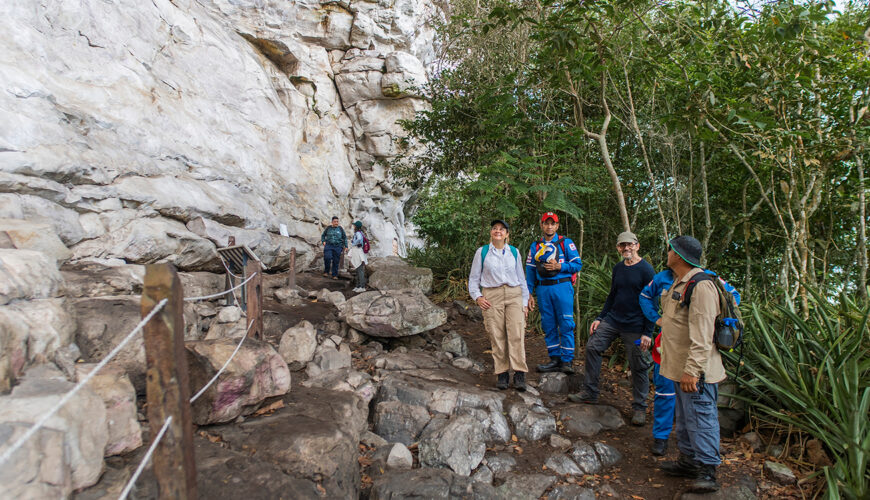
The lecture served as an introduction to the expedition to Cerro Azul, a 3.5-kilometer trek guided by members of Fantasías de Cerro Azul, an association made up of community leaders who know this territory well and have found in tourism a means of livelihood and a conservation strategy.
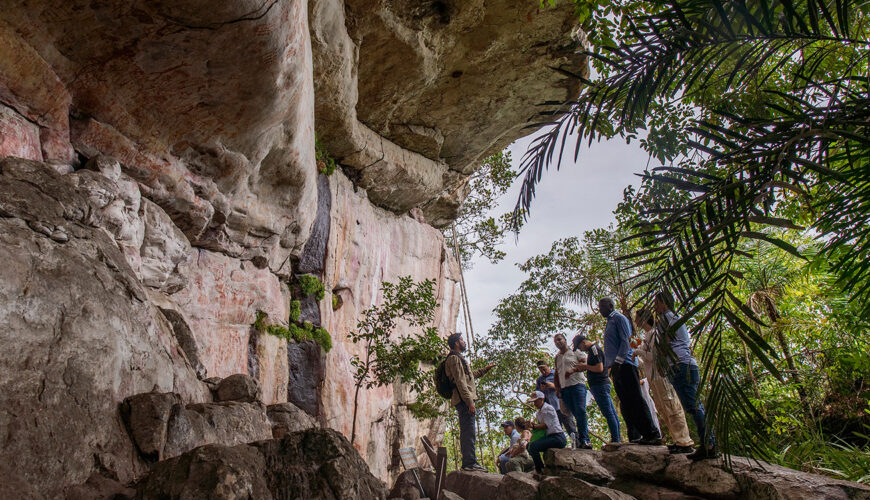
Throughout the journey, visitors learned about the area’s ecological features, wildlife, and vegetation. The first stop was to see the “walking” palm, Socratea exorrhiza, famous for its stilt-like aerial roots. They also enjoyed a breathtaking panoramic view of the Amazon rainforest and the transition to the savannas of the Orinoquía, and took photos at Piedra Tortuga (a rock formation resembling this reptile).
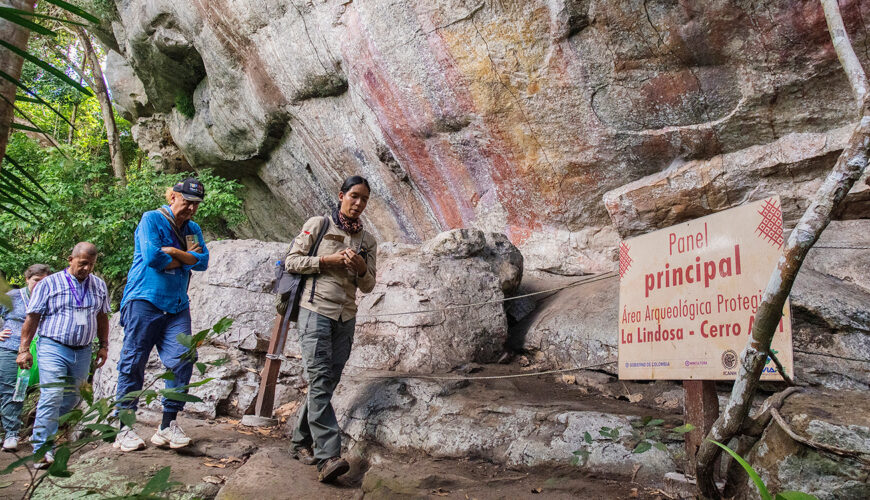
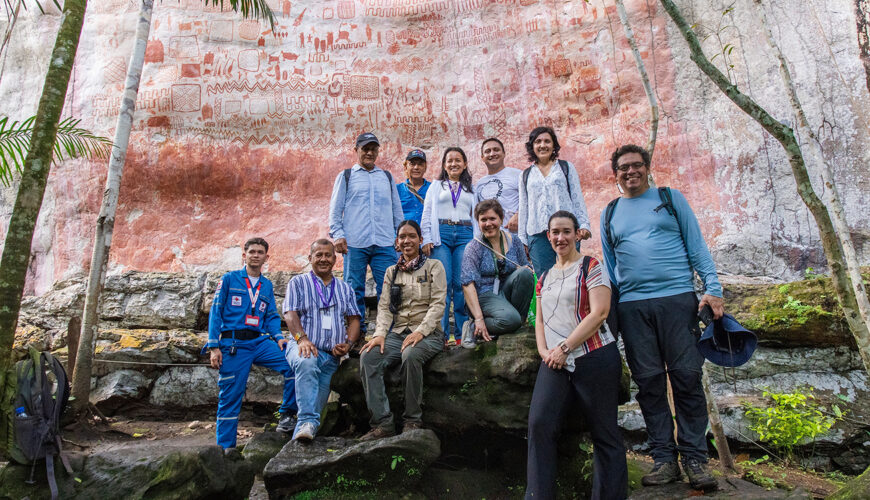
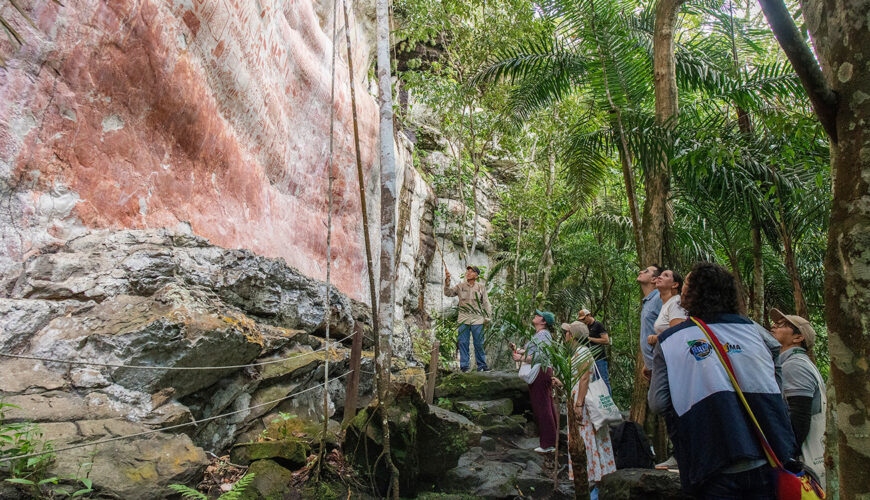
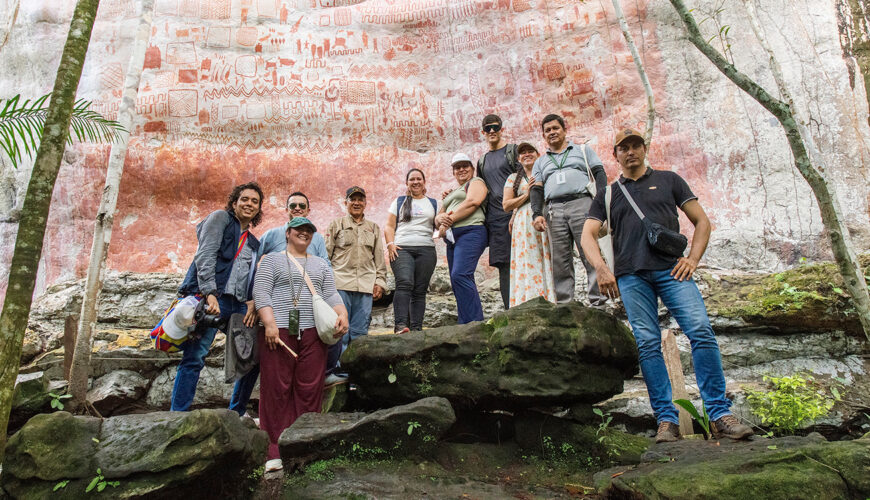
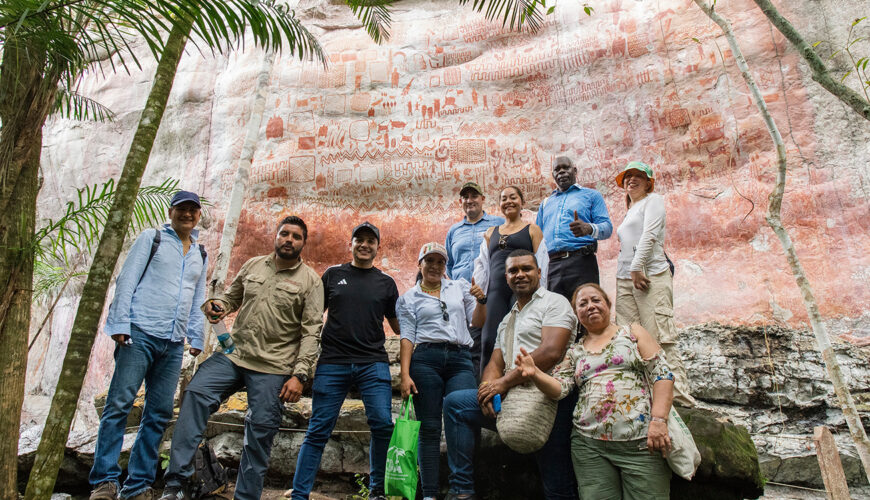
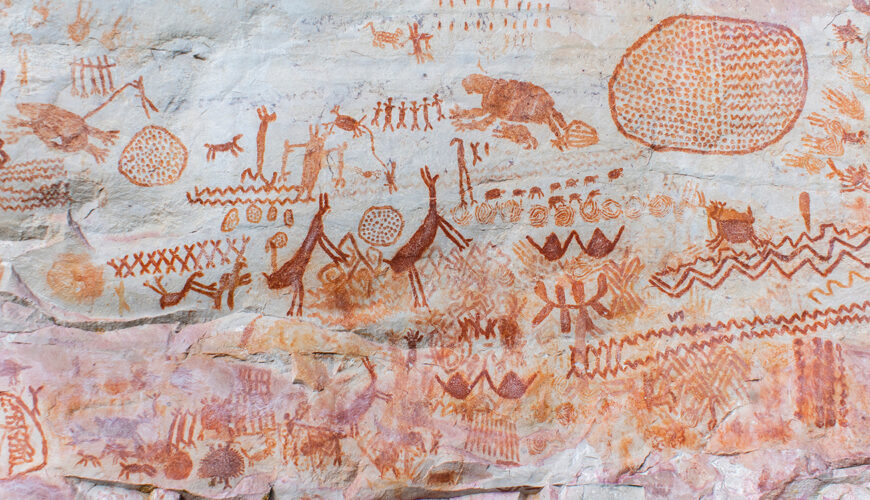
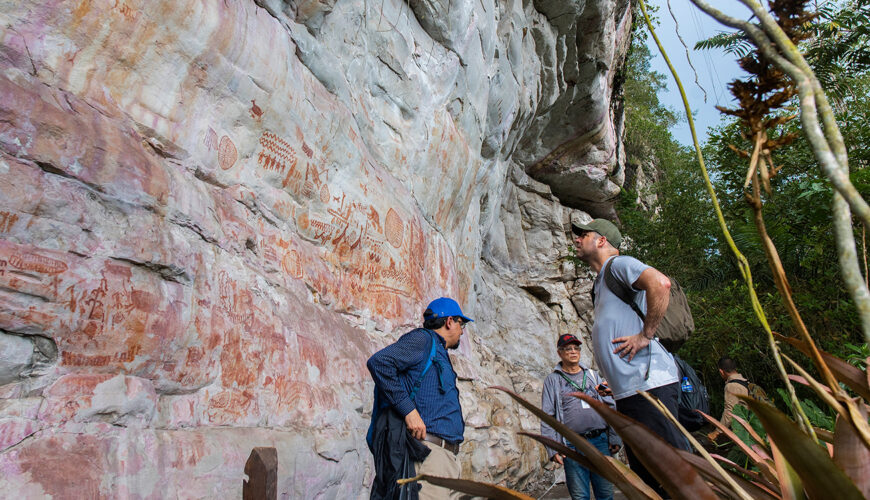
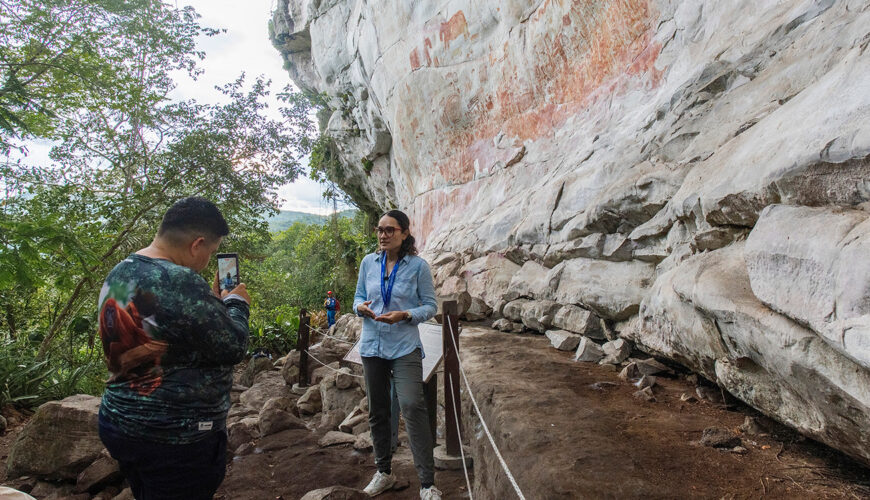
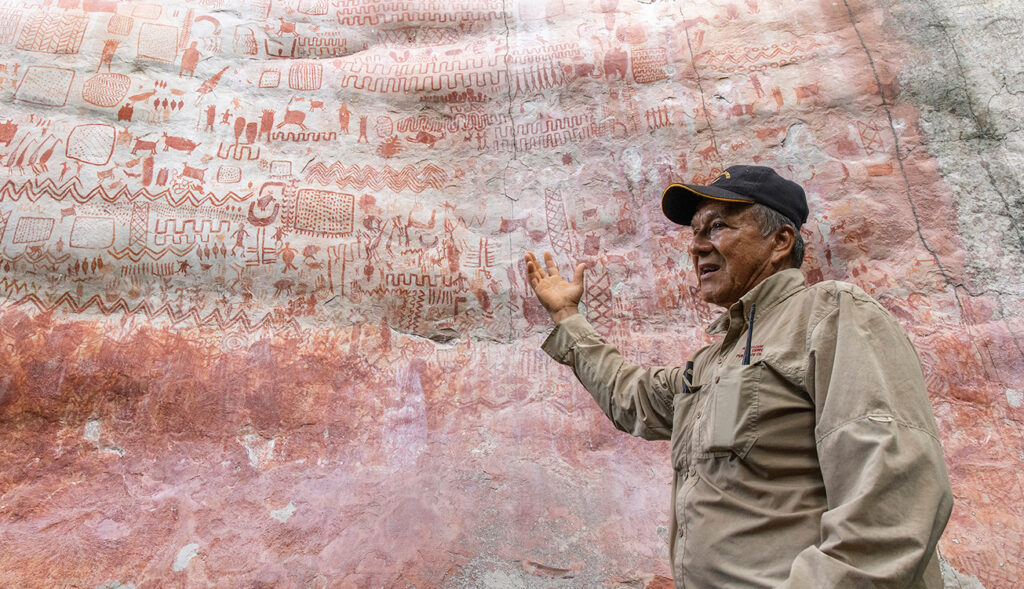
The main attraction of Cerro Azul is, without a doubt, the archaeological treasure depicted on its three panels. These consist of more than 400 meters of murals covered in red cave paintings, some of which have faded over time.
“The Amazon is a territory woven from human stories that can only be understood in light of the various sociocultural contexts and historical moments that have shaped it,” emphasized Angélica Medina Mendoza, deputy director of Social Appropriation at ICANH.
Midway through the hike, one of the guides picks up a stone from the ground, wets it, and draws a line on his hand using a pigment the same color as the pictograms. It is believed that this mineral was one of the raw materials used to make the paints. For Medina Mendoza, researchers’ interest lies not so much in the pigment itself as in the process of preparing the panels, since, apparently, the drawings were not made directly on the bare rock. In his view, this discovery provides valuable archaeological, technical, and technological information for understanding the procedures used by those who created them.
Although the cave paintings are estimated to be between 12,000 and 12,600 years old, there is still no consensus on their date of creation. However, it is believed that different human groups visited this site over thousands of years and left their mark on the rock by drawing mastodons, jaguars, and giant sloths, depicting rituals, and capturing scenes from daily life. Over time, some paintings were layered over others, and this superimposition made it impossible to determine exactly when each one was created.
Endangered Heritage
Scientific understanding and the knowledge of indigenous peoples suggest that the rock panels were sacred sites, according to Angélica Medina. This was likely the motivation behind efforts to ensure their permanence. However, the increase in hunters, the extraction and export of fine furs, and the systematic deforestation of the La Lindosa mountain range during colonization accelerated the deterioration of the cave paintings. “The human factor is probably the greatest cause of deterioration at the archaeological sites in this area,” notes the ICANH in the Archaeological Management Plan for the La Lindosa Mountain Range.
According to Angélica Medina, deforestation accelerated the biological activity of termites, fungi, and lichens on the drawings. Furthermore, the trees that had served as a protective barrier for centuries disappeared, leaving the paintings exposed to rain and sunlight, which rapidly degraded the colors and caused some images to fade.
But the impact has gone even further. In some areas, visitors have scratched and scrawled graffiti on the pictograms. This interference jeopardizes a heritage that transcends Colombia’s borders and belongs to all of humanity.
Based on research led by the Colombian Institute of Anthropology and History (ICANH) and the National University, with the support of the Guaviare Governor’s Office, the Archaeological Management Plan (PMA) was developed. This process led to the site being designated a Protected Archaeological Area (AAP) in 2018.
La Lindosa and Chiribiquete
Like the La Lindosa mountain range, the Serranía de Chiribiquete National Natural Park is part of the same geological, ecological, and cultural corridor of the Guiana Shield and is home to Precambrian rock formations dating back millions of years.
According to the anthropologist, Chiribiquete is a sacred place with different levels of energy and vibration, which is why only a “sabedor” (spiritual guide) or someone under their guidance may enter. Indigenous peoples such as the Coreguaje believe that evil spirits inhabit the area and only visit it when they need to make a spiritual payment to settle a debt with nature.
“On this point, we agree from an intercultural perspective because we—as ICANH or Colombia’s National Natural Parks—believe it is a place to learn about, but not to enter,” Medina emphasized. For this reason, one of the main measures to protect the park is to restrict visitor access and not promote tourism. This approach also respects the cultural rights of indigenous peoples, who have been clear in stating that the site should not be visited.
“The La Lindosa and Chiribiquete mountain ranges date back to the Precambrian era—that is, between 1.8 and 3 billion years ago,” explained Angélica Medina Mendoza, deputy director of Social Engagement at ICANH.
To allow people to experience this heritage without disturbing the sacred sites, there are several locations in the La Lindosa mountain range that are open to the public, including Nuevo Tolima, Raudal, and, of course, Cerro Azul. Although there are many others, the anthropologist highlighted these three for their organization and the facilities they offer to welcome visitors.
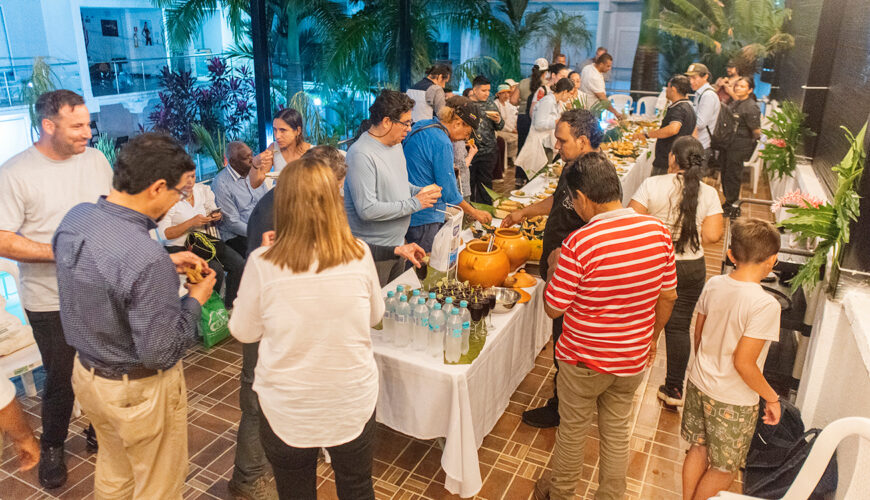
After nearly four hours of hiking, the day’s excursion came to an end, and the hikers gradually made their way back, having enjoyed a delicious lunch of moqueado dorado fish, one of Guaviare’s culinary gems. They arrived tired but with the satisfaction of having discovered one of the great treasures safeguarded by the Amazon rainforest. This IRI-Colombia living laboratory helped them understand that protecting the Amazon’s tropical forests means preserving unique landscapes—guardians of natural and cultural memory—whose loss would be irreparable.