

Why should we talk about ethics or moral, religious, or spiritual imperatives when considering environmental justice? The need to integrate these dimensions into public policy, in light of the current climate crisis, was the central theme of the presentation “Caring for Creation: Ethics, Spirituality, and Historical Responsibility in the Face of the Climate Crisis,” delivered by Reverend Loida Sardiñas Iglesias during the first session of the 2026 Amazon Scientific Immersion Conference.
The climate crisis is, at its core, a moral and civilizational crisis stemming from the extractivist development model that humanity has been implementing. This was pointed out by Reverend Loida Sardiñas Iglesias, who, based on this thesis, developed the lecture “Caring for Creation: Ethics, Spirituality, and Historical Responsibility in the Face of the Climate Crisis,” presented during the first session of IRI-Colombia’s 2026 Amazon Scientific Immersion Conference.
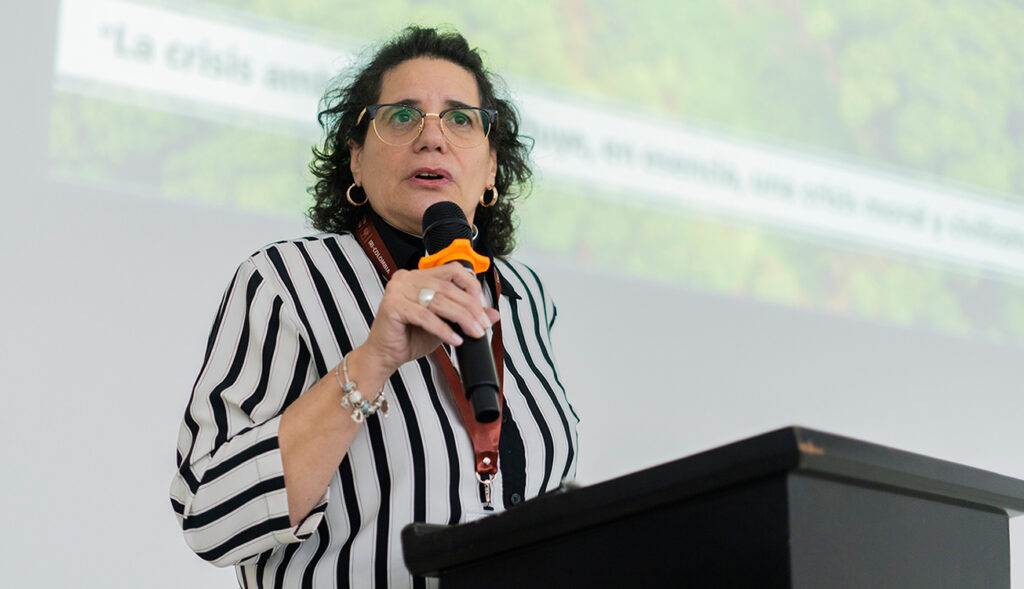
“Climate change challenges our modes of production, consumption, our relationship with nature, and our understanding of human life,” emphasized the scholar, who holds a master’s degree in Theological Sciences and a doctorate in Theology. In response, she proposed that the nation’s lawmakers adopt an ethic of good living and harmonious coexistence, grounded in a bioregional territorial project.
Although scientific knowledge remains important, noted the professor from the Faculty of Theology at the Pontifical Xavierian University, global climate collapse confronts us with an ethical dimension that must guide collective decisions and compels us to question the world in which we want to live and the one we will leave to future generations, as well as our understanding of human beings and their place in creation.
“Floods, extreme droughts, wildfires, biodiversity loss, and the displacement of communities caused by climate-related events are also symptoms of a profoundly unbalanced relationship with the planet and reveal the limits of our rationality,” she noted.
The religious leader, a member of the local chapter of IRI-Colombia in Bogotá, also highlighted how the crisis in the Amazon is precisely the result of a utilitarian and pragmatic view of tropical forests, which promotes indiscriminate logging, mining, extensive livestock ranching and agriculture, and illicit economies. “We call this a moral crisis because it signifies a progressive collapse of that way of life, of humanistic values, and of our sense of humanity,” she added.
Another topic addressed by Reverend Loida Sardiñas during her presentation was the contribution of religious and spiritual traditions which, despite doctrinal differences, largely converge on fundamental principles such as the interdependence of all forms of life and their existence as a living expression of God.
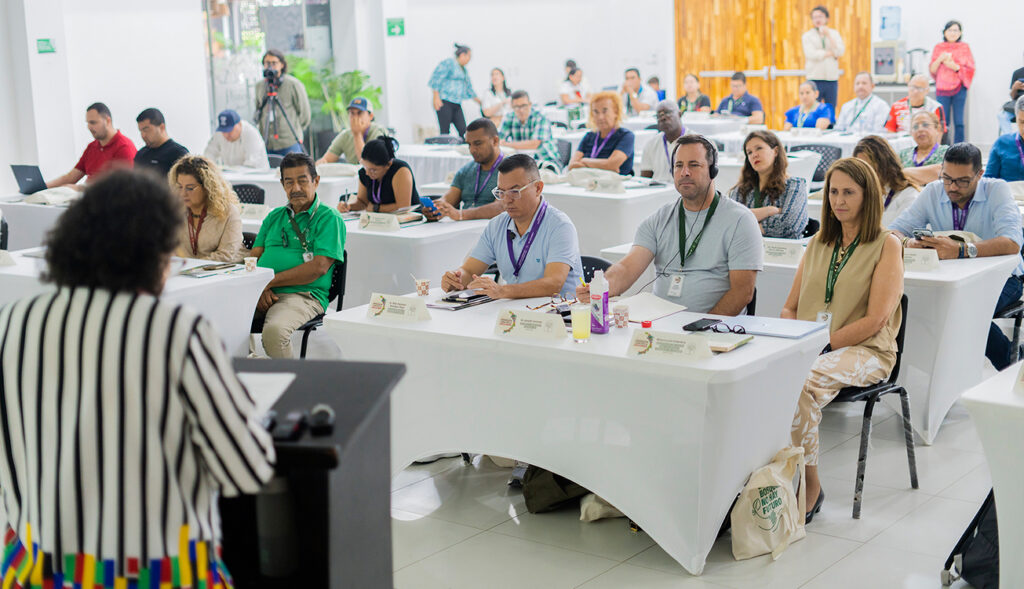
Toward Ethical Action for Good Living and Coexistence
A third step in integrating the ethical dimension into reflections on climate justice relates to historical responsibility, since not all countries or all human groups have contributed equally to environmental degradation.
For the priest of the Anglican Episcopal Church, climate justice requires recognizing historical asymmetries. For example, deforestation in the Amazon generates huge profits for agribusiness, land speculators, criminal groups, and illicit economic networks, but “at the same time, it harms local residents, causes environmental damage, and pollutes rivers,” she noted.
“Believers—both men and women—and religious and ecclesial leaders, motivated by their faith but also by these deep spiritual convictions, identify the Amazon as a living and wonderful expression of God’s creative work.”
According to the scholar, it is necessary to consider retrospective, present, and prospective responsibility in order to understand how these historical processes have unfolded and which development models have contributed to—and continue to fuel—the current crisis. This reflection will also enable decisive action through public policies to effectively preserve the Amazon biome, promote sustainable forms of production for its inhabitants, and ensure the livelihoods of future generations.
In closing, Reverend Loida Sardiñas proposed integrating elements of ethics and spirituality into public policy in order to advance ethical action toward good living and harmonious coexistence.
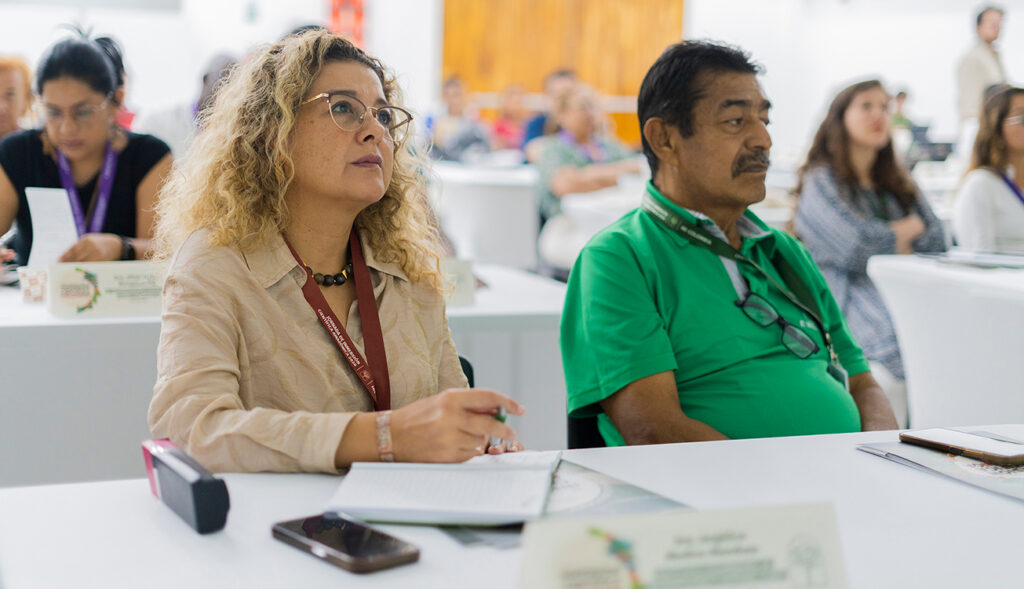
“This integration means recognizing that the decisions made by the executive, legislative, and judicial branches of the Colombian state—as a social state governed by the rule of law—are always grounded in values,” she explained.
According to the theologian, it is necessary to foster a bioregionalist perspective centered on the territory and to promote a comprehensive ecological education that integrates scientific knowledge with ethical action to foster ecological awareness and civic responsibility in caring for creation. Likewise, it is essential to foster an economy oriented toward the common good and equity, consistent with the ancestral philosophical concept of harmony with nature. It is also crucial to strengthen citizen participation both in defining policies and in the planning, implementation, and evaluation of climate policies at the local level, and to foster a culture of care—which involves acknowledging our vulnerability, interdependence, and shared responsibility.
The climate crisis demands an ethical and spiritual conversion on a scale comparable to the structural transformations in history, stated Reverend Loida Sardiñas Iglesias. “We need a moral conscience capable of envisioning a different future, a citizenry aware of the interdependence of planetary life, and institutions that prioritize the care of life over profit,” she concluded.
“We call it a moral crisis because it involves decisions about who bears the environmental costs of our irrational actions, who benefits from the current economic models, and what obligations we have toward the communities that have traditionally cared for and protected our tropical forests.”