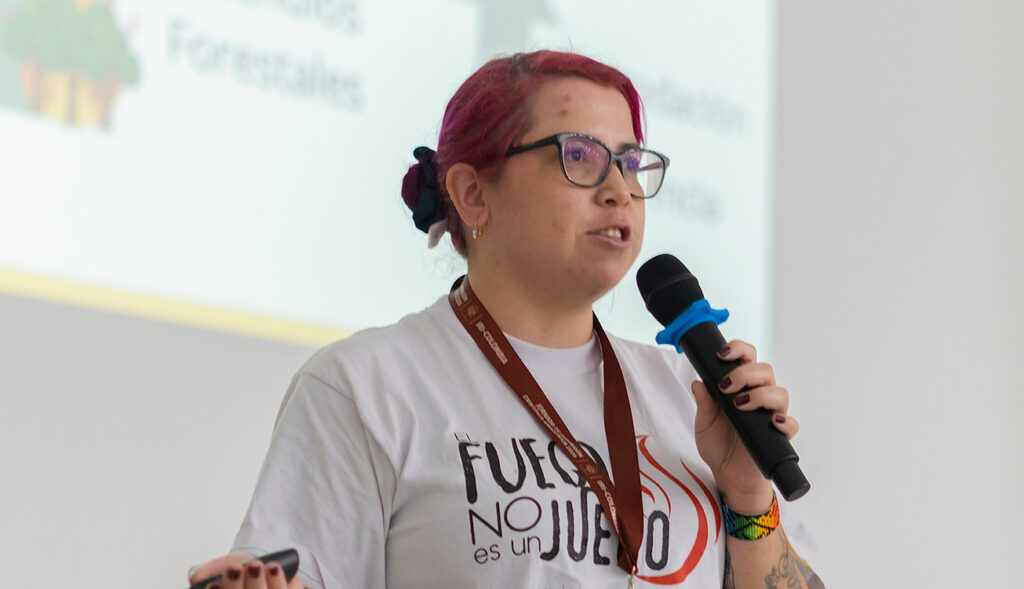
Raising awareness about integrated fire management in the Amazonian forests was the goal of the conference led by María Constanza Meza, deputy director for Disaster Risk Reduction at the National Unit for Disaster Risk Management (UNGRD), during the Legislative Workshop of the 2026 Amazonian Scientific Immersion Conference.
“The energy released by last year’s forest fires in Portugal is equivalent to that of 20 atomic bombs, such as the one dropped on Hiroshima,” warned María Constanza Meza of the National Unit for Disaster Risk Management (UNGRD), during the conference “Fire Governance and Amazonian Resilience: A Critical Agenda for the Next Four Years,” held as part of the 2026 Amazon Scientific Immersion Day.
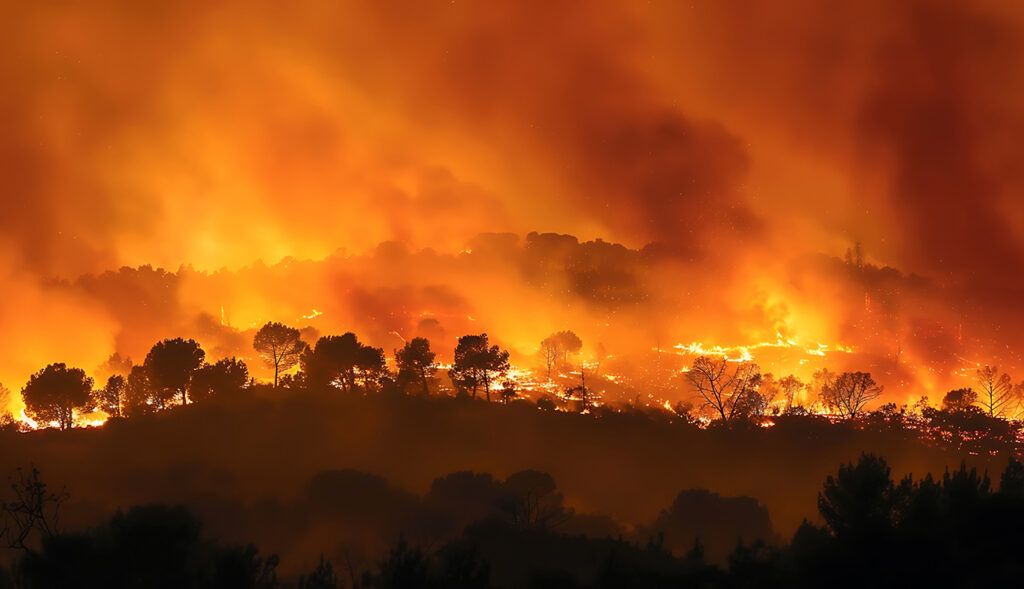
According to the expert on deforestation, forests, and wildfires, the dynamics of these incidents on a global scale are becoming increasingly complex. Other countries such as Australia, the United States, Brazil, and Bolivia—all within the Amazon basin—have recently suffered conflagrations considered “mega-fires” due to their immense scale.
“It really is a delicate situation; these are increasingly complex events that exceed the control capabilities of any country, despite having state-of-the-art technology and elite operational units,” says the deputy director for Disaster Risk Management at the UNGRD.
Although climate change may be a triggering factor, the lack of fire management is the main cause of forest fires worldwide, primarily because prevention has been confused with a ban on fire.
Fire has always carried a negative connotation, to the extent that international policies have been developed to ban its use. However, the expert noted, this measure is based on a lack of understanding, as it has been demonstrated that proper fire management contributes to the conservation and care of ecosystems.
When a forest burns, leaves, branches, and trees disappear; consequently, shade is lost, allowing more sunlight to penetrate and causing a rise in temperature and a decrease in humidity—conditions conducive to the growth of grasses.
The unchecked growth of these dry grasses, due to the lack of moisture, leads to what is known as “fuel load accumulation”—that is, the amount of living or dead organic matter accumulated in a specific area that can burn and fuel the fire.
For this reason, “the next fire will always be more intense in an area that has been burned out of control,” explained Meza. In other words, it becomes a vicious cycle: a fire produces a greater fuel load, which in turn fuels fires that generate an even greater fuel load.
This situation has pushed the eastern Amazon basin to the much-feared “point of no return,” Meza emphasized. This is because, currently, fires emit more carbon than the forests are capable of absorbing, causing a serious ecological imbalance.
Ancestral Knowledge and Fire
In Colombia, fires in the Amazon tend to be concentrated in Caquetá, Guaviare, and part of Putumayo—in the so-called “arc of deforestation.” In contrast, protected areas and indigenous reserves have a low incidence of this type of disaster.
Fire management to prevent wildfires is an age-old practice carried out by ancestral communities that, unfortunately, has not been taken into account from an institutional perspective, noted María Constanza Meza. The expert stated that incorporating traditional and ancestral knowledge about fire into government programs will allow us to learn to coexist with this element and create more resilient landscapes.
But what can be done in the face of such a discouraging outlook? According to the researcher, who holds a master’s degree in Forest Management, Use, and Conservation, the only way to prevent forest fires is through fire management. “Just as we manage water and soil, or take measures to prevent air pollution, we can manage fire,” she emphasized.
Currently, there are a number of documents offering solutions to forest fires and guidelines for their management. Various organizations, such as the Food and Agriculture Organization of the United Nations (FAO), have published guidelines and recommendations on the matter. In fact, in 2021, the Forestry Commission for Latin America and the Caribbean recognized fire as a key element in the management of tropical forests.

Although Colombia introduced a bill for comprehensive fire management in 2016, it is one of the countries that has made the least progress in this area.
In 2018, the Amazon Cooperation Treaty Organization (OTCA) signed a memorandum of understanding on the issue and created the Amazon Network for Comprehensive Fire Management (AMIF). This marked the first time the need to promote fire management actions through public policies was recognized. This was reaffirmed in 2023 in the Amazon Alliance to Combat Deforestation, signed by the Amazonian states, and in the 2025 Bogotá Declaration.
Argentina has had a Fire Management Law since 2012; Paraguay passed its Comprehensive Fire Management Law in 2021; and Brazil passed its law two years ago.
“Many countries have made progress, including Peru, which had been the most reluctant; however, our country is still waiting to give the green light to this bill,” stated Meza. According to the deputy director for Disaster Risk Management, it is urgent to pass the bill introduced in Congress ten years ago so that Colombia can have the necessary public policy to address the threat posed by wildfires.